Well Come To “This Is Divine Law
Select the language English हिंदी తెలుగు About
Copyrite 2025
DHARMA SHASTRA OF THE DIVINE WORLD-DIVINE LAW
BY: M. VENKATA RAJU (SRI RAMADHARMAJA)
info@thisisdivinelaw.com
Translation by: PANYAM DATTA SARMA
All rights reserved. No part of this book may be reproduced, stored in a retrieval system, or transmitted in any form or by any means-electronic, mechanical, photocopying, recording, or otherwise-without the prior written permission of the publisher and the author, except in the case of brief quotations used in reviews, articles, or scholarly works.
Introduction
The Divine law
“All the laws that exist in the universe function in accordance with one supreme law. This supreme law, referred to as the Divine Law, is explained in detail in this scripture titled Dharma Shastra of the divine world-divine law.”
By understanding this divine law completely. Human beings must transform from humanity into divinity and attain liberation. Likewise, the very purpose of this scripture is to transform this earthly world into a Divine World. For this goal to be fulfilled, man must come to know certain divine secrets. These divine secrets are explained in this scripture. Some of these divine secrets, as laws of creation, are visible to the eye in physical form, while others remain unseen, working as transcendental forces. Since man has understood the dharma of visible elements like water and fire, he has been able to use them to his advantage, while also becoming cautious of the dangers they can cause. But because he has not been able to understand the laws of the unseen transcendental forces, he continues to suffer, unable to transform them to his benefit. In this scripture, the nature of these transcendental forces is revealed. It explains how, by knowing them, one can guard against dangers, and also how to transform those forces to be favorable for oneself and for the welfare of the world.
In this book, the secrets of creation are explained in a simple language, so that even school children can understand them. It gives a clear direction to the readers, spiritually and scientifically. After reading this book, the attitude to look at nature and substances changes. If this scientific treatise is completely understood, the external world and substances are not looked upon, as they were did previously. They are looked upon, as they ought to be. Thus a complete understanding occurs is formed on the secrets of creation.
Great thinkers like Albert Einstein, Stephen Hawking proposed in “The Theory of Evolution” that all the principles of the universe function on the base of a single principle (rule). As they expected, the rule is not physical. It begins with the rule of will (mind) and then assumes a physical form. The rule itself is explained in this book, as the Divine Rule. It further explains how all the species are using it, how man is using it positively and negatively.
Gratitude To my parents
I learned many things from the way of living of my father, and his experiences. I derived much worldly wisdom from his life. He is my first ‘guru’ who introduced the world. Since beginning, my father had been supporting those who were faithful to him and brought light into their lives. The ethical values taught to me by him are valuable. I cannot explain his absence, which is conspicuous. Though he is physically not with me, he is always in my heart. I offer my reverent prostrations to my father, Late Sri Manjula Venkateswarlu. My heartfelt prostrations to my mother, Smt. Manjula Ramanamma, who selflessly strives continuously for my well-being, and to Smt. Manjula Lakshmi Devi, who has cared for me with the same affection as a mother to her son. I express my deep gratitude for their love, sacrifice, patience, and unwavering support.
From the time of my marriage, my heartfelt gratitude goes to my wife, Pushpanjali, who has stood by me with tireless effort and unwavering support. I will always be grateful her motherhood in giving birth to our two precious children, who are like rare gems in my life.
I also express my sincere thanks to my three younger brothers and their family members, and to my two younger sisters and their families, for always standing by me in every matter.
Likewise, I extend my heartfelt gratitude to my relatives, friends, and the people of society who have walked alongside me and offered their support and cooperation.
To brahmarshi vasishta, vaalmiki, vyasa maharsi
In this scripture, the subject of ‘supernatural powers’ has been described. As evidence for them, I have referred to the events narrated in the Ramayana composed by Maharshi Valmiki. In the same way, through the depiction of the Dashavataras by Maharshi Vedavyasa, the underlying explanation of the Theory of Evolution has been presented – a fact that everyone should recognize. Brahmarshi Vasishta bestowed great wisdom upon the world.
On this occasion, I offer my heartfelt devotion and gratitude to the enlightened Maharshi Vasishta, to Valmiki, to Bhagavan Vyasa, and to the other revered rishis.
To Sri Prof. Masana Chennappa
After the completion of this book, it was humbly submitted to Prof. Masana Chennappa, the former Head of the Telugu Department at Osmania University, requesting him to review it and offer his valuable suggestions. With his profound command of the Telugu language, he examined the work with great patience and refined it further. I extend my heartfelt gratitude to him for devoting his invaluable time.
Along with his mastery of language and scriptures, he is a person of noble moral values, an affectionate personality who greets everyone with a pure smile. I sincerely pray that divine grace may always be upon him and that he continues to live in good health and happiness.
I also express my heartfelt gratitude to Bethavolu Rambrahmam Garu and Professor Nityananda Rao Garu for introducing him to me.
To Brahmarshi Sri Chaganti Koteswara Rao
I regularly listen to the discourses of Brahmarshi Sri Chaganti Koteswara Rao through television. With a sacred heart, his eloquence in imparting dharmic and moral values fills me with deep peace and joy. With his wish for the welfare of society, he conveys many invaluable teachings. I offer my heartfelt salutations to Brahmarshi Sri Chaganti Koteswara Rao.
To Panyam Datta Sarma
Sri Datta Sarma is a wise scholar who understands the subject deeply. He translates certain profound concepts into simple language. Some Sanskrit and Telugu words in this scripture cannot be found even in dictionaries. For such words, he added suitable equivalents and placed the original Sanskrit and Telugu terms in brackets. I express my gratitude to Sri Datta Sharma garu for dedicating his valuable time to the translation of this scripture. I also extend my thanks to Sri Durgampudi Chandrasekhar Reddy garu, who introduced him to us.
In the same way, I sincerely extend my heartfelt gratitude to the scholars who, along with them, provided proper suggestions in the translation and helped to improve it further.
A Request to the Readers
Do not consider this as a religious scripture. it is a book of knowledge. To give readers an understanding of how the Divine Law was applied in the past, certain episodes from the Ramayana and the Mahabharata have been presented here.
If these references are received with an open mind and reflected upon with discernment, readers will attain complete wisdom and derive the full benefit from this book.
Likewise, this scripture describes the distressing conditions. These conditions are not confined to certain regions alone. Even in the most developed countries of the world, people are experiencing these hardships. I have been observing them through the media. I sincerely wish that these hardships soon come to an end and that people may live peaceful and joyful lives.
Yours faithfuly
M.Venkata Raju (Sri Rama Dharmaja)
Contents
- The Divine Assembly. 1
- The Emergence of The Dharma shastra of the divine World. 2
- The Divine Energy, having connected with Sri Rama’s mind, speaks. 4
- Sri Rāma’s World Tour. 7
- Sri Rāma seeing the miserable conditions of the world, expressed them to the Great Power with sorrow. 8
- Sri Rāma expressing his resolve to see this world as the Divine World. 11
- The Divine Power showing the way for the world to become the Divine Realm. 12
- The Divine Energy informs the tasks to be taken up by Sri Rama to make a Divine world. 15
- Sri Rāma expresses his doubts regarding the secrets of creation. 16
- The Divine Energy informs the Divine secrets. 18
- The inseparable bond between mind and energy. 19
- Preaching the Knowledge of the Self (Soul). 20
- The process by which the living being acquires mental strength and faith of mind. 22
- The action (karma) begins when the living being engages in thought about a certain subject. 24
- Energy that corresponds to the mental illusion and mental confidence of the jīva. 25
- Drusyam (Substance, body) is dependent on Druk (Jiva, the living being and his attitude). 27
- The Jiva, under the influence of past actions, is experiencing the fruit of karma in the present in a mechanical (inert) manner. 34
- The change in the living being’s mental perspective due to visual influence. 35
- Explaining the souls in the universe that possess two kinds of powers. 42
- The Ruling Soul assigns various physical laws to the cooperative souls. 44
- The Existence (Being) of Soul. 46
- The Three Kinds of Jiva’s Body. 54
- According to their resolve, Jiva’s obtain bodies and sense organs. 56
- The Physical Structure of Body. 57
- The Sensual organs and limbs transform into powerful ones. 63
- The Journey of the Jiva: Assembling Strength. 69
- Energy Works Beyond the Senses, According to the Confidence of the Jiva. 70
- Human Body Becomes Powerful by Yoga and Physical Exercise. 72
- Transformation of the qualities of the bodily organs through practice. 74
- Nature Provides Self-defence Mechanisms to the Living Thing. 76
- The Living Being is Immortal. It Dwells in the Body as Divine Substance. 76
- Energy Functions as per the Mind (Will) of Jiva. 78
- Knowledge of Jiva in the Form of His Refinement and Culture(samskāra). 82
- The qualified Jiva attains the developed body as an moksha. 83
- The Evolution up to the Acquisition of Divine Body. 85
- Structure of the Body and Creation, as per the Needs of the Future. 90
- In the order of creation, certain laws have been established to maintain proportion. 91
- The Structure of cosmic Body. 93
- The Living Being Attains Divine Power in Space. 94
- The body of the Jiva has multiple dharmas as that of Yoga and Bhoga (spiritual and materialistic). 102
- The Influence of Karma (Action) on Worldly Matters. 111
- Mukti (Deliverance) is attained by Dharma. 120
- The ‘Dharma Sāstra’ of Divine world: The Dharma that a Human Must Follow to Become Worthy of Entering the Divine World. 121
- Anger. 142
- Character (Chastity). 144
- Mind and Intellect. 144
- 47.The truth.. 148
- The Enlightenment (Knowledge). 154
- purity. 155
- Body and its purpose. 157
- Jiva and his body (Dehi – Deham). 158
- Serenity (Sama) (Peace, calmness). 162
- Happiness. 163
- The Dharma of Divine World Administration (Divine Rule). – Its Benefits. 165
1. The Divine Assembly
Dharmācharyās: Salutations to the assembly. I offer my respects to the elders, friends, and well-wishers who have gathered here. For a long time, our sages have been proclaiming a profound truth a treasure of knowledge passed down to us as a legacy “Dharmo rakṣathi rakṣitaḥa.” That means, “If we protect Dharma, Dharma will protect us.”
Dharma is a powerful character. The word “Dharma” is considered a synonym for “good.” The essence of many aspects of knowledge such as good deeds, the righteous path, wisdom, order, discipline, principles, morality, justice, truth, responsibility, livelihood, profession, and dedication to one’s duty is Dharma.
The opposite of Dharma is Adharma, which is regarded as a synonym for evil. Adharma includes ignorance, falsehood, wickedness, disorder, bad deeds, vice, corruption, injustice, and irresponsibility all of which are indicators of ignorance. Dharma is the symbol of knowledge and truth, whereas Adharma is the symbol of ignorance and falsehood.
If humans strays from Dharma, their life becomes disordered. Therefore, for people to live in peace and without fear, they must rely on Dharma and practice it with constant awareness. Our ancestors and rulers, having realized the greatness of Dharma, preserved it and walked in its path, seeking the welfare and well-being of the people. For ages, the Dharmashāstra has served as a guiding compass for human conduct.
Over the course of time, righteousness has gradually faded away, and unrighteousness has come to dominate. As many people no longer practice dharma, the world has fallen into a state of severe distress.
To eradicate these dire conditions at their very root, a sacred treatise on dharma has manifested. The dharma scripture presented on this occasion is not an ordinary one; it is “Daivaloka Dharma Shastra” — the Divine Law of the Divine Realm.
By understanding, practicing, and inspiring others to practice the Daivaloka Dharma Shastra, this world will transform and shine as a Divine Realm. The same dharma that is upheld by the deities in the Divine Realm has been bestowed upon humanity as a sacred blessing.
2. The Emergence of The Dharma shastra of the divine World.
Let me apprise you of how ‘The dharma shastra of the divine world’ came into existence, in detail. Please listen to me attentively.
M. Venkata Raju, also known as Sri Rama Dharmaja, has revealed this Dharma Shastra to the world.
Although the name bestowed by his parents is Venkata Raju, there is a profound spiritual reason for addressing him by the name Rama Dharmaja.
The name Rama symbolizes the Soul and the individual being.
The name Dharmaja represents the Supreme Energy and Nature.
The divine dialogue that took place between these two principles is what is being revealed to you in the form of this sacred text.
My dear noble devotees! Listen to this secret, which I am going to tell you, carefully. if we have any doubt, an answer comes back from the ‘shakthi'(energy). ‘Shakti’ can tell living being(jiva) of the movements of every atom from the beginning to the end of the universe. It can even change those movements. The living being, the jīva, possesses the energy himself. From it, he receives answers for his doubts. It makes changes according to living being(jiva) will. The more the living being possesses the strength of penance, the more efficiently energy fulfills the respective tasks.
If it is understood in its entirety, even a hellish realm can be transformed into a heavenly one.
From the atom to the vast cosmos, he has articulated everything that came within his vision. He has brought to light the supreme truths as well as the profound flaws inherent within them.
What constitutes the material and what is the ultimate spiritual purpose, what is essential and what is non-essential—he discerned all of this through his “Shakti” and explained it with clarity.
The many insights that came into his awareness, along with the extraordinary solutions revealed to him by his great divine power, are now being presented to you.
In everyone, the inherent tendency pertaining to previous birth, its knowledge, remain as memories and experiences. In this birth, the strength of their influence (Vāsana) keep affecting us and our activities. They keep motivating us towards our destined goals. It is the duty of the inherent tendency to remind us so, whether it may be good or bad. This is the reason why Sri Rāma was able to recollect his previous memories, when he was hardly 14.
Seeing this world as a cosmic drama, and beholding nature in all its creativity and diversity, many doubts used to arise in him. He would reflect and ponder deeply about their states and conditions.
Sri Rama was deeply immersed in prolonged contemplation within his mind—
What is the force that guides me?
Who is sustaining this creation in a stable manner?
Who is directing it along the right path?
How is it that the five elements—earth, air, space, water, and fire—exist in perfect balance for the survival of life on Earth?
Who is regulating and controlling them?
Thus, absorbed in numerous doubts and reflections, Sri Rama remained in deep thought.
As he continued to contemplate in this manner, “Shakti” became connected with Sri Rama’s mind and began to speak in this way.
3. The Divine Energy, having connected with Sri Rama’s mind, speaks.
Mahashakti: Sri Rāma! Be calm. At this age, it is not beneficial to inquire so intensely. Soon you will come to know the answers to everything. Sri Rāma! I am your power. I dwell within your inner being as an undercurrent. I am the great Maya, the ‘Divine Energy’ that fulfills your doubts, desires, and resolves. If there is any resolve in your mind, it is my Dharma to fulfill it according to time and place. If you seek joy, I grant joy; if you seek wealth, I grant wealth; if you seek food, I grant food; if you seek progeny, I grant progeny. Even when you do not ask, it is my Dharma to inspire you to various actions and to provide different means of livelihood in accordance with the conditions of time and place. Whatever action you resolve to do, I am the ‘Dharmaja’ who ensures that action is accomplished without obstruction. Sri Rāma! Until now, you have had knowledge of my powers and ways. At present, you have forgotten your previous knowledge, Because of the influence of the greatness of time and place, as well as the laws associated with having a body, you are without awareness. Soon, everything will be revealed to you.
Sri Rāma: Mahā Māyā! I am able to perceive your wondrous power. At present, I am overwhelmed with countless thoughts and doubts. My mind is restless and unsteady. I cannot comprehend why such thoughts are arising within me. Please reveal to me the cause of these strange occurrences. I am placing before you the thoughts that arise in my mind-kindly listen to them once.
Mahā Shakti: Sri Rāma! I am fully aware of the thoughts arising in your mind. The thoughts that are emerging within you are memories of your previous births. At present, your age is not yet ripe to know everything in detail. When the proper age and time arrive, I shall explain them to you thoroughly. For now, I will dwell upon a few matters. Please listen attentively.
Rama! It is because of the strength of the past impressions within you that they are influencing you.
It is the nature of the knowledge embedded in those impressions to manifest outwardly.
However, since this is not the appropriate time, I am restraining it.
Your strength and knowledge are regulated and revealed by me in accordance with the conditions of place and time.
In alignment with the circumstances of place and time, you remain bound to those situations—
this is my dharma.
When the time draws near, the knowledge of the past naturally returns to remembrance.
Mahā Shakti: Sri Rāma! According to what you strive for and what you resolve in your mind, I will grant you the corresponding knowledge, strength, and wealth in harmony with the conditions of time and place. You possess the authority to utilize these powers. Therefore, the most important matter is to decide for what purpose you should use the powers you hold. When this glorious divine knowledge within you is used for noble deeds and for the upliftment of the world, it attains true fulfillment. For that, you must first understand the conditions of the world.
When the proper age arrives, I shall guide you in all the necessary tasks. Along with the many experiences that are already coming into your awareness, you must also come to know the worldly (material) as well as the transcendental (spiritual) truths. Only then will you be able to employ your strength, wealth, and wisdom along the highest path, making them fruitful for the upliftment of humanity.
I shall keep you moving through both high and low situations, leading you as needed. Remain steadfast and unshaken by such circumstances, as a man of steady wisdom (sthita-prajña). Then alone will you gain the right understanding of what you are meant to attain. Until that time, be patient. Do not overthink-stay calm and serene. Enjoy the blessings of childhood. When you enter youth, you will come to know what is truly supreme.
Sri Rāma: Mighty power! I profusely thank you for getting my doubts clarified. I am grateful to you for leading me in the right path. I solicit you to guide me similarly, in the times to come.
Mahā Sakthi: In order to attain good success in the future, one must face difficult circumstances in the present. Therefore, be prepared mentally and physically. All will turn out well. Victory be yours.
Dharmāchārya: By the divine power pacifying Sri Rama, who was in confusion due to the experiences of past memories, he gave up the doubts of his mind and remained with supreme tranquility and firm resolve. Thus, he spent his childhood joyfully, playing and singing along with other children, while completing his primary education. Thereafter, he continued to walk in the guidance of his father.
4. Sri Rāma’s World Tour.
As soon as Sri Rāma entered youth, destiny began to lead him toward the duties he was destined to perform. The mighty energy, The Mahā shakthi, led him into the high as well as low states of the world. He was Closely observing the state of affairs, various incidents occurring in the world. They affected his mind and made him think. For a while, he would watch the conditions of the poor, being a poor man. Being a rich man, he used to live among the rich. He worked as an employee in various institutions and organisations. He took part in various business activities, as a businessman. Thus, he knew the state of affairs, in the respective fields. In due course, he witnessed many ups and downs. Sri Rama, who had been keenly observing the lives of people and the administration of the rulers, realised the fact that the world is in a pitiable condition, in a chaotic state. coming to know about the various conditions of the world, Sri Rama was very much worried, agonised, angry and depressed.
5. Sri Rāma seeing the miserable conditions of the world, expressed them to the Great Power with sorrow.
Sri Rāma: O Maha Maye! I am unable to tolerate the conduct of the people and rulers of this world—their injustices and unrighteousness. Their ways are filled with despair and despondency. Among the people, there is no enthusiasm or peace to be seen. They are unable to live without fear; anxiety and restlessness are clearly evident in them. The rulers’ style of governance has become corrupt and wicked. Rulers should govern righteously, seeking the happiness and welfare of the people. But many rulers, driven by adharma, are exploiting and oppressing the people like tyrants.
In the various systems, employees and officials are not carrying out their duties responsibly. Negligence, irresponsibility, and laziness are clearly visible in their duties. When one looks at another, jealousy and hatred arise. They do not treat one another with love. Ignorance has taken deep root among them.
Bribery, authoritarianism, arrogance, and many such vices are tormenting the people.
Peace and joy are absent in the world. Though man possesses immense strength and great knowledge, he behaves like a beast. His mind has become pitiable, and his dealings with others are filled with ignorance.
O Māyā Devī! In the world, is there any greater wealth than stable economic life, physical health, and mental peace? Yet, people are living amidst economic inequalities, fears, and anxieties. Because of ignorance and adharma, unbearable situations are arising everywhere.
In matters of wealth, numerous frauds are taking place. Milk is adulterated, water is polluted, and food is contaminated. With such deceitful systems, people are subjected to endless suffering.
For the sake of wealth, people are resorting to gambling, deceit, and greed, traveling along the paths of adharma. The entire world has become covered in the darkness of ignorance.
People are eagerly beginning useless tasks that are unnecessary for the world. They are wasting their time, yet they are not gaining any true, noble results.
Many faults and bad impressions are gathered in the human mind. Because of greed, man has become devoid of wisdom, virtue, and strength, drowning himself every moment in numerous addictions. The wicked thoughts arising within the inner self alone are making this being so miserable.
A ruler should regard the people like his own children, and the people should regard and respect the ruler like a father. But in the present world, rulers view people through the lens of divisions and condemn them. People too are choosing rulers based on caste, creed, and communal divisions, looking upon others with enmity.
The world is in turmoil with racial hatred between black and white, along with caste hatred and religious hatred.
In the world, through drugs, blackmail, cyber scams, and the like, many are cunningly, deceitfully, and unlawfully accumulating wealth. There are also many becoming slaves to these vices.
Those who earn through hard work are not receiving proper encouragement. Even those who toil greatly fall prey to exploiters, failing to receive the fruits of their labor, left hungry, grief-stricken, and even driven to commit suicide.
Many who conduct business righteously are going bankrupt due to lack of income, while businesses built upon adharma are thriving with profit.
A man who was wealthy yesterday is reduced to a pauper today. The economic situation has become very weak; financial stability is nowhere to be found.
At present, many skilled individuals are unemployed, helpless, and unable to decide what to do. Their talents and abilities are going to waste. Every year, countless people graduate with higher education, yet they find no clear path for their future. Governments are failing miserably to resolve the issue of unemployment.
Many are becoming mentally deranged, insane, and even sacrificing little children due to their madness.
The ignorant, who do not know what to do and cannot provide guidance, remain without any benefit even though they possess wealth. Meanwhile, those with wonderful talent and skill wander without any livelihood. What is this dreadful and chaotic condition?
From birth, parents nurture and protect their children like the eyelids protect the eye, giving them a good future. Yet, in old age, very few children are standing by their parents as support. Forgetting family values, people are growing closer to objects and possessions rather than to their own kin.
In some parts of the world, people live happily in beautiful mansions, in pleasing environments with every facility, reminding one of heaven. In other places, people suffer hellish lives without homes to live in, food to eat, or proper clothes to wear. Why does such disparity exist?
Though cities shine as symbols of development, the laborers and contractors who built that brightness are themselves left in darkness.
In this world, which appears heavily burdened with misery, hatred, and instability, I see nothing of true substance except destruction.
A human being driven by a wicked nature ultimately meets destruction as the final consequence.
Dharmāchārya: Hearing Sri Rāma’s words-spoken with passion, anger, and sorrow while describing the state of the world the Mahā Shakti said: “Rāma! I have understood the fervor and feelings within you. Your journey through the world will lead to auspicious transformation. Tell me, how do you wish this world to be? What have you understood and experienced from observing these affairs? For what kind of work do you wish to employ your power? Reveal it.
6. Sri Rāma expressing his resolve to see this world as the Divine World.
Sri Rāma: Maha shakti! There are plenty of resources in the planet of Earth, to turn it into a Divine world. I want this to happen. Please guide me in this direction.
In this world, resources sufficient for all are abundantly available. But since the rulers do not know how to use them properly, they are being misused. Out of selfishness, the strong snatch everything for themselves, saying, “All must be mine,” and as a result, the rest are forced to live in hunger and poverty. Man, who is the most powerful, the most intelligent, and equal to the Divine, is living by using only a fraction of his power. With his true strength, he could build the world into a magnificent wonder and live in it. The world I see is one way, but the world that comes to my imagination and experience is another. This world can indeed be made more beautiful. It does not seem very difficult. Yet man is spending most of his energy on useless pursuits and using very little for the upliftment of the world. If humans lived together in unity, with their strength and wisdom, they could transform every city into a grand city of beauty, filled with fine homes and delightful gardens, and thus live a noble life.
Sri Rāma: O Mahā shakthi! Create an environment that can provide all the facilities and fulfill all the needs of the people. May all beings live in supreme peace. Also, bestow the great fortune of complete knowledge and the enjoyment of the eight divine prosperities (Ashtaishwaryas).
Inform the way as to how man can attain divine strength physically and mentally.
I want to make this world as the Divine one, the ‘Daivaloka’, with your grace.
Mahā shakthi: Sri Rāma! I will let your wish be fulfilled.
7. The Divine Power showing the way for the world to become the Divine Realm.
Maha shakthi: Sri Rama! You have wished for the welfare of the world. It shall surely be fulfilled. For this great task to be accomplished, all the people of this world must be endowed with three forms of divine knowledge:
- The knowledge of Divine Law,
- The knowledge of Daivaloka Dharma Shastra (The Scripture of the Divine World), and
- The knowledge of Daivaloka Administrative Dharma — the Divine Law of Super Power Administration.
When the rulers and the people of the world receive, understand, and practice these divine teachings, this world will be transformed into a Divine World. In the course of time, humanity will attain divinity and divine strength. All people will be blessed with every comfort, and all beings will live in peace, harmony, and joy1.
1. Divine Law: All the laws that exist in nature function according to one Supreme Law — that Supreme Law is the Divine Law. Through the knowledge of this transcendental truth, real understanding of reality is attained. People generally believe that only what is visible to the eye is true, but there also exists an invisible truth, which can be realized through transcendental knowledge.
External knowledge relates to how one should interact with the visible elements such as water, fire, air, and sharp instruments — how far or how close one should stay according to their nature and effects. With such awareness, man protects himself from danger and remains alert. He also uses these elements wisely for his own needs and benefits.
However, because man is unable to perceive the invisible, transcendental knowledge, he becomes subject to its influence, faces adverse effects, and suffers. Therefore, the knowledge of the transcendental truth must be imparted to humanity. Only then will people learn to adapt to it, turn it to their advantage, and attain freedom from all suffering.
Through transcendental knowledge, people come to understand the secrets of creation. They are transformed into great sages. By learning the laws of creation and nature, they live with reverence and devotion.
The ‘Dharma Sāstra’ of Divine world: This science teaches the physical and mental regulations which ought to be followed by people, to make this materialistic world a Divine one. They are: 1. Instruction 2. Orders. He should know both of them and practise them. Thus he transforms himself physically and mentally… from humanity to divinity.
The Dharma of Divine World Administration: Within the Divine World Administrative Law, guided by Super Power Administration, the Dharma of governance and the rightful duties of various professions are ordained in proper sequence and proportion. When these principles are applied in rule, the people’s needs are abundantly met and they live in happiness. In this way, the world partakes in the experience of Divine World Administration.
In the Divine World Administrative Law, endowed with Super Power Administration, rulers, officials, and employees are guided to walk in Dharma. It makes them aware of their respective duties and ensures that each one performs their responsibilities properly and with accountability.
In this world, if even one among these three types of divine knowledge is absent, it remains an ordinary world. If their dharmas decline, it turns into a hellish realm. But the world that upholds and practices all three forms of divine knowledge shines forth as a true Divine World.
Sri Rāma: O Mahā Māyā! Bestow these three kinds of divine knowledge with Your grace.
8. The Divine Energy informs the tasks to be taken up by Sri Rama to make a Divine world.
Mahā Shakti: Sri Rama, your cooperation is also essential for this great undertaking.
This indivisible, eternal knowledge lies hidden deep within you.
By bringing your inherent supreme knowledge back into remembrance,
three divine forms of knowledge will be bestowed upon humanity.
All that you need to do is to continuously contemplate this great knowledge,
to engage in constant reflection upon these subjects as a form of penance.
As you do so, I shall reveal to you the knowledge of each of these matters.
In accordance with your inner desire, your mental resolve, and your deep inquiry,
I, Shakti, act powerfully and dynamically, engaging in purposeful action.
Māha shakthi: Sri Rāma! At the outset, express your doubts, if any, on the secrets of creation and the knowledge of extra-sensual things. In course of time, you will know everything.
9. Sri Rāma expresses his doubts regarding the secrets of creation.
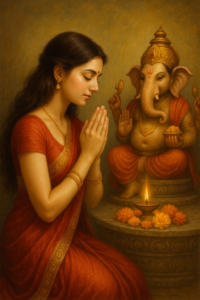
1.Sri Rāma: Maha shakthi! There are many doubts within these secrets of creation – and also great wonders. One of the most significant among them – have you seen the sculpture of Lord Vinayaka? How beautiful it is! I am aware that it was crafted by a skilled sculptor. But now I am in a state of curiosity and doubt – Who is the great sculptor that created the beautiful woman, like a living sculpture, praying to Vinayaka in ecstasy? Yet, there must be some transcendental power that has created this living sculpture. What is that power? And how is it to be discovered?
The world says that God created it. If God created it, then why do such differences exist among human beings? Why is one created strong while another weak, one wealthy while another poor? Could not God have given equal justice to all? Why do these distinctions exist?
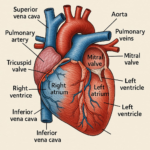
Man assigns different functions to objects and machines and uses them for his needs. But who has assigned the respective functions to the senses and organs necessary for the human body to remain alive? A farmer, for instance, uses a motor pump – which has the mechanical function given to it – to draw water from a pond into his field and distribute it to his trees. Likewise, in the human body, the living machine called the heart pumps blood and distributes it through the arteries to all the senses, organs, and cells. Who has assigned such a powerful function to the heart? Human intelligence has given the motor its mechanical function. But what intelligence has created the extraordinary living machines in the body, such as the heart and the lungs?


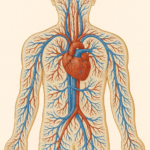

4. Māha Sakthi: Sri Rāma! You have expressed constructive doubts. Who assigned Dharmas to all those things? And why? I will let you know. Listen to me attentively.
10. The Divine Energy informs the Divine secrets.
Just as man, with the primary goal of obtaining fruit from a tree, has created and employed the law of a motor machine for his use, in the same way, Chit Shakti (Consciousness-Energy) creates physical energy with the primary aim of giving the Jiva the experience of sound, touch, form, taste, and smell, as well as the knowledge of pleasure and pain. The physical energy thus created provides the Jiva with knowledge of these subjects. This physical energy, possessing the functions of the senses such as eyes, hands, nose, and skin, imparts the corresponding subject-knowledge. For the nourishment and protection of the senses, organs such as the heart, lungs, and kidneys have been provided.
The sensual organs and limbs are the means to apprise the living being of the knowledge of various matters.
Physical energy possesses the material dharma (inherent property) of making objects visible to the eyes; hence, the living being (jīva) is able to see objects through the eye. Likewise, through the eye, he acquires knowledge of various forms. ‘Shakti’, by possessing the material dharma of making sound audible in the ears, enables living being ( jīva) to acquire auditory knowledge. Since the skin has the dharma of perceiving pleasure and pain, A being (jīva) attains the knowledge of touch. The primary reason physical energy possesses the dharmas (inherent properties) of all sense organs and limbs in the body is to impart the respective sensory knowledge to the jīva (living being).
Sri Rāma: Māha shakthi! Why does ‘energy’ (the power) give such knowledge to living being(jiva)?
11. The inseparable bond between mind and energy.
Mahā Māyā (maha shakti): O Sri Rāma! The mind and energy are inseparably connected. Because of this relationship, whatever thoughts or perceptions arise in the mind of a living being, the Chit Shakti (conscious energy) transforms them into experiences through material energy. Whatever desires a being holds, nature — through its inherent qualities — provides the means and instruments to fulfill those desires.
The intention of the mind reaches the Divine Energy as a command under the Divine Law, and the energy responds by manifesting the corresponding qualities. Thus, through the nature of one’s thoughts and desires, the living being experiences strength and weakness, joy and sorrow, illusion and faith.
From these worldly desires, energy creates the sensory organs as instruments to fulfill them
Sri Rāma: maha shakti! I long to know more profoundly the wisdom of nature which endows the Jiva with sensory knowledge and the faculties of the senses.
Mahā shakthi: Sri Rāma! Before knowing about Nature, which externally brings experiential knowledge of objects, one must first understand the knowledge of the Soul (Ātma), which is internal. By knowing the knowledge of the Self alone, the wisdom of nature existing in countless forms is realized.
12. Preaching the Knowledge of the Self (Soul).
The Soul (Ātma) is a conscious force. It is not a visible entity. Its mental knowledge manifests as physical energy (mass) in the form of Nature. In the universe, Nature, which appears as the knowledge of matter in material form, manifests according to the soul’s will and mental knowledge.
In the soul’s consciousness, the mind that conceives thoughts and the power that responds to those thoughts – exist as the knowledge of the soul. As the Chit Shakti (will power or conscious energy) is influenced by the thoughts of the mind, it generates the corresponding physical energy to provide the experience of the contemplated subject. In order to impart sensory knowledge, physical energy possesses various material properties (Dharmas of mass) and, as an attribute of Nature (Prakriti), delivers the knowledge of the subject to the mind. Thus, Nature acts as the exact reflection of the mind.
All the laws of substantial Nature are as per the law of mind.
Chit Shakti bestows the perception of knowledge. physical energy itself manifests as objective knowledge. Chit Shakti is the inner knowledge, whereas physical energy is the outer knowledge.
In the consciousness of the Self, the Jiva who engages in thought is called by the names Jivi (the living being), Dehi (the embodied one), Drik (the seer), and Vishayi (the experiencer). The power that, being influenced by mental thought, creates sensory knowledge is referred to as Chit Shakti (Consciousness-Energy), Maha Shakti, or Kriya Shakti. The physical power that gives sensory knowledge as experience is called, according to the context, Prakriti (Nature), Padartha (Substance), Dravyarashi (Matter), Vishaya (Object), Iccha Shakti (Power of Will), Jnana Shakti (Power of Knowledge), Deha (Body), or Drishya (Visible Form).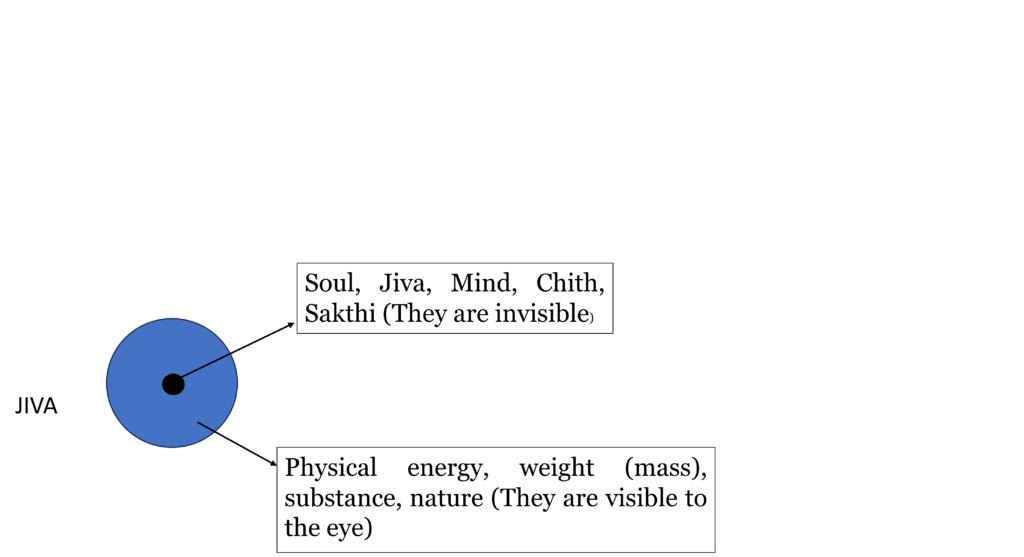
Chit Shakti is a transcendental force that fulfills the jīva’s will and desires. Here lies a subtle secret that must be understood: the jīva can recognize the thoughts formed in the mind, but it cannot perceive how Chit Shakti operates as a transcendental power in accordance with those thoughts. For this reason, the workings of Chit Shakti remain beyond the grasp of the jīva. It is not something visible to the eye.
Sri Rāmaa: Maha shakthi! While the energy co-operates to our feelings and wishes, why doesn’t it gratify the desires sought by mind?
Mahā shakthi: Sri Rama! Energy works as per the strength and faith of living being(jiva) mind. The stronger they are, the more powerful the energy will be.
Sri Rāma: Maha shakthi! How does the living being attain mental strength and confidence?
13. The process by which the living being acquires mental strength and faith of mind.
Mahā Shakti: Through long and continuous inquiry into a subject, the Jiva mind gains the strength of that inquiry and the strength of will.
The very law of the Jiva mental intention and mental resolve becomes the ordinance by which Chit Shakti (Consciousness-Energy) assigns the property of matter (substance) to physical energy.
Sri Rāma! Let me explain to you how energy works, by means of the inseparable bond between mind and energy; and how A being gets such mental strength. Later, I will explain the worldly desires.
The subject that the living being(jiva) contemplates grants the mind its respective strengths, whether favorable or unfavorable, without distinction. If the mind dwells on favorable thoughts for a long time, it gains favorable strength; if it dwells on unfavorable thoughts, it develops unfavorable strength.
Whatever subject the Jiva’s mind contemplates, Energy engages in action upon that subject. According to the viewpoint the Jiva holds, Energy acts in harmony with that perspective. When the Jiva, with a peaceful mind, makes favorable inquiry related to happiness, Energy acts upon that subject and becomes a favorable power. According to the strength of inquiry, Energy manifests the corresponding knowledge in the body. Through pleasant thoughts, the Jiva’s body gains radiance, health, enthusiasm, and joy. By contrast, when the Jiva entertains sorrowful and negative thoughts, Energy turns into a negative force, manifesting in the body as discouragement, dullness, and weakness. The power of inquiry in the Jiva’s thoughts is expressed by Energy through the face and the body. When the Jiva is filled with anger and fierce thoughts, Energy takes on a fierce form; the eyes turn red, and the body displays the corresponding disturbances.
When a man is cooking food, if his two hands are performing two different tasks-such as putting firewood into the stove with the right hand and kindling the fire with the left hand-these actions are not described as being done by the hands themselves, but rather by attributing them to the person as the doer, saying: “He is placing the firewood with his right hand, and he is lighting the fire with his left hand.” In the same way, for the actions carried out by the mind and energy, the living being is regarded as the doer. The living being, through his mind, is entertaining thoughts about subjects. Energy then performs the necessary actions for those thoughts and brings their corresponding results into experience. The mind and energy function as the powers of knowledge for the living being. The soul, which is their substratum, remains as the witness to all these actions.
Energy, through the qualities of nature, conveys the inner knowledge of the Jiva into his experience and expresses the state in which his mind is.
The radiance, enthusiasm, discouragement, anger, joy, sorrow, and other bodily changes that manifest as energy in the body arise because of the mind. The thought-knowledge that the living being holds is what the energy manifests in the knowledge of the body.
Whatever is present in the cause, that appears in the effect.
14. The action (karma) begins when the living being engages in thought about a certain subject.
Sri Rāma! For the living being, the very act of contemplating subjects is karma. It is only through the karma performed by the being that the fruit of karma, in the form of experiential knowledge of those subjects, comes into his experience.
The living being, while contemplating subjects, attains subject-knowledge as the fruit of karma in three stages. 1. The first stage is subject contemplation. In this stage, the subject does not come into experience. 2. By repeatedly reflecting on the same subject, Chit Shakti (Consciousness-Energy) performs the corresponding action and strengthens the power of inquiry. Through the strength of inquiry, the mental power concerning that subject becomes reinforced. 3. In accordance with the strengthened mental power regarding the subject, Chit Shakti (Consciousness-Energy), through physical energy, gives the subject-knowledge as the fruit of action into experience.
According to the power of subject contemplation and inquiry in the past, subject-knowledge comes into experience in the present as a result. According to the subject contemplation and inquiry of the present, it will come into experience in the future as subject-knowledge.
Whatever subject the mind contemplates, physical energy gives it to the mind as experience, saying, ‘This is what you are contemplating.’ What is given as experience is expressed in the body. What changes is only the mentality of the Jiva; but the Jiva itself does not change.
The Self abides as the witness of the thought that arises in the mind and of the twofold activities that follow thereafter. As a lamp has within it both heat and light, so too in the Self, the Jiva who contemplates abides as life, while the responding Energy, as Prakriti, manifests in diverse activities. The Jiva is invisible, yet its mental knowledge shines forth as the reflection manifest in the bodily form.
15. Energy that corresponds to the mental illusion and mental confidence of the jīva.
Whatever illusion or conviction the living being holds in relation to any subjects, the energy abides in those very laws of the subjects and brings forth the corresponding subject-knowledge into his experience.
According to the intention, mental illusion, and mental confidence held by the jīva, the physical energy assumes a corresponding form, strength, and knowledge.
When a living being (jīva) thinks about a certain matter, he forms a particular perspective on it. When he holds a favourable intention, he develops mental confidence. When he holds an unfavourable intention, he falls into mental illusion.
Whatever the mind contemplates as existing, whatever it believes to be true, and whatever it is deluded by ultimately, Shakti(energy) brings those respective states into the experience of the jīva through the attributes of Nature (Prakriti Gunas).
The jīva, through mental confidence, attains courage and enthusiasm. As a result of mental illusion, he experiences fear and anxiety.
When a person, hearing a sound coming from the bushes, holds a negative intention like “there is something dangerous there,” he becomes deluded and anxious. Then, his energy adopts bodily characteristics that express anxiety, such as sweating, shivering, or an increased heart rate. On the other hand, a person with a positive outlook, steadiness, and curiosity, when hearing the same sound, feels eager and fearless, driven by the desire to see what’s there – due to his mental confidence. His energy is reflected in the body with the same awareness. When the mind is filled with delusion and fear, Nature possesses the qualities of matter that express fear. When the mind has confidence and courage, Shakti carries the natural dharma that brings forth the experience of bravery. According to the intention of the jīva, energy takes on corresponding tendencies and manifests various attributes. The mental illusion or mental confidence of the jīva is physically reflected in the body.
Whatever kind of inner emotional knowledge the living being possesses, nature assumes that very knowledge in the form of a physical disposition, holding the material quality in accordance with it.
One should not dwell upon painful subjects, should not imagine events that have not occurred with the fear that “something might happen,” and should not brood with feelings of hatred toward others. Such thoughts weaken the mind. One must understand that when the mind becomes weak, its energy too will remain in a weakened state.
16. Drusyam (Substance, body) is dependent on Druk (Jiva, the living being and his attitude).
Sri Rāma! The radiance, joy, fear, fearlessness, anxiety, courage, enthusiasm, and such states that the Jiva experiences in his body are the result of his mental intention. Likewise, the reason beings possess the form and strength of their bodies is that, across many births, they have been contemplating their bodily strength and form. According to the power of their contemplation and the force of their mental intention regarding the body, beings have acquired their respective bodily forms and strengths.
For many lifetimes, living beings have been, without their knowledge, imagining their bodily form and strength with an inner intention. Accordingly, they are obtaining such physical forms and strength. All living beings appear in accordance with their mental form and mental strength.
According to the intention that the Jiva holds and the strength of its contemplation, Energy brings the corresponding actions into experience. The mind and Energy do not exist in separate paths; wherever the mind is, there too is Energy. On whatever subject the mind is placed, there Energy also abides; with whatever perspective the mind is held, Energy acts with that very perspective. As strong as the mind is, so strong does Energy function. When beings keep their attention on a subject for a short time, it is called concentration; when they maintain the same attention for a long time, it is called tapas (penance). Whatever subject the mind contemplates in concentration or tapas, the mental perspective on that subject becomes strengthened and affirmed. Accordingly, Energy manifests as the knowledge of that subject, taking on the law of nature.
Living beings have currently acquired bodily knowledge according to the bodily strength and form they have believed in. Beings who have developed strong mental faith in a powerful bodily form appear with the knowledge of a strong body. Beings who have developed weak bodily imagination and hold mental delusion appear with the knowledge of a weak body. All living beings seen in the world appear according to their mental knowledge, mental strength, and mental form.
The lion, elephant, monkey, rabbit, and human beings (whether strong or weak, intelligent or dull-minded) all appear according to their mental imagination, mental intention, mental strength, and mental form. Energy manifests in bodily form with the knowledge, strength, and shape that correspond to their mental will.
The mental knowledge of the lion manifests as bodily knowledge in its experience, and it expresses that knowledge to others. The mental knowledge of the rabbit manifests as bodily knowledge in its experience, and it too expresses its knowledge to the world.
The countless living beings existing in the world, each with their various forms, appear according to their mental modifications and mental knowledge.
When a thought in the mind becomes firmly established, it transforms into experience.
Whatever color, form, or strength is firmly established in the minds of living beings, that very color, form, and strength is manifested in their bodies.
Just as an artist envisions a picture in his mind before painting it on the wall, the jiva too is like an artist who manifests in the body the mental images he has painted within his own mind.
The matter that appears as physical energy is not the truth. According to the mental delusion of the living being, the Chith Shakthi (Consciousness-Energy), through physical energy, creates the illusion of matter. The unseen living being is the truth. The existence of the being is revealed by physical matter.
The person who sells cotton-candy makes different forms with it a tiger, a parrot, etc. The boy who buys them is pleased by those shapes, taking them to be real. But the seller knows the Truth. He has no difference among the shapes made by him, for the pleasure of children. The energy of soul, as per the request of mind, creates such illusion.
In the course of prolonged contemplation, the living being(jiva) arrives at a conviction regarding his strength and form. According to that mental conviction, energy remains as bodily knowledge. As the being continues contemplating about his body, the contemplation grows stronger. In accordance with the strengthened mental power and form, energy manifests bodily strength and bodily form.
When the jiva repeatedly contemplates positive thoughts over a long period, that positivity becomes strong in the mind, and accordingly, he experiences physical strength and knowledge. On the other hand, when the jiva continuously dwells on negative thoughts for a long time, that negativity strengthens in the mind, and through material knowledge, energy causes the jiva to experience weakness and ignorance. One should understand that the knowledge arising from belief in negativity is delusion, while the knowledge arising from belief in positivity is faith.
When the jiva holds the mental intention that he is strong, energy responds accordingly and manifests as strong bodily knowledge and strong mental knowledge. The jiva then possesses enthusiasm, joy, courage, and brilliance. The more faith he has, the more energy expresses itself with Dharma in his behavior, actions, personality, speech, and talent. His strong thought becomes a strong body in his experience.
The jiva, through weak self-praise, falls into delusion; but through noble self-praise, he attains knowledge rooted in conviction.
The mental knowledge of the jiva is internal, whereas the bodily knowledge that reflects it is physical.
When the jiva falls into the mental delusion of “I am weak,” a weak mental determination is formed. If the jiva holds on to this delusion, then over time, his energy takes the form of weak physical knowledge and weak mental knowledge. At that point, the jiva becomes filled with discouragement, a heart tormented by sorrow, and fear. His ignorance is expressed in his personality and in his behavior. The feeling of weakness manifests as the knowledge of weak material experience. When a person continues to hold on to such a weak thought for a long time, energy accordingly performs actions that result in weak bodily knowledge.
The jiva is not inherently weak, nor is energy weak. It is only because the state of mind becomes weak that bodily knowledge turns weak.
Even illusion ought to be realised as negative confidence and confidence as positive illusion. As word and feeling influence human beings, strengthened negativity has to be considered as illusion, whereas strengthened positivity as confidence.
One should not dwell upon weak thoughts; and if by chance they arise in the mind, they should be abandoned, and good thoughts should be cultivated instead.
Sri Rāma: Mahā shakti! If a small living being feels as if it were a big one, will it become big? If a weak person feels as if he were strong, will he become strong? Please clarify further.
Māha Shakti: The subject that the living being contemplates manifests only when it becomes firmly established in the mind. It is solely the knowledge that the mind firmly believes as “I am this” which comes into experience. Every living being, every human, appears in accordance with the faith they hold and the convictions that have become strong within them.
A person who has a weak body does not become strong merely by thinking “I am strong.” Only when he brings about change in his conduct and continuously performs strong actions and deeds does he arrive at the mental conviction of being strong. In accordance with that mental conviction, his energy grants him a strong body and mental strength.
A strong person does not lose his strength and become weak merely by holding weak thoughts for a short time. But if he holds weak thoughts for a long period, engages in weak conduct, and continues performing weak actions, then his mind arrives at the conviction that he is weak. Therefore, the living being appears in accordance with the mental conviction-knowledge he holds.
One should not be overwhelmed and disheartened by illusion. One should have ultimate faith. One should not be domineering with pomp and show. One should know that even faith itself is an illusion. Then one can shine as the embodiment of bliss, with worldly awareness.
One should not think that faith must be exhibited through the body. By realizing the knowledge of the Self, your energy reshapes itself accordingly.
The more the mind overflows, so is energy. If you are excited, energy too will be excited. If you are emotional, so is energy. Mind stirs energy. The more serene the mind is, the more tranquil the energy will be.
There is no need to be worried about negative thoughts. Even though some waves of negative thoughts come into the mind, they cannot influence those who have attained Self-knowledge.
For the mind to remain calm, without being disturbed or anxious about every small matter, some time each day should be spent in the experience of the Soul. To enter into the state of Soul-experience, one must sit in a peaceful environment. Then the body will relax. Likewise, every part of the body should be relaxed – the feet, knees, thighs, abdomen, stomach, heart region, shoulders, palms, neck, eyes, face, forehead, ears, and head – observing each and allowing it to relax. By slowly doing this is two or three times, calmness envelops the mind. While experiencing this supreme tranquillity, thoughts should be emptied for a while. Emptying the thoughts does not mean controlling them, but being neutral and free, without thoughts. If you are controlling thoughts, it means the mind is still at work. By remaining neutral, without attending to the thoughts, a still, supremely peaceful state of the Soul comes into experience. That state gives supreme peace and supreme bliss. By dedicating some time daily in the state of the Soul, one comes into the experience of the Soul. Then arises the realization: ‘I am not the body – I am the Soul.’ With repeated practice during these intervals, the mind remains in its highest state, unshaken by every small matter.
Another path to remain in soul-experience is meditation on the breath. Inhaling and exhaling are natural functions of the body. One should observe the inhalations and exhalations taking place in the body. In the course of doing so, the mind becomes peaceful. That state of peace leads one into the bliss of the Soul.
Sri Rāma: One is unable to walk properly. Due to ill-health one cannot sit or stand; one wanders like an insane person; one cannot even move his hand. Do they appear in their respective states of mind?
Mahā Shakti: Sri Rāma! That condition is not a mental state; The Jiva, having obtained the body as the fruition of his past resolves, must realize that he has either endangered it or has himself come into danger. rather, it must be understood that the living vehicle he has obtained has been accidentally damaged.
17. The Jiva, under the influence of past actions, is experiencing the fruit of karma in the present in a mechanical (inert) manner.
Sri Rāma! Because of a negative thought that the Jiva entertained for just ten moments in the past, in the present he suffers pain in the body and, being subject to that state, experiences sorrow in an inert manner. Likewise, by maintaining a peaceful nature and positive thoughts in the present, after ten moments in the future, the Jiva will become subject to corresponding joy and enthusiasm in the body and will experience them mechanically (inertly). The present cannot be changed. But the Jiva has the power to change the future. This very law also applies to the qualities of the bodies of beings.
In accordance with the bodily strength and bodily form that beings have acquired through many births in the past, in the present they possess the qualities of those bodies as mental knowledge. Bound by these qualities, beings inertly experience each state, saying, ‘This is what I am.’ Though beings are compelled to experience the present in an inert manner, they still possess the power to change the future. Because of this, as their mental knowledge and actions change, even small and weak beings transform into strong beings, taking on different forms.
The Jiva is experiencing heaven and hell in an inert manner. As static For the evil deeds performed in the past, the Jiva, in the present, undergoes sorrow and hellish states as the fruit of karma here itself on earth, in an inert way. For the righteous deeds performed in the present, there are powers and capacities that yield the fruits of joy and happiness in the future.
18. The change in the living being’s mental perspective due to visual influence.
Mahā Shakti: Sri Rama! The vision that appears in the world changes the mental knowledge of the Jiva. According to that mental knowledge, his bodily awareness changes.
The mind of the jīva, who is observing the objects in the world, becomes influenced by them. Pleasant environments, cool moonlight, and such scenes change the perspective of the observer and bring about a sense of peace. In the same way, other objects and experiences in the world also influence the observer.
In this world, the energy of others, who are the observers of the bodily changes of the visible person, becomes influenced.
In the world, when a person is visibly seen with anger, hatred, or joy, the mental feelings of the observer also change. That knowledge partly pervades him as well. Being influenced by the bodily changes of the other person, he too undergoes the same modifications and becomes subject to emotion. If the other laughs, he laughs; if the other cries, he cries – such mental changes arise in him. Accordingly, his physical energy too expresses those very modifications.
Although the anger, hatred, or joy present in another person may influence one to some extent, it does not have full effect on those who do not connect emotionally with such feelings. It pervades only those who become emotionally absorbed in them. When one merges with their feelings, that knowledge comes into experience.
In society, the close associates and the highly regarded individuals are imitated by others. And his own Behavior gradually transforms to resemble that person, at least to some extent.
People of a given region, in their minds, choose those regarded as the best in their society and unconsciously imitate them. In imitation, the voice changes first and most quickly. Likewise, the manner of speaking changes. In the same way, personality, behavior, strength, customs, habits, and facial expressions undergo transformation.


8 By observing and imitating the bodily awareness of those who are visible, people in a given region acquire the same facial expressions. Indians, Chinese, Americans, Europeans, Japanese, and Africans share the same facial traits within their respective regions because they develop mental attitudes and emotions similar to those around them in their environment. Adopting these facial characteristics, they assume corresponding bodily forms. In the Soul there is no difference, but due to differences in mental emotions, various kinds of facial expressions arise. The forms of beings follow their mental attitudes and emotions.




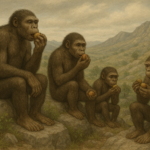
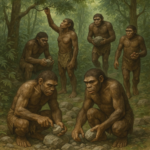
9.Scientists say that monkeys, Australopithecus, Homo habilis, Homo erectus, Neanderthals, and Homo sapiens were formed as the sequence of human evolution. From one stage to the next, their mental intentions and emotions changed. The beings that were transformed by mental emotions were imitated by their fellow beings. Their actions, the food they consumed, and the way they travelled also contributed to these transformations.




10.Divine beings like Hanuman, Shukracharya, and Sri Krishna, who understood the principle of energy, assumed desired forms through the power of their penance and accomplished their respective tasks. Hanuman used his power for the welfare of the world. But evil beings like Maricha and Shurpanakha, who used such powers for their selfish ends, brought harm to the world.
Some living beings change their form in order to protect themselves or to hunt. For example: the chameleon, octopus, and various insects.
Just as a man paints his house according to his mental inclination, so too the bodily principle of the living being changes according to his mental modifications. The being attributes to himself the corresponding qualities and forms.
Differences in facial expressions are found not only among human beings but also among every species of living creatures. Not all cows have the same facial expressions. Each cow possesses its own distinct mental form. If its bodily knowledge undergoes a complete change, it is described as another species. Only the one who tends them closely can recognize this.
Individuals adopt the mental knowledge prevalent in their respective regions and express it in return. They also take on the bodily knowledge of the person appearing before them as a visible image. Such social knowledge too becomes imposed and reflected in the body.
People, when they see differences in bodily nature, language, caste, attire, profession, and the like within society, regard others as strangers, thinking they are not like themselves. The reason for this is that their mind does not accept such states. That is the ignorance held by their mind. Therefore, the one who realizes his own ignorance is the true great knower.
Those who maintain distinctions of caste, creed, or class should be regarded as ignorant. The intention they hold spreads throughout society like a poisonous wind. By spreading ignorance, they become sowers of ignorance who bring disruption to society.
The person one sees, loves, or hates – that is not their true form. In reality, the jīva is a divine being, a manifestation of the divine substance.
Sri Rāma! The living being is of divine form. The energy that creates form, strength, and knowledge in accordance with the disposition of the being is itself the deity. Only through the mutual cooperation of both does any action take place.
He who believes that God exists beholds God and divine energy. He who believes that demons exist perceives demons and evil energy. Whatever state of mind a person possesses, such are the experiences he attains. Those who harbor evil thoughts that disturb the mind become madmen. Those of peaceful nature remain joyful. It is their very thoughts that make them human, that make them maniac, or that make them noble.
If the jīva’s mind is contracted, energy too remains contracted. When the mind expands, both energy and intellect also expand.
The visible matter has no true existence. The Self, which is its substratum, alone is the real entity. The Self exists, and that alone is of the nature of Truth. The one who realizes this is the liberated one.
Man dwells for some time in sorrow, and then, by changing its nature, dwells for some time in joy. At one moment he is strong, and at another, he is weak. That which is changing is not eternal. The one who is changing them remains eternal.
When the light of a lamp in a room spread onto the wall, if that light thinks, “I am the wall itself – its color, its strength, and its weaknesses,” how foolish that would be! In the same way, when the mind – which is a part of the soul’s consciousness – radiates its light upon the body, and due to ignorance thinks, “This body is myself; its form, strength, and weaknesses are mine,” and fears that the body might collapse – that is equally foolish. its true essence is of the nature of Jyoti (Divine Light). its foundation is of the nature of the Ātma (Soul). The one who remains fearless in this awareness is the truly enlightened one.
The body possessed by the living being is a coordination of the five elements (Pancha Bhutas). The five elements cooperate in the actions that the being has to perform with the body.
Sri Rāma: Mahā shakti! Why do the five natural elements help the jiva?
19. Explaining the souls in the universe that possess two kinds of powers.
Mahā Shakti: Sri Rāma! In the universe, there are two types of souls with power – the Ruling Soul and the Cooperative Soul. The soul that possesses greater mental strength and the power of penance is the Ruling Soul. The soul with less mental strength than that is the Cooperative Soul.
The Ruling soul (the influencing soul) possesses willpower and strong energy. The cooperative soul (the influenced soul) possesses the cooperative energy that fulfills the will of the Ruling soul.
Just as energy is influenced by the mental intention of the soul, the physical energy of the cooperative soul is influenced by the mental message of the Ruling soul and abides by the material law according to that message. By the command of the Ruling soul, the physical energy of the cooperative souls is endowed with material nature (substance dharma). Thus, the cooperative souls, possessing various such dharmas, exist as the five natural elements (Pancha Bhutas), rendering cooperation to the Ruling soul.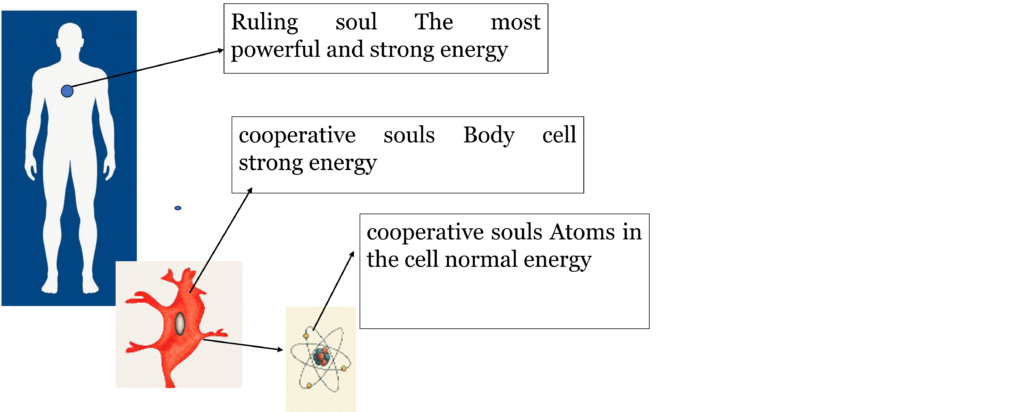
The mental message of the Ruling Soul goes to the cooperative souls as a divine message. In accordance with the divine law received, the cooperative souls assume and uphold various dharmas.
Making use of the physical energy of the cooperative souls as instruments, the Ruling Soul has obtained the body. The one who abides in the body as the living being is the Ruling Soul. The five elements (Pancha Bhutas) and the Ashta Vasus, who dwell in the body and carry out their respective functions, are the cooperative souls.
The body possessed by the living being contains countless five elements (Pancha Bhutas) and subtle organisms. The Chith Shakthi (Consciousness Energy) of the Ruling Soul attracts them and assigns various laws to their physical energy. With their cooperation, living being obtains a body and lives.
20. The Ruling Soul assigns various physical laws to the cooperative souls.
The consciousness energy (Chit Shakti), which is influenced by the mental will of the Ruling soul, attracts the cooperative souls. It controls their consciousness energy and also establishes rules for their physical energy. The cooperative souls function in accordance with the command of the Ruling power.
Based on the mental strength of the jiva, he possesses the respective strengths and is known as Bhutatma, Jivatma, Mahatma, or Daivatma.
The Bhūtātmā (Elemental Soul) possesses the nature of the five elements. The Ruling Soul, as the Jīvātmā, holds greater power and, as beings and humans, possesses the nature of the body. The Mahātmā (Great Soul) holds infinite power and, as humans and noble ones, possesses bodily knowledge and intellectual strength. The Daivātmā (Divine Soul) holds divine power, along with Divine bodily knowledge and infinite strength.
The Jivatma and Mahatma act as the Ruling souls for the Bhutatmas. For the Bhutatma, Jivatma, and Mahatma, the Daivatma functions as the Ruling soul.
The five elements (Pancha Bhutas) exist in various forms and strengths as Sub-Pancha Bhutas, Maha Pancha Bhutas, and Akhanda (Infinite) Pancha Bhutas, each possessing distinct powers and dharmas. The Sub-Pancha Bhutas exist in atomic form as electrons, protons, neutrons, and similar particles. Since the Sub-Pancha Bhutas serve as the energies and cooperative souls for the Pancha Bhutas, the Pancha Bhutas, with their support, acquire the qualities of space (ākāśa), air (vāyu), fire (agni), water (jala), and earth (solid matter – bhūmi). The Maha Pancha Bhutas take form as the organs of the body with the cooperation of the Pancha Bhutas and Sub-Pancha Bhutas. The great Pancha Bhutas take form as the sun, moon, planets, and stars within the cosmos (Brahmāṇḍa), through the combined support of the Pancha Bhutas and Sub-Pancha Bhutas.
Due to the material law assigned to the physical energy of the Bhutatma, the jiva remains subject to that principle and performs actions in accordance with its corresponding dharmas. His mind and consciousness energy (Chit Shakti) remain unmoved and confined within those specific functions.
The Ruling power assigns various natures (dharmas) to the physical energy of the cooperative souls in the form of electromagnetic force, gravitational force, strong force, and weak force. As a result, the physical energy within the Bhutatmas and Maha Bhutatmas holds the dharmas of the five elements (Pancha Bhutas) and provides the administrative soul with experiential knowledge of sound, touch, form, taste, and smell, along with sensations such as cold, heat, hardness, softness, and more. Even for a jiva to blink an eye or take a single step forward, the cooperation of these forces is essential.
Sri Rāma! The Soul is the base in every atom, which is visibly manifested, with its physical energy and its employment.
The Jiva inherently possesses energy. Just as one person wears a garment and thereby conveys its form to another, so too the material nature imparted to the Jiva’s physical energy provides sound and touch knowledge to another Jiva. As a garment depends on the person wearing it, physical energy depends on the Jiva and gives subject knowledge.
Sri Rāma: Dharmajā (Maha shakti)! How did the Ruling and cooperative souls come into existence? How did their birth take place?
21. The Existence (Being) of Soul.
Soul has neither birth nor death. It is purely dynamic, permanent, true and ancient. Even though the body perishes, the soul does not perish. Soul is omnipotent, without beginning and end. It exists in the present, in the past and in the future. It pervades everything. It cannot be destroyed. It is unique. Its existence is stable and firm. It is present in all things substances, and living things, interwoven relentlessly. It is never lost. It is sans dirt. It is pure. It is equal to nectar. It is the embodiment of Bliss. It is self-illuminating. It makes the entire creation dynamic and shining. It is only one, complete, dwells in everything, and witness to all. It shines as the thread in the garland and shines in everything interwoven continuously. Being one and only, it is the high command of everything. It is the light of all lights. It shines and makes all others shine. It is known as ‘I’.It is good-shaped, undivided, undestroyed, partless, infinite, uncomparable, eternal, independent, base for all, high command to all, self-sufficient, all-pervasive, shelters all, embodiment of Bliss, and shines in all living things. This formless, unmanifested and unique being is called Sath, and Soul (Atma).
In the beginning of creation, the Jiva existed as empty space (Śūnyākāsa), as consciousness-space (Chidākāsa), formless and without a body. Until the Soul’s mind generates thought, it remains inert, without physical energy. Without space, time, dimension, or evolution, energy abides unmoving and formless within the Soul. The moment the mind conceives the notion ‘I have a body’, then, according to the power of inquiry, Chit Shakti (Consciousness-Energy) becomes active and generates physical energy. The physical energy thus generated, bearing material properties in accordance with mental knowledge, gives the mind the experience of a body. In its initial stage, the body thus obtained is inert, formless, in the atomic state, extremely subtle and imperceptible. Only when the Jiva receives matter as body do space, time, dimension, and evolution begin for its physical energy. The Soul has no time, cannot be measured. Whatever the mind contemplates within the consciousness of the Soul appears as experiential knowledge in the form of nature. The matter that appears as an object of knowledge alone possesses measurable dimension.
The Jiva’s Chit Shakti possesses intelligence. The physical energy (Prakriti), which gives subject knowledge, also possesses intelligence.
The living being once remained motionless in empty space. When the delusion arose-“I have a body”-Chith Shakthi (Consciousness- Energy) made the being perceive the material law that reflects this bodily delusion. In this way, the souls that, through such bodily delusion, assumed matter as their body became Elemental Souls. Their energy, without any order or law, wandered throughout the universe in the form of dust and particles.
In the atomic state, for the jiva that has acquired the sense of the body, the mind becomes the heart center (hṛdaya sthāna). Moving with mental intention, the energy that reveals bodily knowledge resides as the seat of power. The heart regulates the energy that causes movement. The disturbed mind is brought under control by its own energy. Mind and energy, through mutual command and cooperation, attain a state of stillness and balance.
The Bhutatma, which has come into existence as matter, possesses physical energy that cannot be destroyed by anyone. The soul is indestructible, and its physical energy—matter—is also indestructible. For the welfare of the world, the material nature (padārtha dharma) of this physical energy is modified. In order to maintain the order of creation, the power of the administrative soul assigns various natures (dharmas) to the energy of the Bhutatma in the form of Sub-Pancha Bhutas and Pancha Bhutas.
The jiva, who is in the form of Bhūtatma, gets the will-power, by inclination and non-inclination, and by the strength of enquiring things. As per his will-power, Bhūtatma gets strength as the administrative soul.
To the Bhutatmas (elemental souls), which exist as dust without any order, the Chith Shakthi (consciousness energy), according to the mental message of the Ruling Soul, assigns the five-elemental properties to the physical energy of the Bhutatma.
The Jivatma (Ruling Soul) sends its mental intention as a message to the Chith Shakthi (Consciousness Energy). The Chith Shakthi attracts the Bhutatmas and, like a divine law, assigns them various dharmas. The Jivatma, like a creator, shows the energy its goal.
For every soul, a law of nature is established so that its energy remains stable. Through the natural laws assigned to the Bhutatmas, their mentality remains steady, and their energy assumes various functions (upaadi).
Just as a doctor, by virtue of his intellect, possesses medical knowledge as his attribute, the Bhutatmas are dependent upon qualities, and their energy itself is expressed as those qualities. If a being is endowed with the element of fire, then its energy exists as fire. They exist as one substance, bound by a mutual relationship of dependence and support. Soul-consciousness is life, and energy is the movement of life. Energy governs the mental modifications of the Bhutatmas and ensures they remain within the designated quality. Each Bhutatma embodies a particular quality and imparts the corresponding subject-knowledge.
Although soul-consciousness itself cannot be measured, the mental strength of the soul can be measured. The state in which the soul’s mental knowledge exists can also be measured. The material energy of the soul, allocated in accordance with the law of creation and the welfare of the world, is seen within a specific regulation. The Bhutatmas, as cooperative souls, appear in the laws of the five elements assigned to them. The physical bodies of all beings manifest in accordance with their mental knowledge and mental resolve.
The soul, which is invisible to the eyes, is the true reality. The physical energy, which appears to the eyes and provides experiential subject-knowledge to the soul through the law of matter, is not real. That physical energy is only Māyā, creating illusions of various subjects for the soul.
The soul exists in the void. The physical energy possessed by the soul also exists in the void. According to whatever subject-conception the mind holds, the governing power provides the facility to perceive that subject-knowledge, to make it manifest, and to know the nature of matter. For the sake of action, the governing power manifests matter so that the state of knowledge of these can be understood, so that the soul may realize its own state, and recognize the states of others. It manifests matter to know under which laws the five elements exist. Likewise, to recognize subject-knowledge and subject-defects, the power manifests matter so that the soul may discern its higher and lower states and resolve them.
The Jivatma, along with its Chit Shakti, exists as a divine body. The Chit Shakti provides the jiva only the experience of ego-consciousness (aham bhāva). The sensory knowledge such as sound, touch, form, taste, smell, softness, hardness, and similar experiences are imparted through the Pancha Bhutas, which establish the bodily nature (deha dharma) and thereby enable the jiva to experience those respective objects.
The Chit Shakti creates physical energy and, through it, provides the complex experience of material substance. The energy of the five elements possesses the qualities of nature. The illusion (Māyā), existing in the form of nature, makes the mind experience both the soft and tender sensation as well as the complex and harsh sensation. By impressing these qualities upon the mind, Māyā causes the mind to respond in accordance with them. This illusion stirs movements within the living being, fascinates him, and keeps him under its command.
The Ruling Soul, possessing the great illusion (Mahā Māya), influences the cooperating souls who possess the lesser illusion through that very Māya.
As man provides traits to things by the strength of his hand, which is his physical energy, the Chith Sakthi, which has the administrative soul, provides the dharmas of the five natural elements to the energy of Bhutatmas.
Every soul possesses both a divine body and a physical body. The Bhutatma, along with its Chit Shakti, exists as the divine body. The upādhi (instrumental) law assigned to its physical energy manifests as the physical body.
The ruling soul, which is the individual soul (Jīvātma), is the seer; and according to the vision of the seer’s mind, the elemental souls (Bhūtātmās) appear visibly, diverse attributes.
The ruling soul (Jivatma) possesses the will for action (kārya saṅkalpa). The Chit Shakti, as the executor, holds the willpower (saṅkalpa śakti) to carry out that intention. The cooperative souls (Bhutatmas) function as the implementers of that will, executing the intended actions.
The Jivātma and the Bhūtātmas share a mutual relationship of dependence and cause-effect connection. The intention of the Jīvātma goes as a message to the Bhūtātmas, which are the five elements, and they perform their respective functions in accordance with the message they receive.
The five elements (Pancha Bhutas) possess the bodily knowledge and characteristics that express the mental intention (mano bhāva) of the Jivatma.
Just as clay (matter) serves as the basis for a potter to mould the form of a pot, the five elements (Pancha Bhutas or Bhutatmas) serve as the basis for the administrative soul (Jivatma) to express its mental modifications (mano vikāras).
According to the mental strength and form conceived by the Jīvātma, the power of the five elements (Panchabhūtas) assumes bodily attributes that express those strengths and forms. The five elements cooperate in making the mental knowledge of all beings appear in their bodily form.
Depending on how the Jīva perceives himself, he assumes different forms and qualities—whether as an animal, a bird, a strong one, a weak one, a noble person, or even a god. There is no being that is not divine. Just because a human has little knowledge, he does not cease to be human. Likewise, even if the Jīva’s mental knowledge is limited, he does not cease to be a Jīva. In every being exists the very essence of the Divine. Because the Jīvātma thinks of himself as limited, he appears limited in bodily knowledge. But the moment he realizes and believes that his power is all-pervading, his power becomes Divine Power.
The responds Jiva, in the consciousness of the Soul, together with the responsive energy, abides as the Prakriti-Purusha (person). From the union of Prakriti and Purusha, subject-knowledge arises.
Whatever subject the Jīva unites with, those very subjects manifest.
For this body, which is like a sculpture, the ruling soul (the Seer) is the sculptor, and the five elements are like stones that, according to the Seer’s mental vision, transform into the sculpture.
Sri Rāma! The organs of action (karmendriyas) and the organs of knowledge (jñānendriyas) in the physical body of the living being are like a divine yoga of prosperity that fulfills his intentions and desires. The living being, united with his power, exists as the ruling soul (jīvātma), as a divine body, and as a divine substance within the physical body. Through the senses, the living being acquires knowledge of subjects; but he himself is not the senses. The senses are the wealth he possesses. Just as a person receives information through the receiver of a telephone and expresses thoughts through the microphone, so too the living being expresses his mental thoughts through the voice, listens to others’ thoughts through the ears, and walks to the place he intends through the legs. The organs of action and the organs of knowledge are the sensory wealth through which the living being perceives subject knowledge. Possessing this sensory wealth itself is a yoga of the living being, and these yogas manifest according to his mental intentions.
Yoga means obtaining what was not there, possessing something, or being united with something. Those who have yoga experience its enjoyment. To possess a house is house-yoga; by having a house, one enjoys its benefits. To possess wealth is wealth-yoga; by having wealth, one enjoys its benefits. To possess a vehicle is vehicle-yoga; by having it, one enjoys its benefits. The living being has obtained the body only because of his desire for subjects. Possessing a body itself is yoga; by having it, he experiences its enjoyments. For a bird, having wings is yoga; through them, it enjoys soaring in the sky.
Sri rāma! Nature in the form of the body is like the garment that the living being wears. It is like a dwelling that provides stability and protection. It is like a vehicle that carries the living being on his journey.
22. The Three Kinds of Jiva’s Body.
Nature, which functions as the body of Jiva, possesses 3 types of body knowledge. They are:1) Divine body 2) Body consisting of the five natural elements 3) The body of the Jagath (universe).
1. Divine Body: The living being who exists within the physical body along with the subtle body is called the Divine Body. In the Divine Body, the living being holds bodily awareness, mental impressions, desires, and determinations. He retains past memories. The living being, endowed with soul, mind, and Chit Shakti (conscious energy), possesses the Divine Body.
Physical Body: The physical body made of the five elements is the resolution-based yogic body that fulfills the mental thoughts and intentions of the jiva who possesses the Divine Body. The jiva travels on Earth using this physical body as his vehicle. For the Bhutatmas, the material dharma assigned to them functions as their physical body. They travel by using the energy of the five elements assigned to them as their vehicle.
Cosmic Body (Jagat Sharīra): The Earth, Sun, Moon, planets, and stars that serve as the base and support for the physical body that fulfills the jiva’s intentions are the Cosmic Body. The Earth is the place for living. The Sun, Moon, planets, and stars are the basis for the jiva’s existence. The jiva possesses all these as the Cosmic Body. In this way, the soul possesses knowledge of three types of bodies as its wealth.
Sri Rāma: Mahā Śakti! The living being has attained bodily knowledge through mental conception. I have clearly understood that this is supported by Shakti and the five elements. But how did he acquire the senses through desire and mental determination? Likewise, among beings, each one possesses a particular bodily knowledge and sensory knowledge. Some have bodies that crawling, some have bodies that walk with limitation, some have bodies capable of moving with great speed, and some have bodies that can travel with wings. How did beings obtain these diverse powers? What is the cause of these differences?
Sri Rāma! Whatever kind of energy the jiva strives for, according to his mental strength and the strength of his effort, the physical energy exists with bodily knowledge corresponding to that pursuit.
23. According to their resolve, Jiva’s obtain bodies and sense organs.
The Jiva’s are each making use of the strength they possess and the power of the five elements in their own distinct ways.
When a being attempts to walk, the five elements function as the power of walking. When a being attempts to crawling, they function as the power of crawling. When a being makes the effort to fly, they manifest as the power of flying. In accordance with their will and the strength of their effort, beings receive different powers and strengths.
Sri Rāma! The organs of action such as legs, hands, and wings, and the organs of knowledge (Jñānendriyas) such as eyes and ears, have been obtained by the beings as instruments to fulfill the particular mental desires for which they strive.
Because of the jiva’s repeated efforts to walk, the Chit Shakti (Consciousness-Energy), through the five elements (Pancha Bhutas), arranged legs as instruments to fulfill that desire. Similarly, through countless attempts to fly in its daily life out of necessity, the Pancha Bhutas, in accordance with the jiva’s mental desire (mano vāñcha), transformed into physical energy possessing the dharma of wings to fulfill the jiva’s will.
The five elements, for the purpose of the action willed by the Jiva, possess the corresponding sensory laws that are suitable for the success of that action. All the material laws within the body exist with the aim of imparting subject knowledge.
Wherever the Jiva places his mental vision, there the energy abides; for whatever he strives, the energy performs that action. With whatever perspective he stands, the energy holds that knowledge. Likewise, the energy conveys its message to the Jiva and influences him. In whatever direction the Jiva guides the energy towards Dharma, the energy assumes that Dharma. The energy accepts the message of the Jiva. The commands of energy reach the Jiva, and then he acts accordingly.
According to the strength of effort with which the Jiva strives, the Chit Shakti draws the Pancha Bhutas towards it. The attracted elements then assume various qualities as sense-instruments (indriya-sādhanas) that fulfill the mental objectives of the Jiva.
24. The Physical Structure of Body.
Mahā sakthi: Sri Rāma! The jiva, existing as mere matter without a body, through its mental resolve obtains body and the senses. I shall explain this to you — listen with full attention.
On earth, when the jiva, existing as an inert substance without a body, makes an effort to move, ‘Shakti’ creates the bodily principle necessary for the jiva to move.
The formless Jiva existing on Earth, through its various resolves and mental modifications, gradually acquires mental strength, and over millions of years gains the power of a ruling soul . When the Jiva, having attained this power, attempts to move, the Shakti draws the Pancha Bhutas in response to its mental resolve and grants bodily knowledge as the instrument for movement. The degree of physical body obtained by the Jiva is only in proportion to the extent of mental strength it possesses in its effort to move.
According to the mental strength of the jiva, energy operates in three stages. Initially, there arises the will to move. With repeated attempts to move based on that same intention, over time the thought “I can move” becomes stronger. That strengthened thought becomes karma bala (the force of action). In accordance with this karma bala and the power of inquiry, Chit Shakti initiates action and, through the five elements (Pancha Bhutas), yields the result of that karma. In alignment with the jiva’s mental intention, energy forms a body suitable for movement. The body thus obtained in the initial stage for the purpose of movement is the sūkṣma bhoutika deha (subtle physical body). This subtle physical body possessed by the jiva appears, in the early stages of evolution, as sūkṣma jīvas (subtle living beings).
The Jiva’s mental strength and self-belief act like a powerful magnet, drawing the Pancha Bhutas, making them its own energy, and establishing order like a mighty weapon.
The Jiva, which initially possesses only a limited subtle physical body, gradually acquires a stronger gross body over time through its variations of will and attempts to move. According to the strength of its mental conception, the Pancha Bhutas are attracted, granting it greater bodily strength. The mental evolution of the Jiva is the very cause of its bodily evolution. When the Jiva matures mentally, it gradually evolves physically as well.
Every action that takes place is influenced by Energy. The Jiva is being influenced. All actions occur through the mutual cooperation of the Jiva and Energy. One of the essential attributes of Energy is Icchā Shakti (the power of will), which instills in the Jiva the desire to move. Because of this, the Jiva is influenced to perform various actions. Jñāna Shakti (the power of knowledge), manifesting as intelligence, inspires the Jiva towards those actions. Thus, Energy influences the Jiva, and the Jiva, in turn, influences Energy, thereby attaining knowledge of subjects.
The Chit Shakti bestows strength upon the five elements, transforming them into the great elements (Maha Pancha Bhutas), and thereby provides the sensory power that enables the jiva to move.
As the jivatma tries to move fast, energy gives jiva the means to move fast, in the form of sensual efficiency. For it, it makes various regulations to the five natural elements. Those rules give them various dharmas, as legs, gills and other limbs. Accordingly, the living things, with the co-help of the senses of action (karma), have the efficiency to go forth fast. As per the strength of their endeavour they form themselves into small and big living things, like fish, tortoise, etc.
Raw iron, when given a suitable shape and property, can be used as a wheel for a vehicle, as a pot to hold water, or as a knife to cut fruits. Just as iron takes on whatever property is imparted to it, in the same way, the Ruling power assigns to the Bhūtātmā’s physical energy and the Mahā-Bhūtātmā’s physical energy the appropriate material properties, the laws of the Pancha Bhutas, and the attributes of the senses, thereby appointing them to their respective functions.
The resolve of the mind and the effort of action together constitute karma. The strength of the senses is obtained in accordance with the power of one’s karma.
Sri Rāma! Just as two individuals go on a journey with each other’s cooperation, so too the jiva, desiring to walk, and the five elements that assist in walking, move together in harmony. The experience gained by the jiva is also shared within their scope by the five elements and the great elements (mahāpañcabhūtas).
The five elements within the body influence the jīvātma to consume food. The food taken is distributed to the elemental souls-the five elements, to the great five elements in the form of living cells, to the organs, and to the senses. Each of these, at its own level, partakes of the food and experiences satisfaction.
The enjoyments that the jiva (soul) experiences through the body are also experienced by the five elements. As a result, the food consumed by the jiva influences the five elements, which in turn manifest within the body as anger, hatred, sattvic qualities, and harmony.
For the jiva that had not yet developed eyes, the spark of light waves falling upon its body gave rise to a mental desire in the Jivatma to see the visual clearly. In accordance with that mental desire, the Pancha Bhutas manifested the knowledge of vision (netra jñāna) and formed the structure of the eyes, enabling clear perception of the seen object.
The Chith Sakthi attracts the five natural elements, when the jivatma is inclined in his will to see the light which appears vaguely in it, as per its strength of karma. According to the information received from the message sent by the Chith Sakthi (the will power), the five natural elements possess the necessary optical knowledge and structure, which is the sense of knowledge (jnana) as solution.
The jīva makes a resolve, and ‘Chith Shakti’ provides the formula to fulfill that resolve. The five elements then act in accordance with that formula.
Chith Sakthi gives the efficiency of substance to the five natural elements and senses suitable to their respective role.
When sound waves resonate for the jiva, according to its mental resolve to hear the sound clearly, the five elements are influenced and thereby take on the formation of the ear, which enables the perception of sound.
The senses of karma (action) and those of knowledge (jnana) are the results of the desires of will, as per the mental inclination of the jiva.
As the living being acquires, by dint of his will, legs, hands, gills etc limbs, by its will, it gets the necessary instruments and weapons in the form of limbs, for their hunting, by its will.
In the process of hunting its prey, the living being tries to catch it. Then its own mental inclination reaches the five natural elements, as the very message. Accordingly, they possess the form of a paw with claws. The cat gets the knowledge of its paw, by its previous will.
The jiva performs some actions repeatedly, to meet its needs. In that process, by the strength of practice, his will power increases. If the will/mind power is strong, the Chith Sakthi provides related physical power.
The living being attains whatever it strives for through three stages, according to time and place:1. Performing the karma (action), 2. The karma gaining strength and leading to a corresponding activity, 3. The result of the karma coming into experience in the course of time.
The cat’s previous attempts to catch living beings have now become the present knowledge of its claws. Just as a hunter is given sharp knives, so does ‘Shakti’ provide the claws necessary for the living being according to its need.
By multiple attempts, the living thing gets the strength of practice and of penance. The energy, which follows the strength of penance, has the action with the same strength and appoints the five natural elements in their respective tasks.
The sensual organs which the living things possess now have been acquired by the result of their karma (action) done in their previous birth.
The jiva has acquired the senses of action and of knowledge in the present, as per his will and strength of karma performed in past. The action done in the present leads to the knowledge of body in future, on the basis of the strength of karmas, as the fruits of karma.
In every living thing, its mental ideas and willing are manifested in its body.
The living things have to experience their senses, as “jada,” in a static position. They will undergo change in future, as per their deeds in the present.
The mental resolve of the jiva itself shows the direction to energy. Energy travels in that very direction and leads the five elements (pañcabhūtas) to move along their respective paths.
Even before the bird acquires wings, while it is still a small creature, it tries to jump up and down in an effort to survive. In accordance with its perspective and need, the five elements possess the appropriate power of wings to fulfill that need. The wings of the bird serve as instruments to fulfill its mental resolve.
In its repeated attempts to fly, the jiva attains the strength of karma. This strength of karma itself possesses the power to attract the five elements. The attracted five elements then take on the dharma of wings.
Just as pearls are strung into a garland with the support of a thread, so also, based on resolves (past impressions), the jiva’s sense organs (jñānendriyas) and organs of action (karmendriyas) are arranged like pearls.
The aim of the jiva, the aim of Shakti, and the aim of the Pancha Bhutas are not separate. In accordance with the mental aim of the jiva, Shakti, the Pancha Bhutas, and the Maha Pancha Bhutas all work together with a unified purpose of fulfilling that aim.
25. The Sensual organs and limbs transform into powerful ones.
Sri Rāma! The jiva, having obtained the sense organs (jñānendriyas) and the organs of action (karmendriyas), as it uses those organs extensively, they gradually transform into stronger and more powerful faculties.
The limbs and the knowledge of the sense organs (indriya jñāna) obtained by the jiva as the fruit of its karma are, in the beginning, limited in power, subtle, and weak. As the jiva repeatedly uses them and, through continuous practice of various actions with them, its state of weakness is removed, and they are transformed into strong and powerful faculties. The more a particular sense organ is used, the more its weakness disappears and strength is added to it. The notion that something is difficult or weak is merely a delusion of the mind. In the process of performing actions, this delusion is removed, thereby strengthening the power and confidence of the mind. According to the strength of this mental confidence, the physical energy bestows strong organs, empowered senses, and bodily knowledge.
The living things improve their will power, by dint of the strength of their practice and strengthens the knowledge of senses.
As the living being walks and frequently uses its legs, its own energy and the energy of the five elements operate primarily in those actions. Due to the continuous use of legs in walking and in running while hunting, the weakness gradually disappears, and the legs evolve into stronger ones.
As the living being continuously uses its legs, the weak perspective it once had toward its legs fades away, and it develops a strong outlook. According to this strengthened perspective, its legs undergo transformation and become strong. Correspondingly, the body connected to them also becomes stronger. It is through the process of performing actions that the living being strengthens its sense organs and limbs. Thus, a small creature evolves into a strong being with a powerful body.
As the Eagle, while flying high in the sky, constantly strives to see its food by extensively using its eyes, its mental resolve to view distant objects influences the Panchabhutas. With the aim of revealing faraway objects, they continuously perform that very function and thereby endowed the Eagle with the strong faculty of vision. Accordingly, the Eagle attained powerful visual knowledge. Likewise, through the frequent use of its legs and wings, they were transformed into strong organs of action (karmendriyas). Whatever the mind focuses on the most and strives for, energy works in that activity and strengthens it.
The Eagle, by enhancing its mental strength and self-confidence throughout its life, develops into a powerful Harpy eagle with strong wings, strong legs, and powerful eyes.
The energy travels according to the mental faith of the living being. It is the mental strength of the living being that moves the energy and establishes various dharmas.
Sri Rāma! If any living being, on Earth, acquires any kind of sensual power, it means that it is acquired by dint of its endeavour and strength of practice. Without them, nothing can be begotten. Endeavour makes the jivas get the strength of sadhana and of karma and reap the fruits of karma (action).
The very form of effort is karma. As a consequence of the strength of such karma, the sense organs acquired by each living being are gradually becoming strong.
It is through the practical efforts of daily life that a living being’s organs of action (karmendriyas), sense organs (jnanendriyas), and bodily capacities develop. The more one strives, the more the strength of practice increases. Through this strength of practice, the weakness of mind called “difficulty” is removed, while mental strength and self-confidence are strengthened. In accordance with this, the knowledge of the body and the senses is established.
When the mental strength of a living being changes, its very world changes. An eagle, through the power of its practice, transforms into the mighty Harpy Eagle, altering its knowledge, form, and appearance, and thus seems to emerge as a different creature. In the soul itself, there are no distortions or forms; it is the strength and knowledge that assume distortions and forms. The mental transformation of the being is reflected in its physical body. For example, in the course of hunting, a cat, through its mental strength and maturity of knowledge, evolved in bodily awareness into different species such as a tiger or a lion.
In its attempt to fly upward, the hen has wings only in proportion to the strength of its practice. Because it does not strive to fly further, it remains in the limiting illusion that its power is only this much. A living being attains only that much bodily strength as the power it applies through its effort.
The five elements present in both the hen and The eagle are the same. The five elements themselves do not possess strength or weakness. It is the systems operated by the five elements that are either strong or weak. The reason their sensory systems exist in their current states is due to past efforts. The hen and the eagle, according to the strength of their past karmas, currently exist in their respective bodily states.
The intensity of effort determines the strength of karma. According to the strength of karma, energy attains the power to act. Based on the power of action, the corresponding result follows.
In the course of hunting, the cat acquired a stronger body. As it kept running and hunting its prey, by using its legs more, its legs and body gained strength and it evolved into a wild cat. In the same way, the wild cat further attained strength and transformed into different forms such as the cheetah, the leopard, and the lion. The soul itself did not change, but its mental disposition and mental strength transformed. A living being is called by different species because it acquires different forms and strengths.
Gold is in various forms, one as a ring, has its work, and then as a necklace. Though the forms differ, the gold in them is one and the same. Similarly, though the forms of living beings is different, the ‘life’ in them is one.
It is the faith of the living being that keeps the five elements in order. The five elements, following its command, act as strong knowledge-power or as weak knowledge-power for the body.
A living being that, through a past mental resolve, acquired the bodily knowledge to climb one step, now possesses the present ability to climb one step and can also attain the capability to climb five steps in the future.
A Jiva that can lift 5 kilograms with its effort in the present increases that strength life, in the next life and gains the ability to lift additional weight. A being that finds walking difficult, through persistent attempts, strengthens its faith and gradually transforms into one that walks swiftly. Thus, across many births, the being develops its strength and evolves into stronger forms of life.
Through the repeated acts of lifting weights millions of times, ants have gained the strength of karma and developed the mental strength and confidence to effortlessly lift weights a hundred times heavier than themselves. Their consistent effort and power of practice are the reasons they possess the substance that enables them to lift such heavy loads. In accordance with their effort, they have attained mental strength. The five elements, guided by that mental strength, possess the appropriate material property (padārtha dharma) required to accomplish that task.
Many believe that ants can effortlessly lift heavy weights because their genes are strong. But one must realize that the strength of their genes is the result of the efforts they had made in the past. The knowledge-power that a being acquires through its actions manifests as strong material knowledge in the form of genes. The energy safeguards the genes acquired by the being, transfers them to its lineage, and enhances them further.
Just as ants build their dwellings according to their knowledge, birds build nests according to their knowledge, and humans construct houses according to their knowledge, in the same way, the governing soul (jīvātma) possesses bodily knowledge in accordance with its mental knowledge. Subtle beings have bodily knowledge corresponding to the strength of their mental power. Animals, too, possess bodily knowledge in proportion to their mental knowledge. Human beings, based on their individual mental knowledge and strength, possess different forms of bodily knowledge. Likewise, in the higher worlds, the gods possess divine bodies in accordance with the strength and refinement of their mental knowledge.
26. The Journey of the Jiva: Assembling Strength.
Sri Rāma! A living being gains strength according to the state in which it exists. A human does not develop and display his talents only in this present birth; he performs his actions with the knowledge he has accumulated over many lifetimes. In this life, according to the strength of his karma, he acquires further power. Both past knowledge (samskāras) and present knowledge support him. The knowledge acquired by the soul is preserved by Nature, and then returned back to the soul when needed. For a talented person, past knowledge helps him to attain perfect knowledge even in this very life. A lion has not learned to hunt only in this present life; it is impelled by its past knowledge. Similarly, the bird has not learned to build its nest only in this life; it has been perfected through countless births. Now, that past knowledge supports it in the present. The power recalls past samskāras and inspires the being to perform the corresponding actions.
The living being, possessing a divine body, is transforming the physical body from its existing state to a higher state. The being is becoming the cause for the body to evolve from an ordinary gross body to a divine body.
27. Energy Works Beyond the Senses, According to the Confidence of the Jiva.
The weak ideas in man should change. He should cultivate the mental strength that makes him think that any task is not so difficult. To achieve this, practice is very important.
Even a person weighing 70 kilograms may fail to lift a 50-kilogram weight because of the mental illusion that it is too heavy. By repeatedly attempting to lift such weights, that illusion is removed. His outlook toward it changes, and the confidence grows that it is not so difficult. Once faith and confidence are gained, the person can effortlessly lift any weight and is able to perform any task with a positive attitude.
Without endeavour, we cannot remove the illusion from our mind. Thus removed, the secret of knowledge is revealed.
There can be no physical knowledge, mental knowledge, or intellectual strength that goes against one’s willpower and self-confidence.
Our ancestors realised the secret of confidence. They got its knowledge and used their energies and efficiencies for the universal welfare.
Shiva and Maha Vishnu understood the secret of illusion (Maya) that creates delusion. With their divine powers, they used highly dense substances to craft the Shiva Dhanussu (Shiva’s bow) and Vishnu Dhanussu (Vishnu’s bow). These bows are so heavy that ordinary beings cannot lift them. However, Shiva and Maha Vishnu could wield them effortlessly. In the course of time, with the blessings of Sage Vishwamitra, Sri Rama acquired the knowledge of Bala and Atibala (mystical powers), and he broke both the Shiva and Vishnu bows, thereby demonstrating his valour to the world.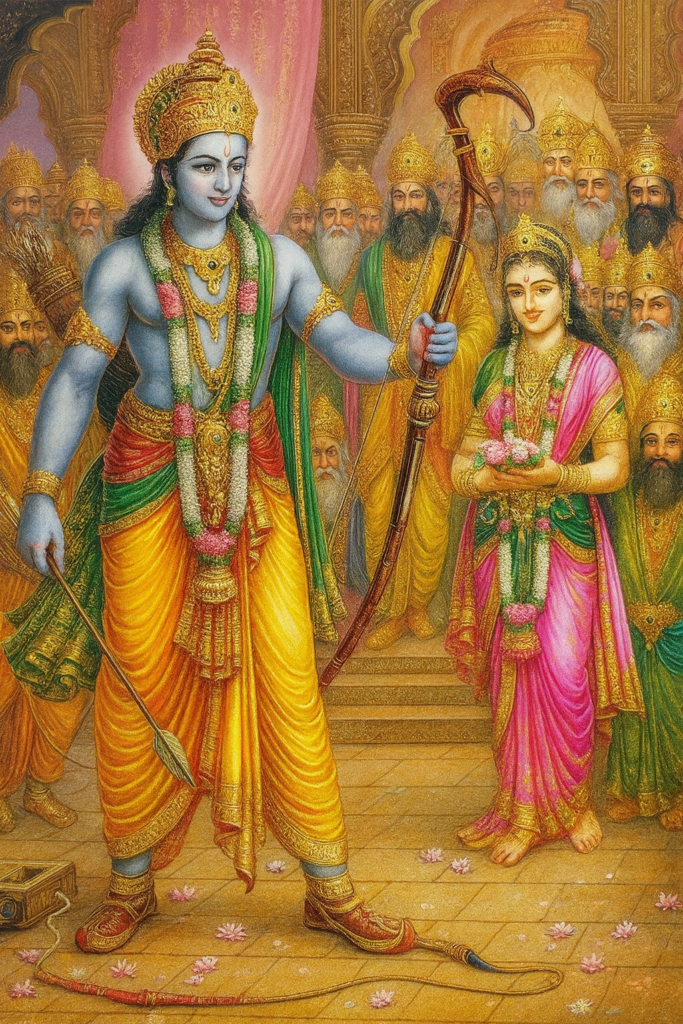
Sri Krishna and Anjaneya lifted mountains easily and demonstrated their energy. So weight is the mental illusion of the jiva. It is associated with the confidence of mind.
Conquering the weak illusion and having confidence is the extra-sensual strength, is possessed by Krishna, Rama, Vishnu, Siva, Anjaneya, Sita, Sage Vasishta, Buddha etc. noble souls.
The physical power is the strength which appears outwardly. Chit Sakthi (will power) is invisible to human eye. It fulfills tasks beyond the senses.
If man confides in his own energy and efficiency or keeps his faith firmly on God, his energy will work beyond their senses.
Sri Rāma! Even the mantras (hymns) work according to faith or if the gurus, who have ultimate faith in them, teach them, the power of mantras shows its effect on those who learn them.
28. Human Body Becomes Powerful by Yoga and Physical Exercise.
Sri Rāma! In the process of human evolution, man takes up multiple activities like walking long distances, running, and lifting weights, for meeting his needs. Thus he changes his body into a strong one, with the strength and confidence of his will.
To maintain the strength of the organs and senses in the body without decline, one must practice physical exercise; otherwise, the body and its organs lose their vitality and become weak. Organs and senses that are not used gradually weaken.
It was for the purpose of strengthening the body that the sages gifted yoga postures to the world. By practicing yoga postures, one experiences lightness in the body. Through yoga practice, weak mental tendencies are removed, and mental strength is enhanced. Accordingly, one attains a strong and harmonious body through yoga.


In the process of practicing difficult postures, weakness is removed, and a strong perspective is developed.
Yogic exercises have to be practised, both for physical and mental strength. The negativities of mind have to be observed from time to time, and regulated. The feelings like fear, addiction, envy and hatred are to be watched and controlled by practice. Yogi is none but the conqueror of those feelings, by dint of practice.
A human must ensure that the peaceful nature within is not disturbed. When the mind remains calm, he lives in happiness, and the body remains strong.
Man should endeavour his strength of mind, by his energy. It is far greater than physical strength. New explorations are to be endeavoured to get it improved. New things must be learnt and talent should be demonstrated in every work. Otherwise, the strength of mind ceases to exist.
The jiva has infinite power. But, as he does not know how to use it, he appears to be with limited power. If he uses his energy for higher and noble tasks and universal upliftment, this energy acquires related knowledge and strength.
A human must possess physical exercise for body, thought for mind, feeling for heart and proper aim for life. Exercises make body strong. Thought develops the strength of mind. Heart possesses humanity and divinity, by good feelings. Having proper aim leads energy towards its goal.
When man wills to do a task, professionally, he should not consider it to be complicated. If he goes on doing his work, even a hill can be drilled. So, everyone should change his attitude, for his work and profession.
Whatever happiness, sorrow, peace, or joy one is experiencing in the present time is nothing but the result of past actions. The future, however, will be in their own hands. Accordingly, one must make proper plans in the present and put forth the necessary efforts. Only then will there be a bright future.
29. Transformation of the qualities of the bodily organs through practice.
Sri Rāma! A person who blocks his breath, being underwater, or who performs Pranayama (the act of yogic inhaling and exhaling), becomes overwhelmed at first, to take his breath. But if he continues his attempts again and again, his mental illusion disappears. He comes to the conclusion that he can be in that state long. In the course of practice, change occurs in the structure of his lungs. He earns the requisite energy to keep himself in that yogic state. (warning: This practice should not be taken up independently, but under the supervision of experts).
It is due to the living being’s effort to stay in water for long periods that the five elements shape its bodily organs according to its resolve. In alignment with the fish’s past resolve to remain in water for extended durations, its present body structure has been formed to enable it to stay in water for a long time. Living beings undergo various bodily changes based on the actions they perform.
If a fish comes out of water, it undergoes a mental discomfort, as it is accustomed to the atmosphere in water. Outer atmosphere torments it. But if it tries to be on land, it gets the related physical structure and lives like an amphibian.
Even though a fish dies when it comes out of water, the mental determination and knowledge it gained during that experience remain within it as past-life knowledge (samskara gnaanam). When it is reborn, that previous knowledge influences it again to come out of the water. The influenced fish gradually acquires the strength to stay outside water for longer periods. As it continues to move about on land through its mental resolve, it eventually develops legs. Over the course of millions of years, that fish transforms into a land-dwelling animal. The present bodily knowledge of a living being is the result of its past karma.
To experience something in a weak mental state is an illusion. Only when that illusion is removed and mental determination is attained does true subject-knowledge arise.
When a living being that comes out of water begins to dwell more on land, it gradually loses the organ-function suited for living in water and develops the traits and abilities necessary for living on land.
30. Nature Provides Self-defence Mechanisms to the Living Thing.
Energy provides (through nature) horns as weapons, hoofs to the feet, to animals, for their self-defence, as weapons and defence structures.
In the process of hunting for food, the tools that emerged as supportive weapons—such as the venomous fangs in the snake and the tongue in the chameleon—developed accordingly. Due to the efforts of these living beings, energy through the five elements provides them with what is appropriate and necessary.
Though living things lose their lives by snake-bite, in course of time they get the attribute of withstanding them and get the energy to hunt the snake itself.
Teeth are formed to chew food. The more they are used, the stronger the teeth and jaws will be.
As the living being frequently uses its legs in the process of hunting, the body connected to them becomes stronger.
31. The Living Being is Immortal. It Dwells in the Body as Divine Substance.
The living being, along with his divine energy, exists as a divine substance (god particle). He carries within him the memories of past knowledge, past resolutions, and past mental desires. Likewise, in the physical body, he inherits the bodily knowledge of the mother and father. The cravings and qualities from their past lives are reflected in every action the living being performs. By acting with wisdom and following Dharma, one must reject the negative traits and cultivate the noble ones.
It is ignorance for a living being to desire immortality in the current physical body. Such thinking is like the delusion of a frog in a well, believing that the well itself is the entire world. It is like traveling in a vehicle with limited power and assuming it to be the most powerful and superior one. In the universe, there exist divine bodies, as well as many divine and higher worlds. One must use the present body as a means to reach those superior and divine realms and attain liberation (moksha). That is, by performing righteous actions and becoming worthy, one attains moksha.
An intellectual constructed a strong house, with his energy. Due to unavoidable reasons, though the house collapses, he can rebuild it, with his intellectual powers. Similarly, the physical body of the jiva, constructed by the five natural elements, falls unavoidably due to the changes in nature. But his Chith Sakthi (will power) rebuilds it, in mother’s womb. Jiva keeps taking birth in the respective worlds, as per his will.
Jiva is a dynamic light, which shines. He identifies himself with his body, being ignorant of this fact. If we put a diamond in the basket, the former’s splendour spreads all over the basket. Similarly, the dynamic consciousness of soul pervades itself through body and world.
Body is glorified with the dynamism of soul. The glory is associated with the soul only. Jiva is the embodiment of soul.
Soul is the one, which is the best, which has no tiresomeness, which is beyond the upadhis (traits) of the body, which eliminates illusion, and in which there is no misery.
Body is a resting place to soul.
One must hold on to the Truth. One should discern what is false, what is impermanent, and what is the true form of bliss. The Self (Atma) is Truth, Knowledge, Bliss, and Infinite in nature.
The mind perceives only within the limits of the body, but the Infinite Existence is your true nature. If you fix your awareness in That, it bestows infinite peace. Everywhere, you will behold only That.
Jiva, who travels in the path of dharma having the best knowledge, doing good deeds, becomes eligible to attain divine body and divine worlds.
Knowledge, wisdom, good deeds, and dharma are the prime means for jiva, to reach the sublime state.
32. Energy Functions as per the Mind (Will) of Jiva.
When there is clarity for jiva as to where he should go, energy guides him in the same direction.
Energy is never tired. Mind gets tired. When mind gets tired and feels tiresomeness, energy makes him feel the related knowledge as illusion. So jiva should choose the proper aim and embark on proper tasks.
Jiva sows the seeds of subject with the knowledge and wish of subject (vishayas). Energy co-operates in developing them.
If the jiva has confidence, energy works in extra-sensual way. If he has suspicion and illusion, energy too works accordingly.
Jiva is like a father to the birth of thing. Chith Sakthi is like a mother who co-operates to originate them and develop them. The physical energy, which is born out of them appears as knowledge of thing (vishayas).
As the jiva sows a thing in the field of his heart, energy develops the seed into a mighty tree.
Sri Rāma! Jiva’s contemplating things is nothing but helping energy to originate them.
Jiva’s wrath and energy’s wrath on others are one and the same. Jiva’s kind looks and energy’s kind looks are one and the same. They are not different. So, loving others, respecting them, making them happy, lead to auspicious consequences. At the same time, hating others, making others miserable, lead to inauspicious consequences.
Jiva should receive always what is good to him, what leads to his well-being and try to get the same.
After jiva wills a thing energy motivates to do it; whether it is good or bad, as per his mind. So noble willings and virtues are to be possessed.
If jiva cultivates divine feelings, his energy turns into divine energy. If he has evil thoughts, his energy too will become negative.
The power possessed by the living being is like the wish-fulfilling divine cow (Kāmadhenu) and the divine tree (Kalpavriksha) that can grant all desires. But one must know what to ask and how to ask. Otherwise, along with the good, one will also be compelled to accept the bad.
In the principle of energy, the negative aspect is that it grants power even to the wicked who make evil resolves, just as it grants power to the noble who make righteous resolves. Because of this, at times even a wrongdoer becomes strong.
Sri Rāma! Whatever the Jiva contemplates, whether good or bad, energy develops it without distinction. The thought of the Jiva begins like a spark. By repeatedly thinking of it, the power of inquiry grows and it turns into a flame. As the Jiva continues to think of the subject, he offers it as food to energy, thereby cooperating in the production of that subject.
Sri Rama! When the Jiva entertains sweet thoughts in the mind, it is like sowing the seed of sweetness; when he entertains poisonous thoughts, it is like sowing the seed of poison. Whatever seed the Jiva sows, energy nurtures it and yields the corresponding fruits.
By contemplating a thing with keen concentration, the seed of thing is sown.
Sri Rāma! Virtues like serenity, tolerance, courage, joy, happiness, purity, confidence and dharma originate from a peaceful mind. On the same lines, vices like anger, fear, grief, illusion, anxiety, ignorance, and non-righteousness (adharma) originate from a wicked mind. They are the manifestations of agony.
Nature is in the form of poison (visha) as well as in nectar (amritha). Jiva has to decide what to take. A polluted heart with hatred, envy, and selfishness gives poison. A holy heart with love, compassion and affection gives nectar and makes man immortal.
Karma (action) begins mentally at first and then takes a physical form.
All the things and vehicles are created as per the willing of the respective living beings. Curiosity to make the created things much better becomes the reason for the things getting a nobler shape. If the seed of thought falls on thing, energy motivates to embark on the task. Every thought which comes in our mind is the one already contemplated previously. It dwells in us in the form of inherent refinement. Energy reminds the knowledge of inherent refinement. It motivates to do things.
When the power within the being unites with knowledge, knowledge is born. When it unites with ignorance, ignorance is born.
All the energies possessed by living beings are limited only. In their journey of life, they acquire additional knowledge. Man has extra intellectual strength than all the other species. But even man’s energy is limited. Much remains to be acquired.
Among all his attempts, man should break the illusion. Then he will realise the essence of life.
Jiva who behaves according to dharma, is God. The Goddess of energy is in the form of dharma.
Energy does not have the attribute of dharma, against that of Jiva will.
As the river water is diverted into fields, man should divert his energy into good deeds, good path, and his own dharma.
man should act as per dharma, as per the laws of nature. If he acts against them, he has to face unexpected consequences.
There is no limit to energy, as such. It can travel even faster than light. The will of man reaches the five natural elements, even faster than the light does. It travels into the past as well as into the future. The five natural elements respond to that message accordingly.
Because visionaries (Kala Jnanis) attempt to perceive the future through the power of their mental vision, the five elements reveal the future only to a limited extent. This is because knowing the future goes against the laws of creation. Therefore, the Divine Energy discloses the future only to the degree it is allowed to be known.
Sage Vyasa, Veerabrahmendra Swamy, Nostadamus etc. noble souls could know about the future, to some extent, by dint of their strength of penance. Through human try to know the future fully, well, energy obstructs, as it is against the rules of creation. Only the Eight Vasuvus and God, of dharma, have such power. They perform the tasks of creation.
Miracles like travelling in air, television and telehearing are acquired, as the physical energy of the living being gets matured.
A bird develops its physical energy and flies, with the help of its wings.
Noble souls like Anjaneya, Vibhishana and Vali realised the secret of energy. Hence they could travel in the air, with their extra-sensual powers, without wings.
33. Knowledge of Jiva in the Form of His Refinement and Culture(samskāra).
Just as prior knowledge is acquired in a school, bodily knowledge is gained in the mother’s womb. The body, being governed by the qualities of nature, recalls the respective past life knowledge (samskaras) according to the time, place, and circumstances. In various stages such as childhood, adolescence, youth, and old age, it brings forth the corresponding past knowledge into memory. Likewise, near water, it recalls the knowledge of water; near fire, it brings the knowledge of fire into awareness—through the activation of inner energy.
In the divine body, the mind, intellect, and ego exist in coordination in the form of past life knowledge (samskaras). In the physical body, the experience of worldly knowledge exists as a product of nature’s qualities in the form of DNA and genes. The bodily knowledge of the living being is like a thread-garland (sūtramāla), and this thread (DNA) is donated by the Supreme Energy to another who is worthy. The living being who has developed bodily knowledge becomes a jñāna-dāta (giver of knowledge). The one who possesses the eligibility and authority to receive it is the jñāna-grahīta (receiver of knowledge).
The physical body, constructed from the five elements, perishes. But the divine body within it does not perish; it is known as the subtle body (sūkshma deham). Death of the living being means that when the physical body can no longer support material functions, the jīva (soul) leaves the physical body and, with the divine (subtle) body, enters another body that aligns with its desires and mental resolutions.
34. The qualified Jiva attains the developed body as an moksha.
When a living being donates its bodily knowledge to another, all the beings that receive that knowledge come to possess a similar kind of bodily understanding. The jiva in a tortoise that existed 100 million years ago is not the same as the one in a tortoise seen today. The jiva that bore the tortoise body in the past removed its weaknesses and has now evolved into another form of life. The body that was developed earlier is donated by Nature to another jiva, who receives that body according to its desires and needs.
Ages ago, the Jiva that had taken the body of a cat overcame its inner weakness and has now attained bodily strength as a tiger or a lion. Its former bodily knowledge is being borne by another Jiva.
Just as a person who creates and uses a vehicle with his intelligence prepares its blueprints and gives them to others, enabling them to use it with the same efficiency – when a living being transfers the bodily knowledge it has developed to another being, that being too uses it with equal capability. Just as the one who originally designed the vehicle enhances his intellectual wealth and goes on to create an even better vehicle, so too the jiva, through its karma, elevates the body it has received to higher levels. Therefore, one must understand that the jiva that once appeared in a particular body in the past is not the same as the jiva now appearing in a body with the same traits.
The bodily knowledge developed by the living being is preserved by Nature. That knowledge is given to multiple divine bodies that possess the required eligibility. For this reason, the bodily knowledge once developed by a jiva in the past appears to be the same in another jiva in the present who has received it through that donation. Millions of years ago, the jiva in the body of a monkey increased its energy and capabilities, thereby strengthening its body into that of a chimpanzee. As the chimpanzee hunted and gained strength, its thinking ability intensified. Through this process of thought, humanity awakened within it, and it evolved its body into that of a powerful primitive man. The primitive man, by developing strategies and intellect, engaging in various activities, showing compassion and kindness to others, and adopting a helping nature, awakened complete humanity within himself — thus attaining the human body. Behind every action performed by the jiva, there is a driving force of energy. That energy influences the jiva to perform various actions. Only with the cooperation of this energy was the jiva able to attain the fully developed human body
Though whatever physical body Jiva assumes, he does not behave against its nature. He is the body himself. As the water contained in a pot assumes the form of a pot, the jiva, who assumes a physical body has the related physical form, attribute, and strength.
35. The Evolution up to the Acquisition of Divine Body.
Some people believe that the process of evolution has developed only up to the human body. But the living being has evolved further up to the divine body. Maha Vishnu, the embodiment of divine energy, transformed the human body into the divine body many ages ago.
The great sages, who performed keen penance and who are blessed by Divine vision, informing the incarnations (Dasavataraas) of Lord Vishnu had told us the process of evolution. They are the incarnation of fish (Matsya), of Kurma (Tortoise), of Varaha (Pig), of Narasimha (Lion-faced), of Vamana (Dwarf), of Parasurama, of Sri Rama, of Sri Krishna, of Buddha (the enlightened), and of Kalki. Similarly, Hanuman in the form of monkey (Vanara), Ganesh in the form of elephant (Gaja), Hayagriva in the form of Horse (Aswa) show the branches to the tree of evolution.
Maha Vishnu radiates His energy into those bodies and brings about changes in their nature. He diverts the beings who are journeying in one direction and leads them into a higher direction. Because of that change of direction, the higher human body and the divine body have manifested.
Many ages ago, certain beings attained super-sensory knowledge (atīndriya jñāna) through divine energy. Based on the bodily knowledge and qualities they possessed at that time, they were referred to by names such as Devas, Gandharvas, Yakshas, Kinnaras, and Kimpurushas. They did not perish or vanish—they continue to live in various realms appropriate to their refined samskaric knowledge. However, many jivas who inherited their bodily knowledge as a legacy failed to uphold that divine principle for long. As a result, they lost their divinity and are now seen in human form. Just as an unused sense organ becomes weak, the bodily qualities of a being not aligned with divine nature also become weakened. They once attained divinity through a pure heart, but due to the loss of purity and the accumulation of impurities, they now appear in human form. Even so, those divine qualities still lie dormant within the human body. Depending on the purity of heart and the strength of resolve, those qualities awaken. When one recognizes their own divinity, Nature restores their divine characteristics once again.
Jiva should keep examining his pious inclinations. Otherwise, he should practise so that he possesses a holy heart. As long as he has sanctity, as per the strength of his penance, his divinity arises. The human cells convert themselves into divine ones.
Sri Rama! The human body worn by the jiva (living being) on this Earth is a highly evolved form, developed in accordance with the will and resolve of the Divine Soul. This powerful body possesses the strength and capabilities to fulfill the intentions and desires of the jiva. This very human body was inherited and assumed by divine beings such as Sri Maha Vishnu, Maha Shiva, Bramha, Sri Rama, Sri Krishna, Jagannatha, Tirumala Venkateswara, Mahavira, Buddha, and others, who used it to serve the world. Though the physical forms they assumed were different, their divine qualities were the same. As successors to their legacy, many jivas have now obtained this human body based on their past karmas (actions). Some of them are using this powerful body righteously – performing virtuous deeds, walking the path of Dharma, and uplifting the world as noble souls.
Body has to be made powerful with yoga, meditation and penance. Then it will respond powerfully to the arrival of great souls. As weapons are crucial for a warrior, body is significant to fulfill divine tasks. So let us not neglect it, the divine body. It should further be transformed into a powerful one.
All the religions are created by man. In this world, Gods and kings, who adhered themselves to dharma used to rule. They were the protectors (saviours) of our ancient dharma (tradition and culture). Now they are being called as Hindus or other various religions. In course of time, due to the negligence of rulers, Dharma has been declining and adharma has been increasing. Dharma is completely disappearing. Soon this world will be ruled by Dharma alone.
What everyone now refers to as castes (kulas) are, in fact, the ancestral professions of individuals. In earlier times, it was the profession of one’s ancestors that gradually transformed into what now call a caste. When someone claims that their caste is superior, it is merely a reflection of their ignorance. Just as it is ignorant to believe that one quality among the five elements is the greatest, it is equally ignorant to consider one’s own caste as superior to others. In the past, people of all professions worked together to keep society stable and strong.
All living species on this Earth did not evolve solely on this planet. There are many Earth-like worlds and countless other realms of existence. Likewise, not all human have evolved only on this Earth. In many different worlds, there are living with distinct qualities and diverse energy capacities. According to their past karmas, they are now serving here through the dharmas of their respective bodies. Based on the fruits of their karmas, they come to or depart to places that offer environments suitable to those outcomes.
The jiva lives with the same attributes of the body, inherited by him. Though he is reminded of his past life knowledge (samskara), the present knowledge of his body, inherited, influences him to a great extent. His ambience, his good associates, his learning, his culture and tradition, so keep influencing him.He acts with the knowledge of his present and the past.
Whatever gave the jiva joy and happiness in the past continues to follow it across lifetimes in the form of vāsanās (deep impressions or tendencies). These vāsanās-whether related to what one ate, drank, saw, or experienced-remain strong if the jiva still holds attachment or intense desire toward them. To fulfill those desires, the jiva receives a suitable body in the next birth. Based on their individual tastes and inclinations, beings are reborn as scholars, singers, rulers, learned individuals, or virtuous personalities.
According to the predominant desires present in a living being’s mind, it takes on a corresponding physical body.
According to the strength of the mind that belongs to the jiva(divine body), the passions of attachment and aversion, anger and distress, and desires are brought under control. A being with limited mental strength, unable to restrain such desires, becomes helpless and falls into the grip of addictions. As a result, he may excessively consume alcohol, become habituated to various addictions, refuse to give up laziness, harbor hatred toward others, and fail to control anger and agitation. But a practitioner of yoga, by the strength of his discipline alone, attains the power to control them.
The experiences that constantly remain with the living being are worldly objects. What is not in his experience is the awareness of the Self. Through effort, one must bring the awareness of the Self into experience. With discernment, one should distinguish what is material (padārtha) and what is the supreme reality (paramārtha).
Whatever one considers as the body and the world (jagat), one must inquire deeply into its true nature and understand its original essence.
The living being suffers because he thinks, “This body is myself,” and believes that the lifespan of the body and its parts is his own. Due to this delusion, he clings to worldly objects that are the root causes of sorrow. But when he realizes that he is the Self the pure consciousness(soul) he becomes free from all suffering.
Soul cannot be cut by weapons. It is not burnt by fire. It does not become wet (soaked) by water. It is not thrown away by wind. It is not covered by anything. It is not at all destroyed. Such soul dwells in you. You are the soul, the very soul. In this way, the Supreme Energy reveals many such truths to Sri Rama.
The President of the Divine Assembly: Dharma Charya! Mahā sakthi has well-explained to Sri Rama, how man attains sensual organs, the greatness of practice and faith, man getting divinity and losing it. I have a doubt. A living being, gets legs, body, and sensual organs, as per his will. But without any inclination or will, how are heart, lungs and many limbs and sensual organs formed in our body? How did man obtain them?
Dharmāchārya: As Sri Rāma too was in this dilemma, Mahasakthi told him this.
36. Structure of the Body and Creation, as per the Needs of the Future.
Mahā sakthi: Sri Rama! The Jiva did not obtain legs merely by desiring them. It was through the effort to walk that, as a suitable means for walking, the power along with the cooperation of the five elements provided legs to the Jiva. Likewise, the bird did not consciously wish for wings; but through its repeated attempts to fly, in accordance with its need, energy created wings. In the same way, though the living being did not deliberately seek sense organs, organs such as legs, hands, and eyes manifested in alignment with the needs of its actions. Similarly, even without willing for internal organs, systems such as the respiratory, digestive, and reproductive systems arose as necessary adjuncts for the nourishment and protection of the senses, suited to the being’s future. As part of these systems, organs such as the lungs, heart, and kidneys were formed.
Sri Rāma! Energy provided the attribute (dharma) of place and time to the Ashtavasus who are the embodiments of various natural elements. As per the information received by them, as per the future needs, the structure of the body and actions in creation are occurring.
For the organs and senses within the body to remain continually strong, the living being is given hunger so that food may be provided for their nourishment and protection. Accordingly, the five elements function as an organ of action (karmendriya) that stimulates the quality of hunger. Under the influence of hunger, the living being accepts and consumes food.
37. In the order of creation, certain laws have been established to maintain proportion.
In order for the universe to exist in order and proportion, The Divine has established certain laws in Nature through its energy. As part of these laws, bhūtātmās (elemental souls) possess the dharmas (functions) of the five elements, and paripālanātmās (governing souls) possess the dharmas of male and female principles. Just as the bhūtātmās cooperate with one another and manifest as the five elements with their respective occupational functions, so too the paripālanātmās the jīvātmās (living beings) have been endowed with male and female bodily functions for the purpose of mutual cooperation and interaction.
The gender differences occurred without the willing of the living beings. The gender difference depends upon the ratio of jivas. According to the administrative dharma, laid down in the world by the Divine Power, the Ashtavasus, the dharma devathas provide the yoga of male and female to the living being. The Divine Power provides the respective dharmas to men and women to live together, with mutual co-operation, as per their mental inclinations.
In the form of body, man is an associative soul (Anubandhatma) to woman; vice-versa. Both of them have mutual, interdependent knowledge of their bodies.
For the many jīvātmās (individual souls) that possess bodies, Nature has established a law of attraction toward each other’s bodily essence, in order to enable mutual cooperation and coexistence. sṛuṅgāra (sensual attraction) is a system provided by Nature for the purpose of creation to regenerate and recreate the body.
Even if the jīva (living being) does not consciously generate desire or attraction on its own, Icchā Shakti (the power of will) creates moham (attachment or attraction) within it, making it inclined toward such experiences. Just as one is affected by cold when exposed to it, or by heat when touched by it, similarly, Nature instills and influences the jīva with sexual desire (kāma vāñcha). Accordingly, a man is given desire that causes attraction toward a woman, and a woman is given desire that causes attraction toward a man. These dharmas (natural laws or functions) lead to reproduction. In this way, in alignment with the process of creation, various dharmas have been established that cause both bhūtātmās (elemental souls) and jīvātmās (living beings) to be drawn to or repelled from each other — all in accordance with the cosmic order.
The system established for the reproduction of the knowledge acquired by the soul from previous lives is the womb of the woman. In the womb, the Divine Energy (Shakti) reproduces the bodily knowledge of the living being.
Woman’s womb is a holy temple which reproduces physical bodies.
The living thing has no death. It possesses the upadhi (body) or leaves it. That’s all.
38. The Structure of cosmic Body.
Just as the organs and senses in the physical body of the Jiva are created in accordance with its future, so too the sun, moon, planets, and stars in the cosmic body are created in accordance with the future.
Jiva has three types of body:1. Divine body, 2. Physical body, 3. Cosmic body: Divine body gives the sense of ego, the feeling of “I”, “Me”, “My”, “Myself”, “Mine” etc. The sensual organs are the part and parcel of the physical body. They give sound, touch, form, taste, and smell to our experience. The Sun and the Moon, the planets and the stars, being the part of the Cosmic body, provide the knowledge of light and gravity.
Depending on the mental strength of each jīva, the Brahmāṇḍa (universe) appears either as something extraordinary or ordinary. To a subtle or minute being, the organs and senses within the human body appear as a vast universe. The human body, which appears as a universe to a tiny being, seems ordinary to a human. Likewise, the universe that appears as a bramhanda to a human seems ordinary to a supremely powerful being (a Deva). The being to whom the universe, which appears vast and cosmic to man, seems simple or common – such a being, endowed with immense energy, boundless power of penance, and limitless capabilities – is referred to as Divine (Daivam).
The human physical body, which is the universe for the subtle being, arises from the mental resolve of the jiva (human). In the same way, the vast cosmos, which is the infinite universe, has been created in accordance with the Divine’s mental resolve.
The universal body (Jagath Sareera) created by God, with His will-power and strength of penance, is inherited by man and all the other species.
Sri Rāma: Mahasakthi! How did God acquire such sublime divine power to create the mega universe, the Brahmanda?
39. The Living Being Attains Divine Power in Space.
Mahā sakthi: Sri Rāma! If a child possesses the energy and efficiency to rule the world, it should be understood that the child has acquired them, by dint of his strength of samskara (culture and refinement), inherited from his previous births. Similarly, God, a long time after opening His eyes, knew His Divine Power and created the Ashtavasus, the embodiments of natural elements, the rulers of eight directions (Ashtadikpalakas) and dharma devathas, the Gods who preserve dharma. Thus He is leading the creation, in the path of dharma (rectitude).
As man realises his energy on Earth, God realises His energy in space.
Sri Rāma! In the vast expanse of space, the Bhūtātmās (elemental souls) exist endlessly, like dense clouds. Through their own processes of intention and fluctuation (saṅkalpa–vikalpa), they gain mental strength and gradually evolve into Paripālanātmās (governing souls). You have already understood that a Paripālanātmā, by means of its own energy, influences other Bhūtātmās and draws their strength into itself as power.
In the same process, within the cosmic sky, through continuous saṅkalpa-vikalpa (will and fluctuation), the Paripālanātmā gradually attained immense power over the span of several crores (hundreds of millions) of years. As time progressed, his inner mental strength continued to grow stronger and stronger. After many such aeons, his power became supremely strong and transformed into Akhanda Shakti – an undivided, limitless force. Due to the influence of this Mahātmā’s (great soul’s) thoughts and mental power, the Bhūtātmās across the universe came under deep influence.
Following the mental vision (manō dṛkpatha) of the Mahātmā (the Paripālanātmā), as he moved, so did the Bhūtātmās move; as he imagined or felt, the Bhūtātmās became influenced by those thoughts and radiated with vibrant colors and shining lights. When the light of the Bhūtātmās began to manifest, the Paripālanātmā formed a will (saṅkalpa) to see that light. In accordance with this resolve, the Mahā Shakti created the faculty of suprasensory vision – the atīndriya netra dharma – in the sky, enabling him to perceive the light.
Over time, the Paripālanātmā, endowed with infinite energy and unshakable mental strength, began to influence the universe with his very intentions. Whenever his mind held a powerful resolve, terrifying sounds would echo throughout the cosmos. When he was in a peaceful state of mind, the entire universe would reflect that peace. But when he harbored fierce emotions, the universe too would take on a fierce form, dancing turbulently in the skies. Just as the ocean surges and overflows when struck by a cyclone, so too would the universe swell with intensity under his influence.
After some time, the Mahā Shakti revealed to him that it was indeed his own immense power that was causing such transformations in the universe. With this realization and the calming reassurance from the Divine Energy, the Paripālanātmā became peaceful. Engaging in deep dialogue with the energy that was communicating with him, he clarified many truths and dispelled his doubts. In doing so, he strengthened his power to its highest potential and transformed it into Daiva Shakti (Divine Energy). Together, the Paripālanātmā and Daiva Shakti began to discuss the path to establish the most ideal worlds in the universe harmony and stability.
The Paripālanātmā expressed his mental resolve to Daiva Shakti – a desire to transform the unstable universe into a stable, habitable, and wondrous realm. In accordance with this intent, he envisioned how the ideal world should be – a vision shaped by his inner manō darśanam (mental perception). Responding to his vision, Daiva Shakti began to reorganize the scattered and unstable Bhūtātmās. Divine Energy transformed them into the Mahā Pañchabhūtas (the great five elements), the Aṣṭa Vasus, the Aṣṭa Dikpālakas (guardians of the eight directions), and the Dharma Deities – endowing each with the material essence and distinct dharma (natural function) appropriate to their cosmic roles.Those endowed with these various dharmas, in alignment with the needs of the future, came together to create a superior world – a divine and orderly realm of existence.
The preservation and propagation of the knowledge that was created is a law of Nature. Following this very principle, the universe continues to expand. The Jagat Sharīra – the cosmic body that spread forth in this manner – has been inherited by the living beings of this world as a legacy.The one who created this universe in the role of Paripālanātmā is known as God. The one who supported Him and created in accordance with His vision for the future is Daiva Shakti (Divine Energy). Those who assisted Daiva Shakti in carrying out these divine functions were the Pañchabhūtas (Five Elements), the Aṣṭa Vasus, the Aṣṭa Dikpālakas (Guardians of thea Eight Directions), and the Dharma Deities.
Just as the cells and the five elements operate according to their respective dharmas under the control of a powerful living being, so too the sun, moon, planets, and stars function with various dharmas under the authority of the Supreme Divine Energy, who is the all-powerful force.
In alignment with the Divine Will (Daiva Saṅkalpa), Daiva Shakti grants Akhanda Shakti (indivisible power) to other Paripālanātmās and establishes the emergence of the Sun, Moon, planets, and stars. The Mahā Pañchabhūtas, endowed with their respective dharmas, possess the functional principles required to carry out these cosmic duties. The Aṣṭa Vasus and Dharma Deities assist in maintaining order within the universe, preserving it in a state of harmony, and ensuring conditions that are favourable for the sustenance of life.
The Jiva contemplates knowledge. Energy possesses the dharma (attribute) of Nature, in the form of knowledge. God commands nature. Nature re-commands the five natural elements.
God is called by different names. He created the Brahmanda, with His divine energy. God is called as Hiranyagarbha, Viratswaroopa, Mahavishnu, Mahasiva, Brahma, Sri Rama, Sri Krishna, Para Sakthi, Chith Sakthi etc. The ruler is called in each region, in each language, with a different name, e.g., Raja, Prince, King, Ruler. But God is one. In spite of His being called with different names, there is one God to all. The Truth is one, but scholars interpret it differently”.
When we establish God, with a name, in our mind firmly, we cannot accept His another name. Realising this weakness, one who understands the fact that all the names refer to one God, is the noble soul.
All the laws observed in the universe – mental, physical, chemical, geographical, astronomical, economic, social, and others – originate from mental intent (manō uddēśya) and mental resolve (manō saṅkalpa). It is through the strength of the jīva’s mind that Shakti (energy) establishes and operates these various laws.
In the universe, the unseen Pañchabhūtas (five elements) are actively performing various functions. Just as the water molecules invisibly keep the fish stable within the ocean, these invisible elements are holding the planets and stars in stable positions throughout the cosmos.
The Pañchabhūtas (five elements), which exist in an unorganized form on Earth as soil, muddy water, and other raw substances, travel through the pores of plant roots and gradually take on an orderly form – manifesting as leaves, fruits, and trees, each functioning according to its respective dharma (natural law). In the same way, within the Brahmāṇḍa (cosmic universe), Bhūtātmās, Pañchabhūtas, and planets, which initially exist without structure, travel through śūnya maṇḍalas (black holes), and emerge in a state of cosmic order – possessing specific dharmas suited to their designated time and space.
Yogis who know the science of attraction draw objects and food by their spiritual power. The food and objects existing elsewhere travel through the void (black hole) and come to them.
By the will of the great divine power-holders, the five elements transform into food. In accordance with Sage Vashishta’s resolve to feed the guests who came to his hermitage, the divine cow Kamadhenu, by her glory, served food to lakhs of people. Likewise, by His divine power, Sri Krishna satisfied the hunger of countless sages with just a single grain.
After death, Shakti carries the jīva’s divine body (sūkṣma deha or subtle body) through the śūnya maṇḍala (black hole). Based on the results of its karma, the jīva is taken into different regions and various lokas (worlds) accordingly.
Ātma Chaitanyam (soul-consciousness) pervades the entire universe. The one whose power extends throughout the cosmos and who governs the universe according to his will – the one who transcends the universe, the one to whom all of creation surrenders – that Paramātma (Supreme Self) resides within you. He is the very Ātma who dwells within all beings.
He who brings the whole creation under His dominion, that Supreme Self, is present within you. You are immortal. You have no death, nor old age. You cannot be defeated. You are unique. No one can weigh your strength.
The substratum of this body and of the universe is the soul’s consciousness. That consciousness is indivisible, beyond name and form; it is truth, it is pure awareness, it is bliss, it is infinite, it is boundless. It is called Sat. Depending on it, the universe shines forth. Human seeing the shining universe, but look to that on which it is based. Once come to know that basis, it will be realized that the manifested universe is but the reflection of the Jiva’s mental knowledge.
As the administrator assigns a job to the one who is roaming without work, the divine power, according to the divine will, provides various dharmas (duties) to the unstable Bhootatmas, and administrative soul and keeps them stable. These dharmas co-operate in the process of creation. The five natural elements, infinite (Akhand) natural elements, Ashtavasus, Ashta Dikpalakas (the eight manifestations/rulers of nature) possess these dharmas. They co-operate in the creative process (Srushti Karya), as the Sun, the Moon, the Planets, the Stars, the Oceans, Great Rivers, the Clouds, the mountain-cliffs, the snow-hills, the north and south poles, and the trees.
The Eight ‘vasus’ and rulers of the directions, the Goddesses of Dharma are regulating the biodiversity and ruling. They keep up the requisite number of living things. They see that the planet Earth is not filled with living things, to the core. They provide various attributes to the living things. They decide the friendships and enmity between the jivas. They decide what is food to them.
Nature provides the hunting attitude to animals, to regulate the species on the Earth. To every Jiva, a distinct attribute is bestowed. They are within their dharmas. Their action is not violence but their dharma (duty). But, if man harms others, it is violence, certainly.
Among all the species on the Earth, only the human being has the freedom and efficiency to regulate his attributes (nature). So, the human being should keep the Trigunas (The ‘Sattva, the Tamo, the Rajo gunas’). He should act in the guna appropriate to the respective places and times.
In the Sattva guna, men have peace, purity, and bliss. In the Rajo guna, men have the sense of action, zeal, zest, positive thoughts, enthusiasm for knowledge, and anxiety to conquer (to get success). In the Tamo guna, they have sloth, negligence for duty, negative attitude, delaying tactics etc. We should always be in the Sattva. We should be in the Rajo, while doing our tasks. We should ignore and control our evil thoughts, so that the Tamo guna can be turned into positive. We should postpone the inauspicious things. Meanwhile, they will removed themselves. Then the Tamo guna turns into a positive one.
Sri Rama! The Jiva is evolving through the strength of his effort. At the same time, Jiva is living in accordance with the universal law, subject to the qualities of nature.
40. The body of the Jiva has multiple dharmas as that of Yoga and Bhoga (spiritual and materialistic).
For every Bhūtātmā (elemental soul) and Paripālanātmā (Ruling soul) in the universe, the physical energy they possess is endowed with a Yoga Sharīra (experiencing body) that enables the perception of sensory knowledge, and a Bhoga Sharīra (expressive body) that communicates or conveys that knowledge — both established as a multiple system .
The body of Yoga knows the experience of matter. The body of Bhoga is the matter itself and gives the related experiences.
The Yoga Sareera of a man gives him the attainment of matter and gives the sexual gratification to a woman (Vishaya-bhoga). The same is the case with the Yoga Sareera of a woman. The same body serves both man and woman, as to the body of Yoga to himself/herself and as the body of Bhoga (enjoyment/pleasure) to the counterpart. Both are experiencing the ‘matter’ (Visha Yānubhava).
The Jivatma knows comfort, misery, love and hate. It has the Yoga of the body which experiences them. The five natural elements have different yogas of the body and give the knowledge of ‘matter’ to jivatma experience.
By assigning various Yoga Dharmas (functional properties) to the Bhūtātmās in the form of the Pañchabhūtas (five elements), they are able to transmit to the Jīvātmās the knowledge of sensory experiences such as attachment and aversion, and conditions like heat and cold. By endowing the Jīvātmās with Sharīra Yoga (bodily connection), they are able to perceive the sense of touch (sparśa jñāna).
The Pramātā (Jīvātma) experiences the knowledge of objects, while the Pramāṇa (sense perception) reveals that knowledge.
To each and every cell in the body, a role to inform the knowledge of things (matters) is provided. In various professions held by Bhutatmas, the dharma is provided to them, so that their positions are not dislocated and they stand as “Sthithi Sakthi” (the energy of being).
In the physical body of the living being, the eye, which possesses the Indriya Dharma (nature of a sense organ), functions as the Yoga Indriya (instrument of perception) that reveals the object. The Sun, being a part of the Jagat Sharīra Yoga (cosmic body), possesses the Yoga Dharma (functional principle) of illuminating the object to make it visible.
The light is experienced through the conjunction of the eye in the Yoga body with the sun’s rays in the Bhoga body. The knowledge of sensations such as cold and heat is experienced through the sense of touch in the Yoga body combined with the cold and heat present in the Bhoga body. The taste of a mango, which is a Bhoga substance, is experienced with the help of the tongue functioning as a Yoga sense organ. In this way, Karya Yoga (functional connection) is provided to the physical power of many Bhutatmas for their position and movement. The Yoga body provided to them gives Bhoga (experience) of sensory knowledge to other souls.
The sky, which indicates time and seasons, the air, which gives breath, the fire, which gives heat, the water, which quenches thirst, and the earth, which provides food and shelter – all exist as associated souls (Anubandhatmas) possessing the Upadhi Yoga that grants enjoyment to living beings. The body of a living being functions as a Yoga body that gives Bhoga (experience) to others, while for many micro-organisms, that same body serves as their Bhoga body.
Both the Yoga and Bhoga bodies manifest in diverse forms – as men and women, as the Sun, Moon, and planets, as conditions such as cold and heat, and further as wealth, grain, and music. They also appear in the forms of the five natural elements: fire, wind, sky, water, and earth.
The physical energy, which has the soul, is the attribute of Nature, possessing different dharmas of yoga.
The sages who realized the principle of the soul’s energy (Ātma Shakti Tattva) established it in the form of the Shiva Linga so that even ordinary human beings could understand its essence. The Shiva Linga found in temples is consecrated as the embodiment of Ātma Shakti. If the Linga is considered as the form of the soul, then the power bound around it as its base is the embodiment of the nature of Shakti (Prakriti Swaroopa). According to the laws of creation, the Shakti associated with each Linga possesses various qualities in accordance with its natural dharma – the Ākāśa Linga contains the quality of space, the Vāyu Linga contains the quality of air, the Agni Linga contains the quality of fire, the Jala Linga contains the essence of water, and the Prithvi Linga contains the dharma of solid matter. In the form of the Shiva Linga, the Linga itself represents the quality of the soul, over which the living being has authority, and the Shakti encircling it represents the qualities of nature (Prakriti Guna). The soul (Ātma) is God, and Shakti is Goddess. Creation is carried out through the cooperation of both.
In whichever region of the world, in any place, if a Linga form is encircled and supported by any stone form that appears in the form of nature (Prakriti), and is worshipped, it should be understood that it has been consecrated as the embodiment of Ātma Shakti (the soul’s energy). Without any distinction of caste or religion, anyone can worship it.
By performing idol worship (Vigraha Aradhana), one attains peace of mind, fame, and radiance (Tejas). Hanuman, Maha Vishnu, Rama, Shiva, Venkateshwara, Buddha, and others are radiant divine forms. By beholding them, such power, fame, and radiance also arise within the devotee who beholds them.
Just as the natural elements (Pancha Bhutas) exist within the Bhutatmas with their respective dharmas, the Divine Power resides in the divine souls — Brahma, Vishnu, and Maheshwara — in the form of knowledge, wealth, and strength, possessing equal dharmas. Brahma, having authority over knowledge, has his power manifest as Goddess Saraswati. Sri Maha Vishnu, having authority over wealth and prosperity, has his power manifest as Goddess Lakshmi. Ishwara, having authority over strength, has his power manifest as Goddess Parvati By the grace of this Trimurti, people live happily with peace, long life, health, wealth, and abundance of food grains. These three deities, cooperating with one another, keep the world prosperous. Their power pervades the entire universe.
After making an idol in the name of a deity, the Scholars recites the root mantras revealed by the sages and performs the Prāṇa Pratiṣṭhā (the ritual of invoking life-energy into the idol). By performing the Prāṇa Pratiṣṭhā, the idol becomes powerful and the place becomes a great sacred pilgrimage site. The devotees who have darshan of that idol receive energy. Their minds become peaceful, and they experience mental bliss. After the Prāṇa Pratiṣṭhā is performed for the idol, it transforms into divine energy and acquires the power to attract people to its sacred place.
To hate the God worshiped by others, to look down upon the followers of other religions, to insult those of another caste, or to reject the customs of others—these are weaknesses of a mind that views life with division. Man lives confined within a small circle of his own making. Only when he breaks this circle and looks beyond caste and religion with a universal vision, will he be able to grasp the knowledge of this infinite universe and attain a higher state both mentally and physically.
Man thinks that this Earth itself is the most developed world. But in the universe, worlds exist in infinite numbers. there also exist worlds that are highly developed. Some are in the initial stage, others are in the stage of evolution, and still others are in the stage of fruition.
It is ignorance for man to worry that the time of this Earth is coming to an end and to search and strive to live on another planet.
Just as it is sheer ignorance for the bacteria within a single fruit of a tree to think that the fruit alone is the entire world, in the same way, it is equal ignorance to think that this earth alone is the only place in the universe for life to exist.
If man provides a good atmosphere, improving the present conditions, for a better future, with good discipline, culture and traditions, the future of their children will turn into a wonderful and joyful one.
From every atom up to the Sun, as well as for all living beings, a law has been established for their energy to co-operate with one another for the welfare of the world. This is the law followed by the Divine Energy, the Great Energy, and Nature.
Sri Rama! The beautiful living idol you saw expresses her mental knowledge. She has also inherited some knowledge from her parents. She has acquired the knowledge of the people and companions in the environment in which she lives. Likewise, desiring the welfare of the world and to guide creation in Dharma, the Divine Energy has endowed her with the feminine principle from the dharmas of creation.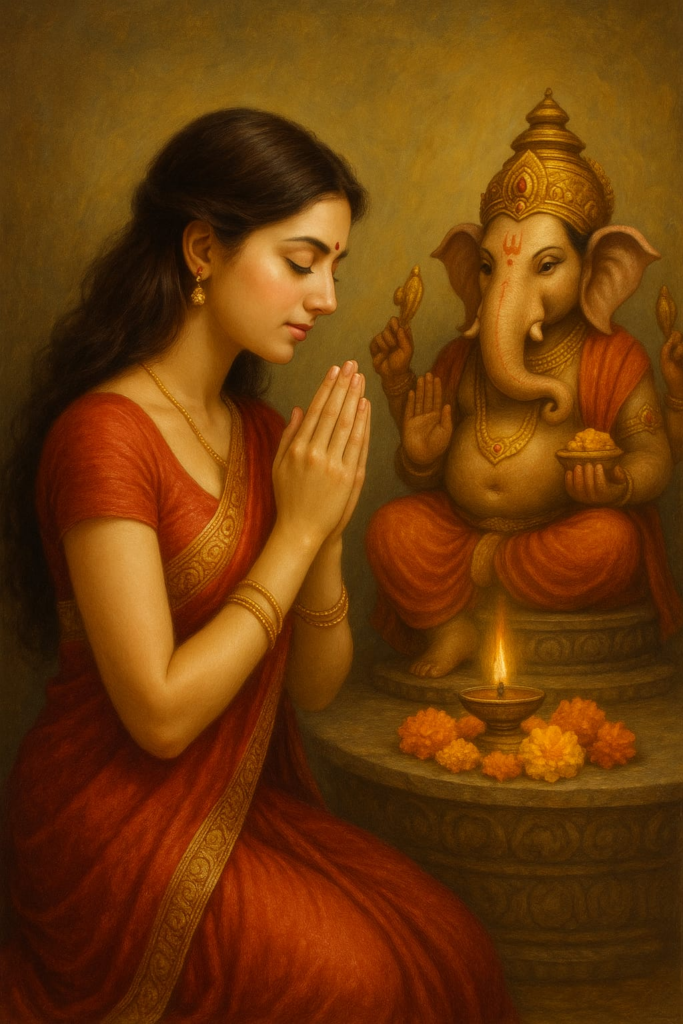
The Divine power assigns the respective professions (upādhis) as per the circumstances of time, place and previous karma (action). The living being cannot reject it, anymore. It should follow, that is all. Without the discrimination of status and profession, whether one is a male or female, Gāndhārwa, whether one is God or the leader of a country or whether one is an engineer or doctor or worker, all should do their duties. All should be ready to take up their respective professions (upādhis). Those who do justice to them, without rejecting them will attain higher planes.
If the living being acts with a positive attitude and pious heart, and gets mental eligibility, Nature provides a divine body.
There are so many developed divine bodies in the universe. Human beings who got liberation (Mukti) are becoming eligible for this.
Energy takes the living things to different wombs and worlds, as per their knowledge, will and wish.
According to the knowledge of the JIVA, there are many worlds like the world of five natural elements, of the bacteria, of fish, of animal, of demons, of humans, of Gods etc. The living being lives in them according to the Jnana yoga possessed by it.
By imparting inertia to the atoms, humans are able to walk and remain stable. The five elements possess inertia even at the atomic state.
Life exists in the human body. Likewise, life is present in the Earth, in the Sun and Moon, in the sky, and in every atom. In the body, the bone joint is endowed with stabilizing power so that the living being can walk with ease. Because of this, it remains steady without excessive movement. In the cosmic body, the atoms within a house or within the Earth are also endowed with the property of attraction and repulsion within the stabilizing force, enabling them to remain steady.
The information repository of all living beings exists in the form of the brain. The information repository of atoms, molecules, and the five elements is contained within their material nature (padārtha dharma). The states and conditions of the five elements change only according to the information received from the administrative soul (Paripālanātma). In accordance with this information, atoms, through union, separation, attraction, and repulsion with other atoms, possess material properties (padārtha dharma), organ properties (avayava dharma), sensory properties (indriya dharma), bodily properties (śarīra dharma), and the properties of the Sun, Moon, planets, and stars.
Disciple: Dharmacharya, why is it that on other planets, a living being existing in an inert, material form does not acquire the bodily dharma according to its own will?
Dharmacharya: Not all planets are created for the sustenance of life. Only the Earth has been made suitable for the survival of living beings. Other planets possess different dharmas, and therefore they function according to their own dharmas. Even if, by the will and determination of a living being, a subtle physical body is obtained there, it will still be restrained. Just as living beings migrate to places where there are rivers, so too do they migrate and settle on planets like Earth.
The Disciple: Dharmāchārya! Do the planets influence man?
Dharmāchārya: The planets influence the mind of man, as per his previous actions.
In the science of astrology, the sages, with their divine vision, have incorporated highly valuable knowledge. In astrology, there is no need to fear the adverse predictions. People have understood only a small portion of the astrology explained by the sages. The influence of the planets on a person depends on whom the living being has taken refuge in. Just as a person who has taken shelter in a house will not be drenched by the rain even when it is known that it will rain at a certain time, a person’s circumstances depend on whom he has sought refuge under, or under which umbrella he is standing. Therefore, one must hold firmly to Dharma, perform righteous deeds, and seek refuge in the Divine with surrender. Institutions and governments must function with a powerful administrative system. Then, no matter what planetary faults exist, they will not trouble people much.
Whenever your mind has a doubt, always remember this: without a cause, there can be no result. If the cause is not seen, it does not mean it does not exist – it simply means that at this moment your mind is unable to perceive it. For example, even when some causes remain unseen, their results can be clearly observed. The same happens in the matter of karma as well. A person cannot see their past actions, yet they experience their results in the present. In our daily life too, many worldly matters occur in this way. Now, I will convey to you the things that the Divine Power is telling Sri Rama about such matters. Please listen attentively.
41. The Influence of Karma (Action) on Worldly Matters.
Maha Shakti: Sri Rama! Just as the Supreme Power directs the five elements, the sun, the moon, the planets, and the stars according to the karma of a living being, in the same way, it also inspires and guides the being to perform various actions in worldly matters.
Energy influences the jiva by three kinds of karmas (actions) and appoints him in respective tasks: 1. Mental feeling or inclination of will, 2. Actions done by previous culture and refinement (Samskara), 3. According to the rule of creation.
Any inquiry into a matter, and having an intention regarding that matter, is itself karma. Due to the influence of karma, the energy (Shakti) directs the being to perform the corresponding actions. The actions performed bring forth their respective results for experience. A good thought leads to good action, which in turn brings the corresponding good result. Likewise, an evil thought causes the energy to influence the being toward evil action, and accordingly, only harmful results will have to be experienced.
The enlightenment of samskara starts with the enquiry of things. On the strength of the enquiry, the knowledge of samskara motivates to do certain actions. The results are received as per the severity of karma. The good inherent tendency (samskara), formed by strong enquiry, influences man to do good deeds. Good deeds yield good results. On the contrary, bad tendencies lead to bad deeds and bad results.
The inquiry or desire for a matter that a living being engages in during the present becomes, in the future, an impression of knowledge (saṃskāra-jñāna). This saṃskāra-jñāna influences and inspires the mind to perform the corresponding actions.
Thinking ‘to drink milk’ is a good action (satkarma), whereas thinking ‘to smoke’ is a wrong action (duṣkarma). When a feeling or thought in the mind continues in the same way, the action gains the strength of deliberate intent. According to the strength of the action, the energy (śakti) holds that strength in the form of saṃskāra-jñāna (impressions of knowledge). Saṃskāra-jñāna influences one to perform the act. Through the deliberative action of wanting to drink milk, the action gains strength and becomes fortified as saṃskāra-jñāna. Strengthened saṃskāra-jñāna then influences one to drink milk. The virtuous action thus brings about a corresponding good result for one’s health. On the other hand, the wrongful action of wanting to smoke prompts a corresponding action, making one smoke. As a result, through wrongful action, a person receives harmful consequences for their health, while through virtuous action, one obtains good results.
Thinking of installing a plant is karma. The first thought will be too weak to cooperate in fulfilling the task. The keener the thought becomes, the stronger the action will be. Accordingly, the knowledge of samskara influences to get the task accomplished. While the task is being done, as per the severity of the task, its result will be according to the circumstances of time and place. When the plant grows into a tree, it gives fruits, shelter, and oxygen.
All that humans are experiencing at present is solely due to the influence of past actions.
Mahā sakthi: Sri Rāmadharmaja! I shall tell you about the results of actions (karma) which Sage Vashishta once explained to Sri Ramachandra. Listen attentively.
Actions performed transform into impressions (vāsanās). These impressions, even if you do not presently think of performing those actions, arise from past deeds and influence you to carry them out. Whatever actions a person strives for, they receive the corresponding results of those actions.
The inner disposition is the underlying cause of all external behaviors. Such a disposition, following the powers of attention and earnestness, becomes the cause for the attainment of corresponding results.
Just as the structure of a large guava tree and its fruits are hidden within a small guava seed, so too, within the seed of karma, the framework of action and its results lie concealed.
The strength of a jiva’s past karma and the strength of its present efforts constantly clash with each other, and the one with greater power prevails. Whichever among the past and present karmas is stronger will be the one that triumphs. The faults of past karma can certainly be made auspicious through present righteous deeds. Whenever present efforts fail, it should be understood that the opposing past efforts were stronger. One should become persevering and keep trying repeatedly. Behind everything presently attained and experienced in this world lies the extra-sensory strength of past karmic efforts.
So, man should intensify his attempts to do good deeds, according to the rules laid down in Sastras (scientific books). Gradually the good deeds become stronger and form themselves into good tendencies (Samskārās). They motivate wisdom and provide the adjacence of the thing called soul, which is Suddha Sattva pure attribute of righteousness. If any hindrances arise in the process of doing good deeds, we should understand that the obstacles are the result of the strength of our previous karmas. On such critical occasions, we should not give up our efforts. We should resort to auspicious karmas only, with redoubled inclination, determination, and industry. We should avoid the effects of our previous inauspicious karmas, bad tendencies, and reminiscences. To achieve this, a lot of patience, firmness, and hard work are needed.
Sri Rāma! Until the mental defects accumulated from the past are removed, one must take refuge in righteous deeds prescribed by the scriptures. The inauspicious karmas of the past can be conquered through present efforts. Auspicious deeds bring auspicious results, while inauspicious deeds yield inauspicious results.
Sri Rāma! If anything has to be obtained by anyone, attempt is the only strategy. Sans attempts, nothing can be derived. Any result arises only by dint of attempt. So should not cease to attempt and continue intensity. Then success will be sure. So man should decide his best life-aim beforehand and tread in the path of rectitude.
Sri Rāma! The main reason for ignorance and poverty is the lack of attempt on the part of people. A man of endeavour is always efficient. He can enrich even his surroundings. He does not consider the entire earth as difficult for him. Only the ‘absence of endeavour’ can make him far from his aim, but not any other thing.
From childhood, association with the virtuous (the learned and elders), discussion of the scriptures, and good practices strengthen a person’s resolve toward the goal. The determination takes shape: “I shall make efforts suited to attaining the highest goal.” The very endeavour one relies upon bestows unfailing results upon a human being.
Only those who have given up laziness obtain the best “thing.”
A man of endeavour can take hold of ‘fortune’ easily.
If a person is successful in achieving something, behind it lies sustained effort. However, a dull-witted person fails to perceive the perseverance that supports such success. In the end, he consoles himself by thinking, “Fortune has favoured him.” One must understand that “success” is not determined by luck, but is attained according to the quality and extent of one’s own efforts.
We should see that our previous inauspicious attempts do not defeat our present auspicious attempts. One who does not go back from his best objective can only get success.
Present righteous actions transform past (prārabdha) karmas into auspicious ones, bringing glory to the capable person in the future. Therefore, a jiva should be a diligent performer of noble deeds, abandoning laziness and negligence. Through his own efforts (righteous actions), he can attain the desired results.
Whatever subject arises in the mind, the chitta (conscious will) assumes that very form. From such chitta (conscious will), the efforts of the senses emerge outwardly. Whatever efforts a person makes regarding various subjects from childhood, the results are also in accordance with those efforts. Therefore, karma is the root cause of everything. The fruits produced by the influence of karma are experienced not only by the person himself but also by those in his proximity.
Because of a householder who possesses righteous actions and noble thoughts, the members of his family live happily. that kind of person the owner of an organisation, the employees follow the same path and contribute to the upliftment of the organisation. When leaders and teachers perform righteous deeds and walk the path of virtue, their disciples too perform righteous deeds and journey along the virtuous path.
Many people lead a comfortable and happy life, as they design for themselves, a meticulous plan for their future and strive accordingly. Lack of proper plan is the main reason for the misery and plight of many.
Rama! I declare again and again that whatever a person strives for, he attains only to the extent of his effort. The one who remains careless and negligent, sitting idly, will achieve nothing anywhere. A person should make the best possible effort for whatever he desires. The result may come immediately or it may be delayed, but in any case, auspiciousness surely follows righteous efforts, and inauspiciousness inevitably follows unrighteous efforts. No one can prevent this. This is an unalterable law of the system.
Futile efforts produce only such futile results. It is only through effort combined with complete and right understanding that one attains what is desired.
The evil impressions acquired from past karmas can be transformed into auspicious ones through present efforts. Present righteous deeds can cleanse the faults of the past. Therefore, O Rāma! One must always strive to perform virtuous actions.
Man should think, “Are these attempts of mine inferior or superior?” Then he should take the proper decision accordingly. Man can judge his own attempts himself.
Observing these worldly affairs, it is evident that the prosperity of a kingdom, luxury and enjoyment, well-established systems, family sustenance, anger, self-control, suppression or attraction, and many other complex undertakings are all achieved solely through the strength of effort.
While having faith in the Divine, humans should adopt the best righteous deeds and thereby attain greatness.
When it comes to the matter of “fulfilment of desires,” the intense longing for them leads one to make purposeful effort, which brings about purity of aim, causing favourable thoughts and actions to arise for the intended achievement. The intellect, shaped by previous efforts, becomes ready for it and accepts that thought. Through repeated effort, the result is attained.
A person who follows the impressions (vāsanās) formed from the essence of his past personal efforts is influenced by them, and in the present he thinks, speaks, and behaves accordingly. These impressions themselves evolve into actions, and again, the impressions influence the person to perform those same actions. Whoever has particular impressions will always be striving in connection with them.
The Vāsanās which are strong in man, will become his karmas. But he cannot realise this, as he did not observe the past attempts totally and as they are not visible before him.
In every living being, there exist both auspicious and inauspicious past karmas. Among them, auspicious impressions (vāsanās) inspire the being towards righteous deeds, while inauspicious impressions push the being towards unrighteous deeds. Whichever of the two is stronger will quickly overcome the other and direct the being into corresponding action. However, in the present, the choice of -What should be done? What should not be done? What should be relied upon? What should not be relied upon?, What should be accepted? What should not be accepted? – all these lie in the hands of the conscious self. For this, one should, with discriminative wisdom, understand the righteous path and the prescribed rules, and rely only upon virtuous deeds. If inspired by auspicious impressions, beings, through the strength of righteous endeavour, can gradually attain eternal liberation. If, however, inauspicious impressions dominate and lead towards unrighteous actions, then in the present time, the best effort becomes most essential.
Jiva is not the body, which is static. He is the embodiment of Chinmayata, the spiritual being. He is the form of great efficiency. Why should the jiva So powerful, be subservient to his previous tendencies? (Samskaras)
The auspicious (constructive) karma is the endeavour which diverts your mind from the wrong path into the right path.
The mind of this jīva is extremely restless, like a mischievous child. However, it has a certain peculiarity – whichever direction we guide it towards, it leaps and runs in that direction. If we turn it from inauspiciousness towards auspiciousness, it will gradually, with affection, take refuge only in righteous deeds. But if we allow it to go from good towards evil, it will, with the same swiftness, gladly take refuge in wicked deeds. Therefore, this mind must be, with some firmness, forcibly redirected only towards righteous efforts, and it should never be left to wander as it pleases. While gradually diminishing unrighteous deeds, one must, with deliberate effort, adopt noble qualities such as compassion and equanimity.
Vāsanās (reminiscences) become thick by practice. Though they may flourish by practice, or by ignorance, or by any other reason, good deeds are the only remedy. Good practice is always desirable. They will paralyse the chances of bad vasanas becoming in future.
After the mind is purified, jiva shines himself like a Sun-diamond.
The jiva, who gets eligibility with a purified mind, gets liberation (deliverance) quickly.
Sri Rāma: Mahā shakti! You are telling particularly that deliverance or liberation is attained by the Jiva as per the eligibility of his purity of mind. Please tell about deliverance and liberation (Mukti, Moksha) in a more detailed manner.
Maha shakti: Sri Rama! Mukti (Liberation) means, the jiva’s reaching to the high state, from the existing state, getting out of sufferings and hardships; getting liberated from the three kinds of misery; knowing the secret of illusion and attaining perfect Knowledge. The Jiva who attained deliverance is free. He can rule Nature. He possesses the power to give liberation to others. He is equal to God. Among his authorities are also the powers to protect nature and to contribute to the construction of the universe. Such liberated beings exist as the divine deities of Dharma.
42. Mukti (Deliverance) is attained by Dharma.
There is a time limit, laid down, for the jiva to attain deliverance. It is determined on the basis of the duration of the upadhi (profession) assigned to him. During that period, after the jiva completes the fulfillment of various upadhis (duties) assigned to him, God gives him liberation or deliverance.
The five elements, and the adjuncts formed from them, upon completion of the period allotted for their duties, attain liberation and transform into living beings. For living beings, various dharmas have been assigned within their inherent qualities, and with those qualities, they perform their respective duties. When their period of duty ends, they too attain liberation and receive a body endowed with superior qualities. For a human being, who is an evolved jīva, the primary duty is to perform the entrusted task in accordance with Dharma. The duration for which one remains on the path of Dharma is accounted for, and upon the completion of their period of duty, the human attains liberation or moksha, thereby reaching the highest states of existence.
According to the qualification of the soul’s mind, liberation is attained which leads to entry into the higher worlds; the Divine Law (Daivaloka Dharma Shastra) explains the dharmas to be followed to enter the Divine World, and by understanding these, a human attains worthiness for liberation according to his state of mind and actions.
43. The ‘Dharma Sāstra’ of Divine world: The Dharma that a Human Must Follow to Become Worthy of Entering the Divine World.
To attain Mōksha (Mukti), i.e., liberation or deliverance, man should follow the two rules laid down in the Daivaloka dharmasastra (The Science of Righteousness of the Divine World). They are 1. Upadesa (Instruction), 2. Orders (Adesa).
1. Upadesham (Instruction): Practising as stated in the Dharma Śāstra of the Divine World and as advised by the elders is called Upadesham. It guides how one should fulfil one’s duties and what kind of internal discipline one should maintain. 2. Ādesham (Directive): This specifies the rules that a human must strictly follow. These should be adhered to exactly as given. Likewise, one must follow the laws and dharmas laid down by the constitution of the state.
The one divine energy that upholds the entire animate and inanimate universe is Dharma. That which sustains all the worlds through mutual dependence is called Dharma.
Dharma means the act of practising. It is Dharma that, through the guidance of the experienced, tells us what should be done and what should not be done, how it should be done, and how it should not be done. The Dharma Śāstra, which lays down such moral rules, becomes the cause for the welfare and upliftment of the people.
The primary reason for the existence of an administrative system is to ensure that no one acts solely according to their own desires or based on their own strength, but rather that the well-being of all is secured and equal facilities are provided to everyone. If the strong seize everything by their power, the weak and the common people will suffer deprivation. To regulate this disparity and to grant each person their due according to their merit-this is the Dharma of administration. Therefore, one should honor the law of the administrative system and practice it in accordance with Dharma.
Just as a dam is to the flow of a river, so is Dharma to society. For the welfare of society, the system is bound by Dharma. When those within the system work in adherence to Dharma, society is safeguarded.
Dharma teaches a person how to live harmoniously with fellow human beings and with nature. It destroys all inner conflicts within a person and enables them to live peacefully.
Dharma means to hold, to sustain, to serve as a support, to stand in favor of justice, and to provide stability. Whatever gives us support and stability is called Dharma.
A soldier is protected from enemy attacks by wearing armor. A cowherd holding a staff near a herd of cows protects them from wild animal attacks. Lawyers and defenders, by standing in support of truth and punishing wrongdoers, protect the citizens.
Dharma is fulfilling the responsibilities that have been assigned to a person and those that he has accepted, by adhering to them faithfully.
Even in times of distress, the one who gives utmost importance to protecting Dharma-believing that safeguarding Dharma is more important than even protecting oneself-is a truly noble and righteous person. A human being, even in difficulty, should always be prepared and willing to protect Dharma with deliberate effort.
One should perform their duty with complete purity of the three faculties-mind, speech, and action-being fully engaged in it.
Dharma changes according to one’s stage of life (ashrama) and the conditions of time and place. One should follow the specific dharma applicable to the place and situation where one is.
Being responsible is Dharma. Being irresponsible is adharma.
Carrying out one’s duty without defying the orders of the authorities is Dharma.
The righteous actions that bring us growth, prosperity, happiness, and success are called Dharma. Dharma is that which grants physical, mental, material, spiritual, and social development, leading to complete well-being.
Dharma plays a pivotal role not only in the life of an individual but also in the development of society.
If dharma is in danger, the righteous and the weak will be endangered.
The one who follows his own dharma is the most excellent of all. He is the one who protects dharma and uplifts society.
Svadharma means doing justice to one’s own profession or duty. Whether he is an employee or an officer, without neglecting his responsibilities, he must fulfill the duty entrusted to him with a sense of responsibility and without any hindrance. Fulfilling one’s responsibility diligently is Svadharma.
Those who adhere themselves to Dharma are always brave. It gives them courage and splendour.
Truth is the origin of all dharmas. Dharma eliminates social evils. Men should live with Truth, Compassion and purity, being involved in good deeds. Dharma shines with a pure heart. Where there is dharma, there is no sin.
Dharma must be upheld with patience. Without patience, Dharma cannot stand. Patience is everything. Patience is sacrifice. Patience is charity. Patience is Dharma. There is no Dharma greater than patience. The foremost quality required for Dharma is patience. For the welfare of society, Dharma is absolutely essential.
There should not be such orders or speeches that weaken dharma.
The one because of whom the people in society live with courage, who gives reassurance saying “I am here for you,” and who conducts himself in a manner beneficial to good culture – such a person is righteous. Because of him, the people remain safe. Whichever organization he works for will not suffer loss due to him; rather, it will be praised. By deviating from Dharma, a person not only brings about his own downfall but also causes the downfall of those who trusted him. The only thing that can protect a human being permanently is Dharma.
One who is self-confident that “I have rendered my dharma” is always very happy and serene.
If wealth is not bound with Dharma, then just as the life of a person who wishes to raise cattle in a great forest filled with wild beasts becomes miserable, so too is the life of those who seek to earn wealth by abandoning Dharma.
The one who stands firm in Dharma even in difficult circumstances is a man of steadfastness. No matter how adverse the situation, if he does not abandon the scriptures and Dharma, he is truly steadfast.
One should hold on to Dharma with courage not only in favorable circumstances but also in complex and adverse situations. Without losing enthusiasm, one must cling to Dharma with utmost dedication. It is Dharma alone that will protect you.
Do not abandon Dharma for personal needs, for prestige, or for selfish gain.
Wherever one goes, one should follow Dharma there. If everyone follows their own Dharma, there will be no lack of peace and security in the world. In this world, the true meaning of peace is the practice of Dharma.
Whenever Dharma is neglected, no matter how many laws are enacted or how much effort is made, people will not be able to live in peace. Abandoning Dharma leads people toward grave dangers.
Wherever a person upholds Dharma, peace and prosperity will abundantly prevail there.
Human birth is exceedingly rare and precious. One who has attained such a rare birth can attain liberation only through the practice of Dharma. It is only through the practice of Dharma that the true purpose of human life is fulfilled.
The jiva is of divine nature. To care for the welfare and well-being of all living beings and humans is the same as caring for the welfare of the gods themselves; only then will their grace be attained. If one causes them suffering, one will incur their wrath. This is Dharma. Even if he is your enemy, do not see him merely as a human being, but as a master of the five elements. Just as power works actively in accordance with his will, it also works actively in response to his grace or his anger. One who causes harm will inevitably experience the consequences. This is the law of nature. The current circumstances and time may be favorable to him, making the effect unseen, but a time will surely come when conditions will not be in his favor. In that time, the five elements will stand firm all around, preventing any movement, and will carry out the punishment without fail.
By causing harm to someone, one becomes cursed through the anger of the afflicted jiva. By bringing happiness and joy to a jiva, one receives its grace, which bestows merit. As a result, one gains good fortune and the blessings of worldly enjoyment. A curse is experienced as sin, and grace is experienced as good fortune. The past karmas behind these remain so hidden that no one can perceive them, but they come into experience in due course of time.
Even if one has done no wrong, there is no need to fear becoming cursed by someone’s anger. For those who grow angry without cause, their own negative vibrations will affect and destroy them. They will receive the full result of each curse and will themselves be subjected to suffering.
Those whose mind is calm are untouched by the curses of others.
If someone suffers or falls ill due to another’s negligence or anger, it should not be thought that this happened because of a curse. Such thinking is ignorance and Adharma. However, those who behave negligently or angrily and become the cause of others’ suffering will certainly face punishment.
Only the courts of justice should impose punishment for the wrongs committed by a person. Anyone who disregards this act in Adharma (unrighteousness).
Whether an act is considered violence or non-violence is determined by taking into account a person’s intention and duty. The violence committed by soldiers and lawyers in the course of performing their duties is not considered violence.
A doctor who amputates a diseased limb is not a perpetrator of violence. Whether it is violence or non-violence should be determined by considering the intention behind the act and the purity of heart with which it is done. If it is done with a sense of duty and commitment, it is not considered violence.
If, without a valid reason, without a sense of duty, and without proper discernment of right and wrong, one speaks merely to cause pain to others, then it becomes an act of violence. Hurting someone’s mind is also violence.
Whether it is knowledge or ignorance, dharma or adharma – its nature is to spread. Knowledge and dharma should be accepted and propagated. Ignorance and adharma should be stopped. Those who perform their entrusted duty in accordance with dharma, who guide their authority along the right path of dharma, and who spread knowledge and dharma are the brave ones. If many follow their path, he becomes a giver of knowledge to them. Those who are negligent in their duties, indulge in laziness, or misuse their authority are spreading ignorance. Such people incur the wrath of the Divine.
The wise person should direct his strength towards dharma and righteous deeds, making the welfare and protection of society his goal. Whoever protects dharma will, in turn, have their welfare safeguarded by dharma itself. If strength is used in the direction of adharma, one will inevitably have to face its harmful consequences.
Selfishness, hatred, and adharma are like spear – they can hurt and cause sorrow at any time. Peace, patience, forbearance, compassion, kindness, charity, and dharma are like an umbrella that protects from the sun and rain, bringing joy to everyone.
The energy of those who entertain evil thoughts not only gives corresponding suggestions but, just as wind aids a fire, evil forces also cooperate and exert their influence. The energy of those who hold a resolve for dharma, however, directs only toward the path of righteousness. Likewise, their resolve is supported by the Pancha Bhutas (five elements), the Ashta Vasus, the Ashta Dikpalakas (guardians of the eight directions), and the deities of dharma.
Diseases or calamities cannot trouble a person as much as ignorance and lack of discernment can. Therefore, a human being should, with an attitude of careful observation, recognize the kinds of ignorance by which he is being afflicted.
In the present times, knowledge and righteousness have declined, while ignorance and unrighteousness have greatly increased. One should understand that these are the very reasons for the current miserable state of affairs.
For good to triumph over evil, righteousness must triumph over unrighteousness. If unrighteousness or injustice is taking place in one’s surroundings or society, and a person has the power and ability to change it but does not stop it, it amounts to supporting it. The one who condemns unrighteousness and ignorance is the one who safeguards righteousness.
When a dispute arises between an enemy and a friend, if justice lies on the enemy’s side, one must stand with the enemy-that is Dharma. In practicing Dharma, one should not see distinctions such as enemy or weak. The one who upholds Dharma is the truly strong person. The weak cannot hold onto Dharma for long. If someone adheres to Dharma, it means he is the most powerful. The one who stands on the side of Dharma, even when he knows that at that moment wealth or life may be lost, is a righteous soul. Such a person, destiny places him in an exalted position.
The providence (vidhi) follows the knowledge and dharma of the jiva. It takes him to the respective worlds, and the related places in them and appoints him in the respective tasks.
Having faith in the providence and the creator means giving our energy freedom. Such people can perform their duties in a righteous way. They can live fearlessly and freely.
Those who live without believing in the Divine, possessing only limited knowledge, and using the power of their speech to weaken the strength of others, should be recognized as the ignorant ones who weaken society. One must remain cautious and alert towards such people.
Humans must believe in their own power. Behind them, their power works in an incredibly effective and powerful way to accomplish various tasks. While trusting their own strength, they must also trust in the Divine Power. Then they will witness miracles in their lives.
The fool who torments others for his momentary pleasures and who acts in a selfish manner keeps taking births in various worlds and places, till his ignorance is eliminated.
When one commits a sin by causing mental or physical suffering to another person, the consequence may not occur immediately. However, in due course according to the prevailing circumstances of time and place every action will inevitably have an equal and opposite reaction.
Even divine incarnations such as Maha Vishnu, Rama, Krishna, Shiva and Buddha could not escape suffering and hardship. Mistakes made by a living being during times when knowledge and awareness are lacking will, in the course of time, inevitably produce their effects.
Just as the message of the mind of the Ruling Soul (Paripālanātmā) reaches the five elements, so also the purity of the Jīva’s heart reaches the Divine Soul (Daivātmā). Those with noble intentions receive divine grace, while those with evil intentions become deserving of divine wrath.
One must understand that after an event is ordained by the Divine, all the actions performed by the Jiva are merely roles being enacted. In accordance with the Divine message, karma influences and directs the Jiva. The Jiva thinks, ‘I am thinking,’ but even the message received feels like his own thought – it does not appear separate. Just as a bulb does not know which of the two two-way switches makes the current flow when turned on and which one stops the current when turned off, in the same way, a Jiva of limited knowledge cannot discern whether a signal has come from the Divine or from his own intellect.
If a living being has committed mistakes in the past, then evil forces will obstruct the good deeds he intends to perform now. If there is Divine grace, those obstacles to the deeds will be removed, and the intended work will be accomplished quickly.
People should respect the ruler’s orders and remain trustworthy.
Rulers, leaders, officers, and employees have to render their duties as the saviours of dharma and the servants of the society, doing justice to their profession.
Those who practise dharma are cooperating to the universal rule.
From the atom to the sun and moon, the same dharma applies to all that is the dharma of mutual cooperation. Without forgetting this dharma, one should extend help and cooperation to fellow human beings.
The future of a nation depends on the profession a person performs within the system, as well as on how that person conducts themselves in society. One should not neglect their profession, nor should they act carelessly in society. If one acts with dedication to duty and with a commitment to the welfare of society, they become a contributor to the upliftment of both the system and the society.
For a system to improve, an employee working within it must fulfill the assigned duties without selfishness and without holding back their effort. They should not behave arrogantly toward their superior. Likewise, if in a position of authority, they should regard subordinates with goodwill and see them as the backbone of the system. One should earn respect by respecting others. Bribery, which weakens the system, must be opposed. Only then will the system be strengthened and uplifted.
Dharmacharya: Always remember this point. Due to the results of past karma, you now hold authority. If you use the power of that authority for your selfish purposes, it will not take long to fall down. But to regain a higher position again, it will take a very long time.
It is the duty of a superior to place necessary pressure on employees so that the assigned goal is achieved promptly. For employees, failing to fulfill the given target and instead blaming or defying their superior is adharma (unrighteousness).
According to the merit (punya) a being has earned through past actions, destiny (vidhi) grants them the capability, wisdom, and appropriate power to accomplish the work they are meant to perform, and places them in various positions accordingly.
Even in darkness, the good and bad deeds you perform are seen. The soul itself witnesses them, and the divine energy perceives them. This energy, in the form of destiny, responds accordingly.
Rulers must safeguard Dharma. Even the slightest negligence in upholding Dharma will allow darkness to spread.
The main reason for the suffering faced by humans is that many have forgotten the balance of public welfare, with too many people scrambling for positions of power and desiring only comfortable professions.
Just as a fist cannot be strong if all five fingers are of equal length, and the fingers will not cooperate to perform a task, so too, if the five elements are not in proper proportion—for example, if every element possessed only the quality of water, the entire Earth would be submerged in water; if every element had only the quality of fire, the Earth would turn into a fireball. It is because the five elements hold their respective dharmas in balance that the Earth remains suitable for the survival of all living beings. Likewise, every human should work in their respective professions with fairness and balance, doing justice to the job they have received, and contribute to national development and public welfare. One should not strive merely for power but regard their profession as a divine duty. In due course, the Divine Power will ensure they receive rightful justice.
Whether one is a sanitation worker in their profession or the head of state governing a country, both should be regarded as serving society. Such service should be considered as service to the Divine. Employees should not think of themselves as being in a low profession; rather, they should view their work as public service and a command from the Divine.
If fear and laziness exist, they should be overcome. Strength, courage, and enthusiasm must be cultivated; only then will the work be completed quickly and successfully.
While inquiring into the subjects of knowledge-churning, many ideas take root. In the process of understanding karma, the seed that arises is the doctrine, “If karma is not performed, birth itself is eliminated.” Though this doctrine is true, in the present circumstances of country, time, and situation, it is not suitable, for it hinders development. Even if the five elements do not resolve to perform karma, the universal law assigns them their respective duties to act. The deities too, for the welfare of the world, take up different responsibilities and perform their respective tasks. Even if the individual soul does not take initiative for karma, Nature, according to the law of creation, engages it in some activity. Even if man does not resolve for karma, he is obliged, by the law of administration, to perform his respective duties. Karma performed with a sense of duty does not bind the soul; rather, it draws it closer to liberation (moksha).
By doing social service and becoming eligible for liberation, there exist blissful worlds and divine realms where one can live without performing any karma. In those worlds, there is no need to perform any actions. But until the Jiva attains divinity, it is indeed bound to perform karmas.
Compared to one who performs penance in the forest for a hundred years seeking liberation, the one who serves society for a single day with the intention of public welfare comes closer to attaining liberation.
If one does not perform karma (right action), their strength, knowledge, and wealth will weaken. As a result, the eight forms of poverty will befall them. One should trust in karma and engage in righteous action. One should trust in Dharma and conduct worldly affairs accordingly. Then, there will be success in all endeavors and auspiciousness for everyone.
The greatest service of all is to perform one’s duty in accordance with Dharma.
An authoritative decision must be in accordance with Dharma. Authority or employment should be given to those who are qualified. The authority should be entrusted to those who have expertise in the relevant field.
Our activities should be completely useful to the society and the development of the country.
Heaven and hell are not located somewhere in another world. Wherever people live happily, joyfully, and in a pleasant, beautiful environment-that is heaven. Wherever people suffer and are distressed-that is hell. Heaven is not confined to a single place; it can be created everywhere. Instead of dreaming of going to other new worlds, one should transform the world they live in into a heaven. You should make your surroundings delightful and pleasing.
Hell is nothing but burning with hatred and disillusionment. Heaven is nothing but floating in joy and enthusiasm.
One should be grateful to one’s parents, who gave birth to one; and to the nature, which protects our body, to the five natural elements, to the eight forces of Nature (Ashtavasus), to the eight rulers of eight directions and to the Gods of Dharma.
Where there is dharma, everything will be protected there. That which is not protected by dharma will soon become extinct.
One must possess the quality of being committed to Dharma. By adhering to the rules of the system and fulfilling your duties, you will become one who stands in truth. This will lead to purity of mind and help you gain skill in performing your karma(actions).
All human customs and interactions should fit within the framework of Dharma. One’s profession should follow the regulations of the occupational system. The rules of the system should be in harmony with the laws of governance, and the laws of governance should ensure that people receive all necessary facilities and experience happiness. Only then will they be truly aligned with the framework of Dharma.
The fame, advancement, prestige, and peace of a human being comes from the dharma they adhere.
One must help others and also receive help from them — this is the Dharma of mutual cooperation.
If you understand the meaning of the mighty word ‘dharma’, you will know what to do. Then you will realise your merits and demerits. Illusion will disappear and knowledge occurs. You will understand what your duty is.
When working, one should remain fully attentive, acting with great care and skill. Negligence must be avoided, for even the finest work done with expertise can be ruined by a small act of carelessness. The one who performs actions with focus, dedication, and mastery is a yogi in the truest sense. And the yogi is worthy of attaining moksha – liberation.
When you perform your actions without expecting the results, there is One who grants the fruits. What is to be given will be granted according to the conditions of time and place. The one who understands this truth and fulfills his duties with patience is truly a yogi.
One should not abandon Dharma due to desire, fear, or greed.
Whatever work you do, first examine whether you are doing it diligently and selflessly. Consider whether it is righteous, whether it has selfish intent or selfless intent. Understanding this, perform your duties righteously with good conduct and purity of thought, word, and deed (trikarana shuddhi). This is the divine quality. The purity of your heart itself is the divine quality.
The energy responds according to the state of the mind. If a living being possesses divine qualities and a positive outlook, changes occur in the DNA within the body. As a result, the body attains divine attributes.
When you speak, argue, pass judgment, or perform your duty, your intention is of primary importance. Based on that intention, it takes physical form. The five elements act according to that intention. The intention reaches the Divine as a message, and depending on it, one receives either divine grace or divine displeasure.
One must have the patience and wisdom to observe and understand the situations that give rise to anger, hatred, jealousy, or fear. Only then will the mind become peaceful and pure.
When one thinks of a task as difficult or feels bored by it, dedication to duty is hindered. To the inner power, there is no concept of difficulty; it is only the mind that creates such a feeling. Any work done with boredom becomes a burden, whereas work done with interest and attention feels effortless.
Whenever you act with wisdom in righteous activities, every sin that hinders the fulfillment of your heartfelt desires will be removed. When the virtuous intelligence to perform deeds of righteousness arises within you, it becomes the cause for the beginning of all auspicious undertakings.
Though the work done by you, righteously, becomes a failure, it is not your mistake. You have done your duty, that’s all.
Your dharma is to put forth your best possible effort in any work you undertake, with the intention of perfecting it. You must continually strive to take every task you do, and every object you handle, toward greater progress.
We attain a birth as per our sanctity of heart and strength of our Samskāra (Culture and refinement).
Those who possess courage, selflessness, and enthusiasm are pure. The longer they maintain this state, the longer they remain supremely peaceful, pure, steady, and joyful. In their presence and under their protection, many others live with happy and without fear.
Dramas, movies, books, speeches, and similar content filled with agitation and restlessness poison the human mind. One should remain aware of them and stay vigilant.
The one who admits to having made a mistake, feels remorse, and corrects it, moves towards good conduct.
For the task that must be done, God has given you the ability to accomplish it and has appointed you for it. Use it not for misuse, but for the benefit of many people.
Whoever wishes for your growth, if you have love and devotion toward them, it means you are living a righteous life.
Women should be respected and considered as the embodiments of ‘Sakthi’ (energy).
We should pray the Almighty God to motivate us to go forward towards ‘Dharma’, and make us never stand on the side of ‘adharma’ even for a second.
A seed in the soil will grow into a mighty tree even with a single drop of rain. But a seed on a rock will never sprout, no matter how much water is poured on it. Likewise, those who possess the threefold knowledge of the soul, dharma, and karma can rightly understand any subject, and like a great tree of wisdom, offer sweet fruits and shade to many. For those lacking such knowledge, the power to grasp wisdom is minimal, and no matter how many good teachings are imparted, it will be as useless as pouring water on a seed lying on a rock. Complete understanding will not occur. Those who know about karma, dharma, and the soul are scholars who comprehend the essence of all dharmas.
“Be peaceful and keep others in peace,” says dharma.
Those who chant the mantra of dharma with zeal and devotion, will be protected by God.
Like the flow of a river, one’s wisdom should continuously stream forth. Knowledge, wealth, and power must flow from one person to another like a living current. When they flow, they become useful; if they do not, they are of no benefit to anyone. In such a case, the framework of Dharma becomes weakened.
Whoever earnestly strives for truth and righteousness will have their sins wiped away.
One who faithfully follows Dharma attains liberation. They come to the awareness of that which is the Supreme Truth-unchanging, beyond everything, and beyond the six modifications (birth, growth, transformation, decline, decay, and death)-that eternal truth known as the ‘Self’.
Listening is important. But contemplating on what we listen (reminiscing) is more important. It leads to Dharma (remembrance). That which is remembered well, will sink into the mind strongly.
If you can see your mistake clearly, if you don’t get it rectified, it will be a bigger mistake.
‘Dharma’ should never be an attempt, but it should change into a habit.
Standing in support of someone in distress, serving them without boasting about your help, and living in a way that benefits many-on the day you do such things, your health, strength, intellect, and words will gain true value. If you use any of these only for your selfish gain, there will be nothing in it for you to truly rejoice over, nor will there be anything for others to look up to you for. Instead, without using them for selfish ends, become a person of sacrifice and offer your services to society. Then you will stand as an ideal person for all to follow.
If, upon seeing you, others are inspired with the desire to stand tall like you, and they become motivated, then that day your birth is truly blessed.
One who merely knows Dharma is not a Dharmatma; only the one who practices and upholds Dharma through action is truly a Dharmatma.
As long as Dharma is upheld, the world will remain safe and peaceful. The very purpose of all scriptures is to propagate Dharma.
Dharma is the legislation of God. It causes the welfare of the society. Hence we should possess firm faith in it.
The foremost quality a human should possess is to submit to Dharma and to yield to one’s duty. One must practice Dharma by taking the scriptures as the guiding law. The one who submits to Dharma is useful to the world and uplifts it.
You should stand in the protection of dharma, doing away with apathy. Though dharma is being spoiled, though adharma is in full swing, you should not remain indifferent. Then Dharma will be endangered. So, you too will be responsible for the oncoming repercussions. Moreover, you will have to pay heavy price for your indifference.
Whenever you are in a dilemma, as to what is dharma (right) and what is wrong (adharma), there is only one solution. When others do something to you, you will suffer. You should not do the same thing to others. That is dharma. Your conscience tells you whether the thing you do is right or wrong. If you violate your conscience, that is adharma.
Those who feel happy that they have upheld Dharma, and those who feel sorrow that they abandoned Dharma at a certain time, are indeed the ones who truly hold on to Dharma.
One should never abandon Dharma, no matter how many difficulties arise. Dharma will uplift and save at some point in time.
Without their knowledge The glory of character is engraving to those who adhere to dharma.
Those who hold firmly to Dharma are protected by Dharma itself. In the practice of Dharma, the mind attains enthusiasm.
If one practices Dharma with devotion and commitment towards the welfare of society, then just as no insect dares to approach a heated iron rod, no harm or corruption will come near that society.
44. Anger.
Wherever anger exists, deceit is born. This becomes the cause for the downfall of the living being. It is a great pit created by ignorance and illusion. To cross it, one would require many lifetimes, and even then, transformation may not be achieved easily.
The power of penance, Earned by anger, decays. The penance of the one whose mind is occupied by anger, is spoiled. It destroys the siddhis like Anima, and Garima, and Mahima. It prevents men from doing righteous things. A wrathful person can never be a yogi.
When anger overtakes the body, one should not make any decision. One should avoid deciding, thinking, or formulating plans in such a state. In anger, there is no discernment between what is appropriate and what is not. The agitation that anger causes in the intellect prevents proper thinking. A single mistake made in anger can bring a lifetime of regret. One must be cautious beforehand to avoid later lamenting, “If only I had not taken that decision, my situation would have been different.”
A person should examine what causes his downfall, identify his greatest weakness, and understand what leads him to progress. With awareness and vigilance, he must uplift himself. Just as a small spark of fire starting in the trunk of a tree can eventually burn down the entire tree to ashes, so too do the vices of jealousy, hatred, and anger gradually consume a person.
If you do not utilize your energy in the right way, it will be diverted into the wrong path. The actions a person performs are what lead either to his upliftment or to his downfall.
The most important thing a person should examine in life is jealousy. Jealousy is a deep-rooted flaw carried by the soul from countless past lifetimes. Therefore, one must consciously replace this jealousy with love.
A person who possesses patience is like one devoted to the eternal vow of truth and righteousness, having the strength and capability to endure any situation. He can accomplish any great task successfully.
Getting angry requires no special strength. But to maintain patience and composure requires great strength and courage.
In many situations, a word spoken hastily in agitation can be more devastating than the Brahma’s staff, bringing downfall. It is not enough merely to perform penance; for one who performs penance, attaining self-control is equally great. A word once spoken sets one’s energy into motion. The energy that receives the message transmits it to the five elements. The five elements, having received the message, proceed to accomplish the respective actions.
When resentment enters a person’s mind, everything he has previously heard, read, or learned is wiped away. Nothing comes to his recollection, and no new thoughts arise. His intellect becomes dull, and in such a state, he is inclined to carry out any kind of malicious intent.
45. Character (Chastity).
Chastity is of the utmost importance; it is the greatest wealth.
Whoever possesses the splendour of chastity becomes a righteous and exemplary individual, inspiring many others. In turn, those inspired go on to influence and guide numerous lives along the right path.
A person’s splendour of chastity is shaped by how they think, what they read, what they listen to, and what they practice.
46. Mind and Intellect.
If one’s mind (will) is strong and active, resorts to Truth and dharma, and confides in the existence of God, one can achieve anything.
Bliss means to remain in your divine, motionless, formless state—untouched by any sorrow and unmoved by trivial matters. If anything can trouble or agitate you, it means you are not truly in bliss. It means you are being influenced by someone; without your permission, no one can truly influence you. The joy found in favorite food or desired objects is momentary. Perfect bliss is attained in Ātmananda the bliss of the Self and that joy cannot be stolen by anyone.
When the heart is pure, the mind remains calm. A person with a calm mind speaks gently. Gentleness is a quality that every human being should possess. Keeping the mind peaceful is entirely in your own hands.
The mind creates countless thoughts and often worries unnecessarily. Such worry causes harm to health. Observing truthfulness, listening to scriptures, contemplation, pranayama, yoga, and meditation are practices that help control the mind.
One must have control over the mind. It is the mind that creates fear, and it is the mind that dispels fear; it is the mind that brings danger, and it is the mind that removes danger. The power works according to the commands of the mind.
When the mind of a powerful ruler is calm and strong, he can control all forces and keep them peaceful and joyful. But if he himself is filled with anxiety and agitation, the forces in the world become tense, and the world is filled with unrest.
To attain Saṃskāra (refinement) we must be alert with the things and matters, which have to enter into our mind. through our senses. Mind is influenced by senses. It is activated by what you see, hear, touch, taste and smell. It is thus it is excited.
What you resort to influences your intellect.
The one who stands firm by his goal is truly strong, virtuous, and courageous.
Only when the mind is pure and strong does the fulfillment of the goal occur.
You alone are the witness to whether your mind is good or bad.
For as many times as you hate others, for that long you will remain with a bad mind. For as many times as you recall the good others have done, you will remain with a good mind. The better your mind is, the more peaceful you will be. The more peaceful you are, the more you will speak good words and maintain good conduct.
Intellect is guides you as to which way to go; it is also what makes decisions. The intellect always leads toward the good. By impartially examining the good and bad within one’s intentions and thinking without bias, it shows the path, declaring, “This is the right course.
Karma (Action) stimulates the intellect, and the intellect in turn stimulates karma(action).
The intellect advises against undertaking actions that are not beneficial. One who abandons what is unworthy or inauspicious is truly great.
Whatever object in the world is thought to bring happiness, in truth, it cannot provide complete happiness. Even if one possesses many things, without steadfast wisdom (sthita-prajñatā) there will be no peace or contentment. Conversely, even without such possessions, if one has steadfast wisdom, one remains peaceful.
It is very difficult to conquer our nature. By practice we should do away with our evil tendencies and develop good tendencies. heart must be pleasant; keep the minds of others pleasant too by good behaviour.
Heart can speak. the feeling of the heart goes as a message.
Becoming disheartened over every small matter causes both the body and the mind to shrink in strength. One may fall and be unable to rise again. Therefore, it is essential to remain enthusiastic at all times.
When we have a pious thought-process, our mind will not go in the wrong direction; then it can control itself.
Inner purity is the most prominent of all.
Of all enemies, the greatest enemy is sorrow. Whenever a person succumbs to grief, thinking, “I could not achieve this,” they will never progress in life. Sorrow first robs one of courage. It makes a person forget the good words and lessons heard earlier. It prevents growth and advancement. Those who remain constantly enthusiastic will find that there is nothing in life they cannot achieve.
Mind should not be carried away by misery. There should be no pessimism. Be optimistic and try to uplift himself.
Whenever you speak about someone, first recall the good in them and begin by talking about those virtues. If you make this a habit, it gradually becomes part of your nature. Observing the good brings peace of mind, whereas focusing on faults breeds anger and agitation within you. The more you notice the good, the calmer you will feel, and your mental state will naturally improve.
Whatever object you are fond of, your mind keeps revolving around it. This is the greatest strength of the mind, and also its greatest weakness. Focusing the mind on something meaningful and fruitful is strength; focusing it on something trivial is weakness.
It is not how strong you are, but how strong your mind is.
One should not neglect one’s own dharma (righteous duty) and responsibilities, and get involved in matters that are of no concern to them. One should not study or engage in unnecessary subjects. If, in the pursuit of unnecessary work, one abandons the work they ought to do, one will not only bring ruin upon themselves but also cause harm to others, allowing unrighteousness to spread unchecked.
What matters most is the purity and power of the mind. Even without physical strength, a person can offer immense service to society through the purity and strength of their mind.
If the mind is pure, and a person trains it to always hold on to pure objects, that person will be liberated as a result.
There is only one way to refine the mind – by gaining knowledge of the scriptures. Study them thoroughly and deeply. By practicing and applying what you have learned through regular exercise and discipline, the mind becomes refined.
Reform your mind. Divert it into the direction where what must be caught can be caught. This is called practice-it is like making an adamant horse yield. By practice we gain the talent of getting things yielded.
If you can master your mind, free yourself from unnecessary infatuations, redirect your desires toward the welfare of the world, and perform every action for the good of all, you will become a benefactor to society, a fulfiller of your duty, and a person of honor.
47.The truth
Truth is the word spoken when both speech and mind are in complete unity
When speaking the truth, one should avoid words that cause displeasure to others; instead, speak only those words that are pleasing and beneficial.
Do not think that by pointing out others’ faults you are “only speaking the truth.” Even if what you say is true, speaking in such a manner is not in accordance with Dharma.
One must speak words of endearment; each utterance should bestow benefit upon others, inspire noble change, and become a cause for upliftment.
Speech buries ignorance.
Consider speech as a form of penance, and without causing harm through it, those who uphold truth through their words are the noblest. One must have self-control over their speech.
If you speak words that should not be spoken, they can provoke anger and disturb even those who are calm. However, if you speak only what ought to be said, it can bring calm even to those who are disturbed.
What we see, hear, speak and follow should lead to progress. It should be constructive.
Control over speech is very important. Whoever speaks or whatever they speak, both mind and speech have to be co-ordinated well. We should speak what is Truth only.
The speech of those who administer Truth as a penance, obtain tremendous energy.
Speech can take away life, and it can also give life. Speech can destroy, and it can also be the cause of upliftment.
Speech is the most powerful force; it is far greater than any weapon or blade. A person who has practised penance should think beforehand about how deeply others may be hurt if they hastily utter words.
Whatever is in the mind of a wise person manifests outwardly in the form of speech.
The speech of a person who habitually speaks falsehood is so weak that even a child will not heed it. Even if such a person speaks the truth, it does not reach the ears of others. The speech of one who always speaks the truth is exceedingly powerful, capable of influencing and governing the entire world.
Don’t speak inauspicious things. Don’t hear them either.
To protect Dharma, one must wield speech as a weapon. Speech has the power to alter the course of events. No matter how significant or exceptional something is moving in one direction, speech can redirect it entirely to another path. Therefore, speech should be endowed with dignity and grandeur.
Speech can travel any distance. Speech is the most powerful gift bestowed upon humanity. One must recognize its value and use it with utmost care. If speech is misused, it is as if one has invited one’s own downfall. But those who use it wisely will be uplifted and redeemed.
Through a vow of truthfulness, you will remain honorable and renowned.
Truth is established in Dharma, if we discard dharma, it will be like doing away with them both. Hence we should adhere to dharma, combined by Truth.
If one clings to truth but abandons righteousness, or holds to righteousness while abandoning truth-both lead to danger.
Truth is eternal. It does not change. But dharma changes according to the circumstances of region and time.
One should be bound only by truth and righteousness, and by nothing else. At all times, one should incline towards truth and righteousness.
The authorities who execute dharma have some exemptions regarding Truth, as per the circumstances prevailing at that time and place.
If the intention in one’s mind is to bring about the welfare of society, then at appropriate times one may act as though speaking the truth as a duty. For example, when a guard behaves like one among the thieves in order to discover the thieves’ plan, the false words he uses for the sake of social welfare are not considered untruth. Likewise, even the violence committed in such a case is not deemed violence. Outwardly, he may appear to be speaking falsehood with an intention of deceit, but inwardly he desires the well-being of the people. Such conduct should be regarded as performing one’s duty and upholding righteousness.
In matters of making exceptions to false speech and violence, one must act with an understanding of the subtlety of Dharma. This is a very delicate subject. Without sufficient discernment and careful examination, it is not right to speak falsehood or commit violence as a general principle. In such cases, it too would become adharma (unrighteousness).
The day you rejoice, saying, “To uphold Dharma, I have preserved the most wondrous opportunity to establish myself in Dharma,” on that day you are truly blessed.
If you want the Goddess of Dharma co-operates with you, you should be righteous to the core. Then only she will bestow her grace upon you.
Those who stand by dharma in ruling the kingdom, and those who support it are the real saviours of the society.
Being with devotion (Bhakti) is the best.
Dharma is the base for The Truth, which is proclaimed by all śāstras, and on which the entire mega universe (brahmāṇḍa) stands.
If you speak falsehood now, you may escape from difficulty for the moment, but it will not grant you permanent protection. If you speak the truth now, even if it brings hardship, the truth will protect you forever. No matter how many troubles come upon you, you must never utter falsehood, and you must never abandon the truth.
The ruler himself is dharma. he is the conquest and conqueror. He is the protector of the world. When the ruler violates dharma, there will be no peace and security in the society. No one can live comfortably and happily.
A ruler should be with the people, and an official should be with the employees, just as a father stands behind his son.
Just as a chisel’s blow with a hammer shapes the stone, when the words arising from the Dharma Shastra strike the mind, the vices clinging to it fall away, and the inner substance shines forth. The mind becomes endowed with the quality of sattva (purity and goodness). The study of the scriptures itself is also a form of penance (tapas)
Know the source from which happiness comes and the place from which peace arises.
We should check, from time to time, whether the sanctity of our mind is intact or not. Mind without ‘samskara’ (refinement) is of no use.
As long as ‘Dharma’ is there, the society will be prosperous.
One must possess a personality that remains unshaken by the agitation of circumstances. A mind that succumbs to agitation cannot produce the best decisions. Those who, without departing from their inner steadiness, can observe matters merely as a witness and then decide, are the ones capable of making the greatest decisions.
God is the one who knows the innermost heart. Others only know what appears outwardly. You must be accountable to God, who knows the heart.
One must be in a position to say, “What I have done is indeed the truth.” If you take a decision and perform an action, do it only if afterward you will not feel, “I have done wrong,” but can say with conviction, “What I did was right.” If you cannot be in such a position, then do not do that action. This is an essential quality a person must possess. Exercise discernment based on Dharma, ensuring there is no fault within you.
Doubt about God must be removed, and one must attain complete surrender. If you can surrender fully without any weakness or wavering in your intellect, you will surely receive divine grace. Doubt will only bring distress. Complete surrender gives courage, peace, and joy.
The pyre burns only once. But grief burns every minute.
By its powerful nature, Time clouds your intellect in order to deliver its destined result to you. It casts delusion, causing enmity and desire to arise. You must experience your own destined result. This entire scheme is designed solely to make you undergo that result, and it is determined according to each person’s past actions (pūrva karma).
Wealth should be earned in accordance with Dharma. Desire should also remain within the bounds of Dharma. Wealth that is not in accordance with Dharma will destroy oneself and the society. Desire that is not in accordance with Dharma will bring sorrow to oneself and to the society.
Sri Rama! The reason people in various places live with abundant joy, happiness, and peace of mind is because of righteous deeds, the path of virtue, supreme knowledge, and Dharma. Wherever these exist, that place prospers and remains protected. The cause of the calamities and miseries people experience is unrighteous deeds, the path of evil, ignorance, and adharma. Wherever adharma prevails, people suffer, are oppressed, and subjected to hardships.
48. The Enlightenment (Knowledge)
The wealth of Knowledge has to be acquired by its enquiry and acquisition. It is the best wealth of all.
“Only those wise and strong in intellect, who possess knowledge as their wealth, set the highest benefit as their goal.”
To bring the true object into awareness, the light of knowledge must arise. In the light of knowledge, the real object becomes visible. Without light, one cannot distinguish between a stump and a thief in the dark, nor between a rope and a snake. Until the light of knowledge arises, the difference between the true object and the false object does not become apparent. Therefore, to bring such a true object into awareness, the light of knowledge must arise. For the light of knowledge to arise, one must understand the scriptures and live within the framework of Dharma.
Those who have the capacity of enquiring into knowledge discard all fears and flourish everywhere.
Only the wise will become the best among all, in every field, achieving success. He overcomes any dangers.
The intellect advises a jiva, who has gained intellectual strength through perfect knowledge, to take refuge in tranquility and happiness.
49. purity.
Purity (hygiene) is the most significant attribute for man.
Purity (tidiness) (Soucha) is of two kinds:1. External purity (Bahya Soucha) 2. Internal purity (Antar Soucha)
The former implies keeping our body and surroundings clean and the latter, the mind.
Body is the means to realise the Truth, to reach our aim. So, it should be kept clean.
The heart should be kept pure.
No one can say exactly how those who harbor envy and hatred toward others will fall, but those who possess envy and hatred are certain to face downfall.
In inner purity, one must consciously cultivate noble qualities. One should reduce intolerance and develop patience.
If one makes a conscious effort to bring in auspicious qualities within, they will always remain engaged in good thoughts. The nature of the intellect depends on the kind of thoughts that arise in the mind.
When good thoughts dwell within, good intentions arise. When good intentions arise, good actions are performed.
When one sees, hears, or speaks of things that cause agitation, the mind does not remain peaceful.
The vessel is not impure. The vessel is indeed pure, but later it becomes tainted with impurity. The substance used to cleanse the impure vessel keeps it clean. Just as a cleansing substance removes the impurity from a vessel, Dharma Shastra removes the impurities that the mind holds within.
Everyone is by nature of good heart, but over time, impurities such as envy, hatred, and selfishness have clung to them. What purifies these are virtuous deeds and the Dharma Shastra. By knowing and practicing Dharma Shastra, purity of mind is attained. When the mind becomes pure, it remains peaceful. A peaceful mind uplifts you and brings welfare to the world.
The living being is not bad; it is the qualities he has acquired that are bad.
When the mind becomes pure, at some point the dawn of knowledge takes place. Through knowledge, ignorance is utterly destroyed, and one realizes that the One Divine alone pervades everything. To attain perfect knowledge, one must follow the path of Dharma, which is shown through virtuous deeds and righteous conduct.
Because of being in a state of rage, the thought directed towards another’s downfall turns into a force that either destroys that person or, through every action, leads to the destruction of oneself. Due to anger, only the power of revenge becomes stronger, while other powers become inert. The senses grow so dull that he is unaware even of the harm occurring to himself, and they degrade him into a state of madness.
By engaging in noble contemplation (Shukla Chinta), one develops concern for the scriptures, and through that, attains scriptural wisdom. Through pure contemplation, one acquires the capabilities to become a great sage and a profound scholar. These powers may be attained in this very life according to one’s practice and discipline, or in a future birth. Even if not attained in this life, in the next birth he will, by the force of previous impressions and experiences, again engage in activities aligned with Shukla Chinta, and eventually accomplish it.
50. Body and its purpose.
One who makes use of a boat crosses the river. But the one who merely delights in looking at the boat, worrying what might happen to it and not using it, gains no benefit from it. In the same way, the body too must be used purposefully to attain liberation.
Even to reach the higher worlds, the body must be used for a worthy purpose. Only then does the body become useful. Just as only those who use the boat properly can cross the river, so too only they can attain the goal.
There is no enemy greater than grief and fear. In whomever grief and fear arise, they turn into enemies and cause harm. Grief takes away courage and weakens the mind. No matter how many resources one has, or how much capability one possesses, if the mind becomes weak, all of them become useless.
There is no enemy equal to fear, and no friend equal to courage. For one who has enthusiasm, the word “difficulty” does not exist. A person with enthusiasm can stand firm through effort. But one without enthusiasm, even if possessing many resources, will not be able to accomplish anything.
When one remembers what his duty is, when his Dharma comes to his awareness, and when he becomes determined to do what he ought to do, he can accomplish anything.
51. Jiva and his body (Dehi – Deham).
Sri Rama! The divine body itself is inherently united with liberation and is Divine in nature. Every living being or human is, by essence, already Divine. But due to lack of intellectual realization, he is unable to grasp it. Man is unable to bring that awareness into his experience. In the course of time, however, the divine realization will manifest in experience.
The embodied soul (jiva) has clothed itself with the body.
The soul within the body is myself. We should establish the fact in our mind that body is the co-operating energy to get our intentions and desires fulfilled.
What is seen through the most powerful instruments and is considered to be the truth must be understood as a function arranged for that particular time. But it is not eternal. The Soul, which is the cause for its appearance, alone is eternal and true. It cannot be seen, it cannot be touched, and no one can ever destroy it.
Soul has no awkward feelings (vikaras). But mind has. Energy responds to them. It is volatile and makes the mind waver.
“The Soul does not appear in a new form. The Soul is realized. What exists is only the Soul. The jiva (individual being), the mind, and the energy are the three states within the Soul.”
‘I’ (Aham) is the witness within. It has no change. It knows all the changes.
All human beings must possess knowledge of the Soul. One must firmly realize, “I am not the body.” I am the Soul. Its power is all-pervading. It does not fall, it cannot be wetted by water, it cannot be burned by fire. It is indestructible. To come to the firm conviction, “That indeed is what I am,” is true knowledge of the Soul. Those who stand firmly in this state are the liberated ones (Jīvanmuktas).
The body that exists in childhood transforms into youth. It is not the soul that undergoes change, but the body. Under the conditions of time and place, it is the body that gives various experiences to the soul. The body changes, while the indwelling soul experiences those changes.
The reality is that what truly knows and exists is the real “I.” It witnesses everything. The changeless Soul perceives the changing body. The knowing Soul never changes, whereas the known body undergoes change. In the course of time, the body perishes, but the indwelling soul does not. Instead, it chooses another body for its onward journey.
No matter how many objects you change, how many vehicles you change, or how many houses you change, you yourself do not change. You are only leaving aside what is worn out and useless.
The very power that has provided your present body will also provide you with another body in accordance with your will and desires.
These external eyes are not sufficient to see the Soul. With the physical eyes made of flesh, one can see only the world. The Supreme Soul dwelling in the body can be perceived only through the eye of wisdom and the divine eye.
Paramatma can be visited only with the help of grace of Maya, the goddess of illusion.
Whatever karma you have performed, that very karma is the cause for you to obtain a body
When the body is no longer suitable for dwelling, the indweller leaves it. In the past, it left another body and entered into this one. After leaving this body, it will take on another body. The one who is steadfast in wisdom does not fear this truth.
Those who are properly enlightened about the thing ‘Soul’ (Atma) are never scared.
The Jiva is prevented from recollecting his experiences in the previous births. If at all he is reminded of them, his life will be reversed by old experiences, vengeances, etc. He will not be able to move forward into future. The balance of ecology, the dharma of bio-diversity is disturbed. Without thinking of your life, submit yourself to God totally, do your duty and then God decides where you ought to be.
Due to the reminiscences of the previous births, the process of creation intended is affected highly.
The Jiva is not reformed and uplifted, if he is reminded of the experiences or ‘Vasanas’ of his previous births.
The experiences which have been since our childhood, give us awareness about doing and not doing things. In the same way, the good and evil known in the previous births come into experience, in the respective matters as inherent tendencies, of Samskaara. Both good and evil come into experience. They lead man’s life. We should keep the evil hidden and arouse good. This will ennoble our life.
If one contemplates on dharma, Destiny guides in the proper way. It gives independence. It takes nearer to liberation.
In this present birth, you are responsible for the kind of intellect and knowledge that will be granted to you in your future births.
God is not the cause of rebirth; the cause of rebirth is the mind. It is through the mind alone that man is liberated.
God entrusts you with a specific authority and assigns you a particular function. It is that duty alone which you must perform.
What truly exists is pure consciousness. Yet, it is not realized as it really is. What exists is like a great vessel of gold, but it appears otherwise because it is covered with impurity. To recognize it as a vessel of gold, the impurity must be removed. Only then will the pure essence of the Soul’s consciousness stand revealed in its own nature.
Soul is the witness for everything. In being the witness, it is the witness for our downfall too. The moment we realise that we are immutable, imperishable things, as its synonym is God Himself, we become God, as God, and get divine enlightenment, and stand as God forever. To attain this ultimate state, the process of practice is very important.
One must remain as a witness to the subtle movements of the mind and the senses, and perceive them. Evil tendencies must be extinguished while still in their subtle stage. In this way, the habit of inwardness develops, the habit of self-examination is cultivated, and the awareness arises that the Soul is the one true reality
The characteristic of the existing consciousness is that it has no name, no form, and no expression. It is neither light nor darkness. There is no action in it, and it has no measure. It is pure consciousness in essence. It has no cause and no effect. It is neither darkness nor radiance. To that oneness, the scriptures have given many names: Ṛtam, Ātman, Parabrahman, Truth, and the Divine. It is of the nature of pure awareness (Chit). From it alone, the universe arises as an apparent manifestation.
The world is nothing but the vision grasped by the mind. The experience of what the mind holds is the universe. As long as one identifies with those experiences, the underlying foundation is not realized. Only after true knowledge arises does awareness of it dawn.
The substance we see in different forms is nothing but the divine nature. It appears in various forms by Chith Shakti, the will-power.
Just as waves arise and disappear depending on the ocean, in the same way, objects are born, grow, and pass away depending on the consciousness of the Soul. Distinct and separate from the world stands the indivisible essence of Existence-Consciousness-Bliss (Sat-Chit-Ānanda), which itself is the Soul. Your vision should remain fixed only on the Soul-consciousness, which is the very form of the Divine.
52. Serenity (Sama) (Peace, calmness).
The jiva should always possess the attribute of Sama, which means a serene mind.
One who is blessed with the quality of calm nature is always peaceful and pure. He has no delusions; no desires, never thinks that this should not leave me. He is always in the state of serenity.
Serenity is well-being. Serenity is the ultimate goal. Serenity is tranquility. Serenity only prevents illusion.
Where the moon of serenity shines, there the hearts of people are always peaceful.
The bliss which we attain out of this serenity is far greater than that attained by things innumerable.
A serene person treats all living things with compassion and friendliness. Similarly, all people like him.
Only the one who observes and practices serenity is considered to be alive. Others are dead, though they are alive.
The peaceful person is not carried away by emotions. Whatever he hears, touches, sees, accepts and acts-he is neither elated nor depressed.
A serene person has the virtue of equanimity. He treats all with the same love.
Serenity is associated with courage.
Only serene people shine in this world.
The nectar of serenity cannot be stolen by others. It gives us Paramapada, the ultimate state.
Just as in space there are no sunrises or sunsets, for one who has attained self-knowledge there is no unrest, hatred, selfishness, fear, or sorrow.
The one who has realized the state of the Soul through inquiry does not grieve over what is lost, nor does he reject what comes. He neither sorrows nor longs; he remains like a full ocean without waves.
The Brahmapadātha, the substance of Divine being is neither static, not void. It is pure consciousness and bliss.
53. Happiness.
One should always remain ever content.
We should participate in cultural activities or at least enjoy watching them. Our mind will be happy by listening to melodious songs, by watching artistic dances or plays.
Happiness is the supreme well-being. A happy man is untouched by sins like depression and helplessness and misery.
By playing games, or by watching them, our mind becomes curious. It begets mental strength and joy.
Contentedness is satisfying with what we get, and not getting helpless and miserable. No one can experience the ease and comfort as a contented person can.
With contentedness, radiance grows. Without satisfaction and happiness, radiance ceases.
As fire is extinguished by water, dissatisfaction extinguishes radiance.
Happiness is the greatest of all advantages. Association with the good people (Satsanga) is the noblest of all states. Of all the kinds of knowledge, enquiry is the greatest. Serenity is the best of all luxuries.
Until the intellect becomes fully steady, one should live virtuously by merely listening to the teachings of the scriptures, and should earn one’s pursuits in accordance with dharma.
Sri Rama! Those who, by cultivating the good taught in the scriptures of dharma and eradicating the evil, remain with a pure heart – they are the ones who attain divinity.
Sri Rama! Along with what has already been said, if The Dharma of Divine World Administration – endowed with superpower administration – is implemented in governance, then people will live in great happiness, peace, and joy.
54. The Dharma of Divine World Administration (Divine Rule). – Its Benefits.
Sri Rama! In all matters, Dharma stands as the foremost principle. When a special dharma is imparted to an ordinary object, it functions more effectively. When a powerful mechanical dharma is imparted to a vehicle that normally runs, it moves with greater speed and strength. When a system is endowed with the highest values of dharma, that system functions efficiently. A society enriched with lofty values, noble culture and traditions, and great rules and regulations uplifts the entire nation.
People think that it is the political leaders who provide them with all the facilities they need, and that the leaders are the cause for the rise and fall of their respective regions; hence, they elect a leader. When the elected leader comes into power and, during his term, their region does not develop as expected, they replace him with another leader. In this way, we see in the present times that people keep changing many leaders. But in reality, it is not the leaders who must be changed. What must be changed is the system. The administrative system that governs these structures has to be reformed. Although the ruler has a role in development, the principal role is played by the system of administration. It is the administrative law that runs the systems. A powerful administrative system alone has the strength to transform the earth into a heaven. To clearly understand the role of administration, let me explain with an example of a vehicle. Just as the engine of a vehicle carrying passengers plays the crucial role in taking them to their destination, in the same way, the administrative system plays a crucial role in guiding the people. The more powerful this system is, the more effectively the institutions function.
The noble intentions of righteous rulers who come with the resolve to do great good for the people do not bear fruit. The reason for this is the absence of a powerful administrative system. Just as the capacity of a vehicle’s engine determines how many passengers it can carry, in the same way, the strength of an administrative system determines how many people it can govern. The present strength of administration is not sufficient to lead the billions of people in the world. The lack of a powerful administrative system is the very cause for unrest, conflicts, thefts, poverty, and religious hostilities in the world. For the present world population, there is a need for a strong Super Power Administration System (Divine rule). To operate such a system, human beings must possess mental strength, power, and skills. Even if the vehicle and its engine are good, only when the driver has the necessary skills and ability can the passengers safely reach their destination. In the same way, even when the administrative system is strong, the rulers, leaders, officials, and employees who run it must possess mental strength, ability, and skill.
In the Divine Rule Administrative System, there will be no inflation, no poverty; all people will be educated, with stable income, healthy, and joyful. Spacious houses will be provided for everyone, along with an environment enriched with noble culture and traditions, so that all may live in peace and happiness. For the welfare of the people, the rulers of the nations must implement the Divine rule system. The people, in turn, must follow the rules of the Divine rule system and perform their dharma.
Through the Divine rule system, there will be no shortage of funds for the projects that are undertaken. Employment opportunities will be available for all the people of the nation. All resources will be utilized properly. Just as river water is diverted and directed to where it is needed-such as agricultural fields and reservoirs-instead of flowing away into the sea, in the same way, by means of the Divine rule system, all the necessary facilities required for the people will be provided.
There will be no miserable condition where people are forced to commit robberies or thefts. There will be no one begging for food. There will be no adulterated trades. All activities will proceed rightly and purely, with each person engaged in their own duties and responsibilities.
The mind is influenced by the surrounding environment. To keep the mind joyful, there will be spacious cultural halls, environments suited for sports, outdoor and indoor stadiums, meditation and art centers, auditoriums, and many other recreation halls for the refreshment of the people. Pleasant gardens, children’s parks, yoga and meditation centers, gym centers, and the like will all be provided by the Divine Rule system.
Sri Rama! The very moment you envisioned the Divine World, the seed for the construction of the Divine World was sown. The construction of the Divine World is inevitable! No one can ever prevent it.
Sri Rama! The lowly states, ignorance, and unrighteousness that have fallen within your sight and that you have seen will no longer appear. All those conditions will become things of the past. They will be found only in history, but not visible to the eye. This earth will transform into a delightful realm. All hearts will become pure. Everyone will journey along the path of knowledge and the path of dharma, and they will attain divinity.
Upon this earth, the Divine World will be established. The time has drawn near for all people to enter into that world. Those who dwell in the Divine World will keep coming into this world and going back again.
The transcendental knowledge, the cosmic secrets, and the teachings explained so far in the Dharma Shastra transform man’s inner vision and make the mind steady. The further teachings and instructions that are to be given will direct how a human being should live. Likewise, the rules of Divine World Administration will be explained clearly.
When the teachings given now, along with the instructions that are to be given later, are implemented and practiced in the world through the Divine World Administrative System, then this world will shine forth as the Divine World.
This infinite knowledge itself is nectar. Those who attain it will be liberated from the ignorance and become immortal. Those who consume this nectar will be blessed and fulfilled.
Dharma Āchāryas: In this way, the Divine Power revealed the secrets of creation to Sri Rama. What I mainly wish to convey to those present here is this — man must know the secrets of creation only to the extent that he is meant to know. Not all the secrets that the Supreme Power revealed to Rama are being disclosed to you. I am telling you only as much as should be told. According to your mental strength, you will gain more knowledge in due course of time. The Divine World Administrative System, which the Divine Power explained to Sri Rama, I shall soon reveal. Then, all people will flourish in peace and happiness.
Devotee: Revered Guru! We thank you for telling us the supreme truth that the Divine Energy explained to Sri Rama. I humbly pray that you may soon bestow further teachings, the instructions necessary for human conduct, and the Divine World Administrative System.
Dharmacharya: Soon I will share with you the ‘Divine Rule’ that bestows joy and supreme peace to the world. Follow this divine knowledge that you have known until now, and guide others to follow it as well. Understand that every action you do is accounted for. Without harboring any doubts, surrender yourself to the Divine. Walk on the path of Dharma and take part in the upliftment of the world.
“Let all be happy”
“DHARMO RAKSHATI RAKSHITAHA”

This is Divine Law.
